On this page
- The short answer
- Quick answer
- Why does a Bali villa need its own insurance conversation at all?
- What does buildings and contents cover actually protect?
- Why is public liability non-negotiable for a rental villa?
- How does earthquake and natural-catastrophe cover work in Bali?
- What is loss-of-rental-income cover, and why do owners skip it?
- How much should a Bali villa owner expect to pay in 2026?
- What's most often missed on a Bali villa policy?
- How do you actually get a Bali villa covered?
- FAQ
- Key takeaways
- The Cabo Bali insurance partner — and the 5% owner deal
The short answer
A Bali villa that earns rental income needs five things: buildings cover, contents cover, public liability, a natural-catastrophe extension (earthquake, flood, tsunami) and loss-of-rental-income cover. Standard Indonesian property policies often start at roughly 0.2% of insured value per year, with the earthquake extension adding around 0.05–0.15% on top. The most common gap is no rental-income protection — so a long repair after a covered event also wipes out the cash flow. Always confirm exact cover with a licensed broker.
Quick answer
- Buildings / property damage — the structure itself. Fire, storm, theft, impact. The foundation of any policy.
- Contents — furniture, AV, appliances, soft furnishings. Often priced at ~15% of building value, or itemised.
- Public liability — covers a guest injured on your property. Essential for any villa with rental turnover.
- Natural-catastrophe extension — earthquake, tsunami, flood. Frequently sold separately. Volcanic eruption is often not automatic.
- Loss of rental income (business interruption) — pays out while the villa is uninhabitable after a covered event. The most-skipped cover for income villas.
- Typical cost (verify): roughly 0.2% of insured value/year for base cover; +0.05–0.15% for the earthquake extension.
- This isn't insurance advice — confirm cover with a licensed broker. Cabo's insurance partner is BPI Consultant, and mentioning Cabo Bali gets you an extra 5% off your first-year premium — details below.
Why does a Bali villa need its own insurance conversation at all?
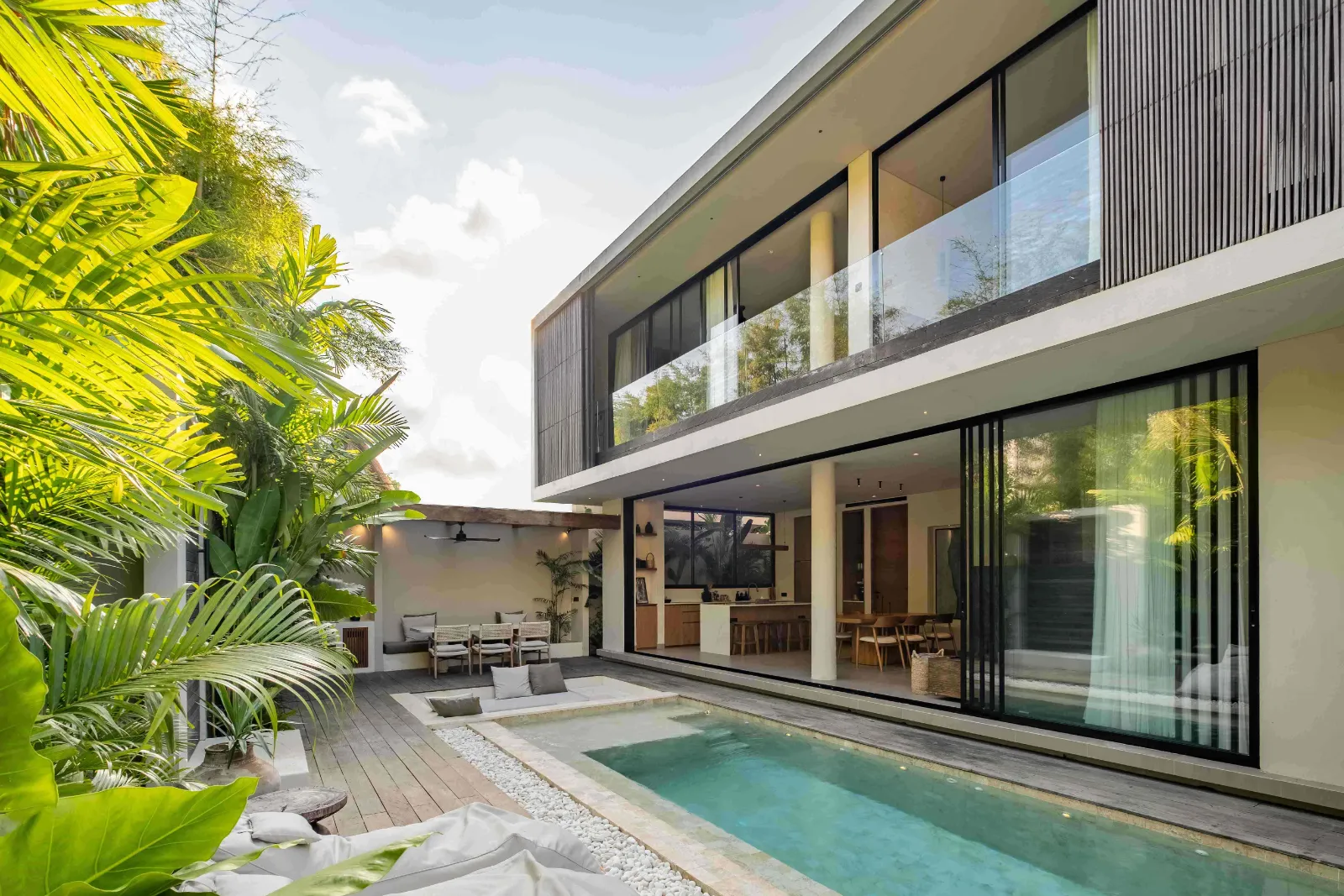
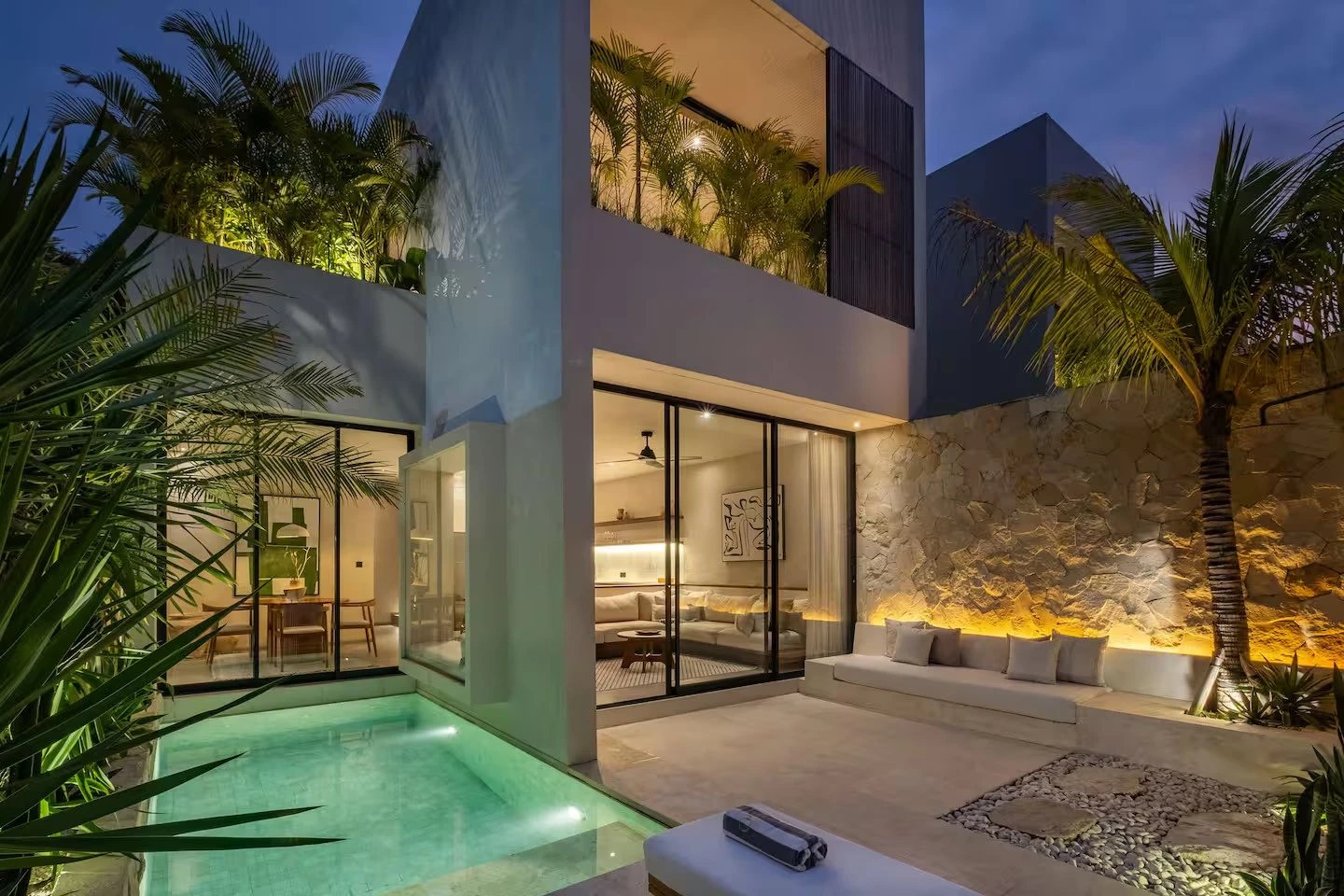
Bali sits on the Pacific Ring of Fire, which is exactly why the cover question is different here than in most second-home markets. The island carries real exposure to earthquakes, tsunamis and flooding, alongside the everyday risks of fire, theft and — for any villa that hosts paying guests — liability claims. A villa is rarely just a holiday home on the books; if it earns rental income, it is an operating business asset, and it should be insured like one.
That distinction matters because the policy a private owner buys for a personal residence is usually too thin for a rental villa. Higher guest turnover means more liability exposure, more wear, and more ways for a covered event to interrupt your income. The right structure is layered: protect the building, protect what's in it, protect against the people who walk through it, protect against the ground moving under it, and protect the revenue if any of those events shut you down.
What does buildings and contents cover actually protect?
Buildings (property damage) cover protects the physical structure — walls, roof, pool, fixed fittings — against insured perils like fire, storm, theft and impact. This is the backbone of every villa policy, and the insured sum should reflect rebuild cost, not purchase price or market value. In a leasehold market like Bali, where build quality and land terms vary widely, that rebuild figure deserves a careful, honest number rather than a round guess.
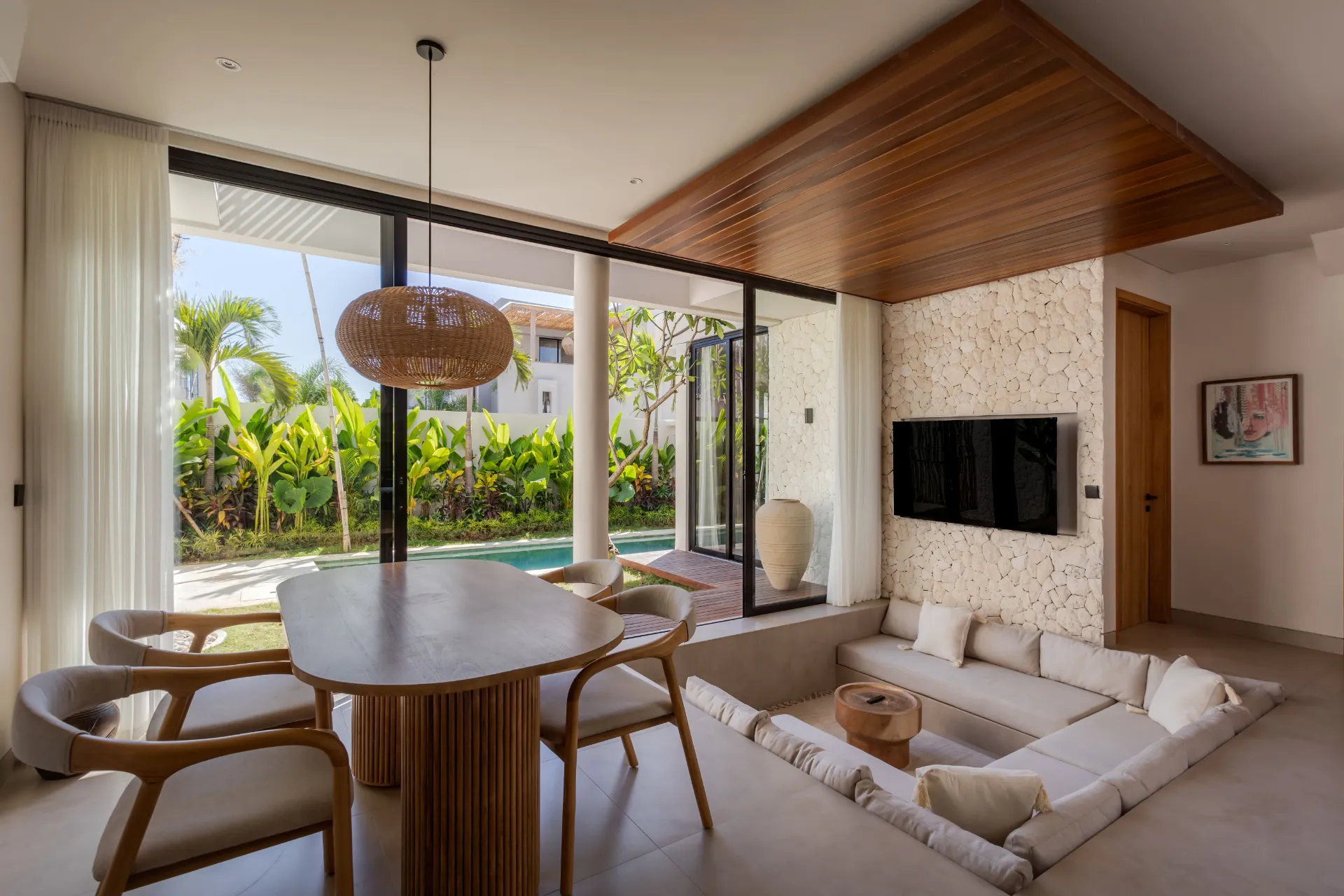
Contents cover handles everything that isn't bolted down: furniture, kitchen appliances, air-conditioning units, electronics, AV gear and soft furnishings. A common industry shorthand prices contents at around 15% of the building value, though a higher-spec villa with substantial AV, outdoor furniture and appliances can justify itemising instead. For a furnished rental that turns over guests weekly, contents take a beating, and under-insuring them is a quiet way to lose money at claim time.
Why is public liability non-negotiable for a rental villa?
Public liability is the cover most likely to be ignored and most likely to be needed. It protects you against claims when a third party — almost always a guest — is injured on your property, covering medical costs and legal fees that can otherwise land directly on the owner. For a villa with a pool, stairs, cliff frontage or high guest turnover, this is not a nice-to-have. Some guidance suggests carrying public liability at a high limit (commonly cited up to IDR 2.5 billion) precisely because rental villas concentrate risk: more guests, more activity, more chances for something to go wrong.
The reason this gets skipped is that nothing has happened yet. But a single serious injury claim can dwarf a year of rental income, and unlike a damaged sofa, you cannot simply replace it. If your villa hosts paying guests, treat liability cover as load-bearing.
How does earthquake and natural-catastrophe cover work in Bali?
Natural-catastrophe cover is the line item people assume is included and frequently isn't. In Indonesia, earthquake, tsunami and flood protection is usually sold as an extension on top of the base property policy, and some local insurers offer attractive headline rates precisely because they exclude earthquakes and floods. Reading that exclusion before you sign is the difference between a covered villa and an expensive surprise.
There is also a recognised standard policy framework in the market — an Indonesian Earthquake Insurance Standard Policy (often referenced as PSAGBI) that covers building damage from earthquakes, volcanic eruptions and tsunamis under defined terms. Even so, volcanic eruption is frequently not automatically included in a general property policy and may need its own extension. As a rough guide, the earthquake extension is often quoted at around an additional 0.05–0.15% of property value per year (verify current rates with a broker). Given Bali's seismic exposure, treating nat-cat cover as optional is the single riskiest call an owner can make.
Citable benchmark: Across the owner conversations we have during onboarding, the most common coverage gap we see on existing Bali villa policies is missing or under-spec loss-of-rental-income cover — owners protect the building but not the revenue the building produces, leaving a long post-event repair to hit twice. — Cabo Bali, 2026
What is loss-of-rental-income cover, and why do owners skip it?
Loss-of-rental-income cover — sometimes called business interruption or operational-loss cover — pays out when your villa cannot earn because it is uninhabitable after a covered event. It is the cover that thinks about downtime rather than the damage itself: a fire or storm might be repaired physically, but the booking calendar still goes dark for weeks or months while the work happens, and that lost revenue is real money.
This is the most-skipped cover on income villas, and the logic of skipping it is seductive — the building is insured, so why pay more? Because the repair timeline is where owners get hurt. Some packages in the market structure this as a daily benefit for a capped period (for example, a fixed daily payout for up to 90 days under certain Zurich-branded packages, per third-party summaries — verify exact terms). The right question to ask a broker is simple: if a covered event takes my villa offline for three months in high season, what does this policy actually replace?
A real Bukit example of why fire cover matters: traditional alang-alang (thatched) roofs are beautiful but highly flammable. On New Year's Eve 2025, children setting off fireworks in Pecatu burned an entire alang-alang villa to the ground. Fire isn't a hypothetical here — make sure your buildings cover, and your loss-of-rental-income cover, are sized for it.
How much should a Bali villa owner expect to pay in 2026?
Pricing is driven by insured value, location, build quality and which extensions you bolt on, so any figure here is a planning range rather than a quote. As a widely cited benchmark, base house/property cover in Bali runs at roughly 0.2% of the insured sum per year — for a villa insured at IDR 2.15 billion, that works out to a premium in the region of IDR 4.3 million annually, per published 2024–2026 figures. The earthquake/nat-cat extension typically adds about 0.05–0.15% of property value on top (verify — rates move).
The table below summarises the core cover types, what each protects, the typical 2026 cost signal, and the gotcha to watch. Treat the cost column as directional and confirm live numbers with a licensed broker before you rely on any of them.
| Cover type | What it protects | Typical 2026 cost signal (verify) | Notes / common gap |
|---|---|---|---|
| Buildings / property damage | The structure: walls, roof, pool, fixed fittings — fire, storm, theft, impact | ~0.2% of insured sum / year | Insure to rebuild cost, not purchase price |
| Contents | Furniture, appliances, AC, AV, electronics, soft furnishings | Often bundled; ~15% of building value as a starting estimate | High-spec villas should itemise, not estimate |
| Public liability | Third-party injury on your property — medical and legal costs | Limit commonly set high (up to ~IDR 2.5bn cited) | Essential for rental turnover; frequently under-set |
| Earthquake / nat-cat extension | Earthquake, tsunami, flood damage | ~+0.05–0.15% of property value / year | Often sold separately; check the exclusion list |
| Volcanic eruption | Damage from volcanic activity | Add-on; varies by insurer | Frequently NOT automatic — confirm explicitly |
| Loss of rental income | Revenue while the villa is uninhabitable after a covered event | Varies; sometimes a capped daily benefit | The most-skipped cover on income villas |
What's most often missed on a Bali villa policy?
The pattern is consistent: owners insure the obvious and skip the expensive-when-it-matters. The four gaps we see most often are (1) no loss-of-rental-income cover, so a long repair stops the cash flow as well as the bookings; (2) earthquake or flood quietly excluded to keep the headline premium low; (3) public liability set too low for a villa with high guest turnover; and (4) insured-to-value mismatch, where the building is insured at purchase price rather than rebuild cost, leaving the owner under-paid at claim time.
A fifth, subtler gap is documentation. The claims process in Indonesia leans on prompt notification and evidence — you contact the insurer immediately, an adjuster assesses the damage against the policy terms, and the quality of your records shapes the outcome. A villa with a clean inventory, dated photos and maintenance logs is in a far stronger position than one without. This is one place where having a professional manager already keeping operational records quietly pays for itself.
Pro tip — Keanu Fischell, Co-Founder, Cabo Bali: When owners come to us, the first thing I check on an existing policy isn't the premium — it's two clauses. Is loss-of-rental-income actually in there, and is earthquake genuinely included rather than excluded in the fine print. Those two are where Bali villas get hurt: the building gets rebuilt, but if the policy doesn't replace the income during a three-month repair, the owner carries the whole downturn alone. Read the exclusions before the price.
How do you actually get a Bali villa covered?
Getting covered well is less about finding "the cheapest policy" and more about comparing properly structured ones. The practical route is to work through a licensed broker who can put your villa in front of multiple underwriters — leading international insurers such as Zurich operate in this market alongside local underwriters — and return like-for-like quotes so you can see what each policy includes and, more importantly, excludes. Comparing on premium alone is how owners end up with a cheap policy that doesn't pay.
Cabo's own answer to that is BPI Consultant (Be Protected Indonesia), the independent broker we refer every owner to — and in practice the cover they most often place on Bali villas is with Zurich. Mention Cabo Bali and you get an extra 5% off your first-year premium, whether or not we manage your villa; for Cabo-managed owners the introduction is simply part of onboarding. Full contact details and what to have ready are in the partner section below. To be clear: this isn't insurance advice, Cabo doesn't sell insurance and takes no commission, and your broker should confirm the final cover.
FAQ
Is villa insurance mandatory in Bali? It is not universally mandatory by law for a private owner, but it is strongly advisable, and lenders or certain lease structures may require it. For any villa earning rental income, treating cover as essential rather than optional is the sensible default. Confirm your specific obligations with a licensed broker.
How much does Bali villa insurance cost in 2026? As a planning benchmark, base property cover runs at roughly 0.2% of the insured sum per year, with an earthquake/nat-cat extension adding about 0.05–0.15% of property value on top. Actual premiums depend on value, location, build quality and extensions — verify with a broker.
Does standard Bali property insurance cover earthquakes? Not always automatically. Earthquake, tsunami and flood cover is commonly sold as an extension, and some insurers exclude it to offer a lower base rate. Check the exclusions explicitly and confirm earthquake is included before signing.
Are volcanic eruptions covered? Often not by default. Many Bali property policies do not automatically cover volcanic eruption damage and require a separate add-on. Ask your insurer directly whether volcanic activity is included.
What is loss-of-rental-income cover and do I need it? It pays out when your villa can't earn because it's uninhabitable after a covered event, covering the downtime rather than the physical damage. If your villa relies on rental income, it's one of the most important covers to include — and one of the most commonly skipped.
How much contents cover should I take? A common starting estimate is around 15% of the building value, but higher-spec villas with significant AV, appliances and outdoor furniture should itemise contents rather than rely on a percentage. Under-insuring contents is a frequent and avoidable mistake.
Is there a Cabo Bali discount on villa insurance? Yes. Cabo's insurance partner is BPI Consultant (Be Protected Indonesia), and mentioning Cabo Bali when you contact them gets you an additional 5% off your first-year premium. It applies whether or not Cabo manages your villa, and Cabo takes no commission on it.
Which insurer does Cabo's partner usually recommend? BPI Consultant is an independent broker and quotes across underwriters, but in practice the cover they most often place on Bali villas is with Zurich. The right insurer for your villa depends on build type, location, value and which extensions you need — the broker confirms that, not us.
Can Cabo Bali help me arrange villa insurance? Yes — we make a direct introduction to BPI Consultant, and for Cabo-managed owners it's part of onboarding. Cabo doesn't sell insurance or give insurance advice; the broker confirms the final cover.
Key takeaways
- A Bali rental villa needs five core covers: buildings, contents, public liability, natural-catastrophe (earthquake/flood/tsunami) and loss-of-rental-income.
- Plan around ~0.2% of insured value/year for base cover plus ~0.05–0.15% for the earthquake extension — then verify live rates with a broker.
- Earthquake and volcanic cover are frequently not automatic. Read the exclusion list before the premium.
- Loss-of-rental-income is the most-skipped cover on income villas — and the one that hurts most during a long repair.
- Insure the building to rebuild cost, not purchase price, and keep clean records — including your licensing paperwork — for the claims process.
- Cabo owner deal: mention Cabo Bali to BPI Consultant for an extra 5% off your first-year premium.
- This isn't insurance advice. Confirm cover with a licensed broker.
About the author
By Rissa Prima, Digital Marketing Manager, Cabo Bali. Cabo Bali manages boutique villas across Uluwatu, Bingin and Canggu.
Get your villa covered properly
Cabo Bali manages 20+ boutique villas across Uluwatu, Bingin, Pecatu, Ungasan, Canggu and Pererenan, with 91% portfolio occupancy, a 4.84/5 rating from 750+ reviews and a 5.0 Google score — on a 13% management fee with no lock-in, in-house concierge and 24/7 operations.
When you onboard a villa with us, one of the first things we do is introduce you to BPI Consultant, our insurance partner — with an extra 5% off your first year — so you can compare properly structured quotes rather than guess. We don't sell insurance and take no commission; we make sure your asset and its income are actually protected.
WhatsApp us on +62 812 3968 3171 or email [email protected], and see how we run villas at Villa Management.
Related reading
The Cabo Bali insurance partner — and the 5% owner deal
Cabo Bali works with BPI Consultant (Be Protected Indonesia) as its villa-insurance partner, and it is who we refer every owner to. They are an independent broker, so they quote your villa across underwriters rather than pushing one product, and in practice the cover they most often place for Bali villas is with Zurich — a large international insurer with a long track record on Indonesian property risk.
The deal: mention Cabo Bali and you get an additional 5% off your first-year premium. It applies whether or not Cabo manages your villa — it is a partner benefit, not a management perk, and Cabo takes no commission on it. We publish it in full because we would rather you got properly covered than kept in the dark; that is the same reason we publish our fee, our occupancy and our contract terms.
How to use it
- Contact Florent Michel at BPI Consultant — WhatsApp +62 813-3993-049 or [email protected].
- Say you were referred by Cabo Bali in your first message — that is what triggers the extra 5% on year one.
- Have ready: rebuild cost (not purchase price), contents value or inventory, build type (note any alang-alang roof), location, and whether the villa earns rental income.
- Ask for the quote with and without the earthquake/nat-cat extension and loss-of-rental-income cover, so you can see what each actually costs before deciding.
Prefer a warm introduction? WhatsApp Cabo on +62 812 3968 3171 or email [email protected] and we will make it directly. For Cabo-managed owners this introduction is part of onboarding.
Cabo Bali does not sell insurance and this is not insurance advice. BPI Consultant is a licensed broker and confirms the final cover, terms and price.
Keep your licensing paperwork with your policy file
One practical point owners miss: the claims process here leans on documentation, and your permit and licensing paperwork belongs in the same folder as the policy. Keep the building permit and certificate of worthiness (PBG/SLF), your company and business-licence details including the KBLI 55193 short-stay classification if the villa is operated as a rental business, your regional PB1 tax registration, and guest records, alongside a dated inventory and maintenance log. A villa that can evidence what it is, how it is operated and what was in it is in a far stronger position at claim time than one that cannot. If you are unclear where your villa sits on licensing, start with our guide to the 2026 Bali rental rules.
Related reading