Updated 25 September 2026 · 8 min read · By Rissa Prima, Digital Marketing Manager, Cabo Bali. General information from villa operators — we're not lawyers or tax advisors, but we work closely with trusted legal and tax partners who advise us. Licensing is only half the compliance picture — see our guide to rental income tax in Bali.
On this page
- The short answer
- What's changing in 2026?
- What you actually need
- Can foreigners hold the licence themselves?
- What happens if your villa isn't licensed?
- The pragmatic path for most owners
- What the SLF process actually takes
- Frequently asked questions
- Key takeaways
The short answer
The 31 March 2026 deadline has passed. The Ministry of Tourism extended it to 31 May, then moved to a notice-and-delist process: about 1,600 unlicensed operators were reported to the booking platforms on 2 June 2026, and since 1 August 2026 unlicensed listings can be removed from nine platforms, including Airbnb, Booking.com, Agoda and Tiket.com. Every short-term rental needs an NIB issued through OSS under the correct accommodation KBLI code. Full compliance also means tourism zoning, a PBG building permit and an SLF safety certificate, which can take 6 to 12 months. Foreigners generally can't hold a homestay (pondok wisata) licence personally; the compliant routes are a properly structured PT PMA, or a licensed local management company.
Quick answer
- Status (September 2026): the 31 March deadline was extended to 31 May, then replaced by delisting from 1 August 2026
- Core requirement: NIB (via OSS) under the correct accommodation KBLI code; platforms now ask for the NIB, KBLI and NKU
- Villa KBLI code: 55203 under KBLI 2025 (it was 55193)
- Full compliance: tourism (“pink”) zoning + PBG building permit + SLF safety certificate
- Foreigners: generally no personal pondok wisata licence; use a PT PMA or a licensed manager
- If unlicensed: your listing can be removed from Airbnb, Booking.com, Agoda, Tiket.com and five other platforms
- Next: automatic checks between the platforms and OSS are due from around mid-2027
- It is not a ban: short-term rentals remain legal; this is enforcement of licensing
What's changing in 2026?
Indonesia is enforcing licensing rules that already existed, by moving the checkpoint onto the booking platforms. Here is how it has played out so far:
- December 2025: the Ministry of Tourism (Kemenpar) told every accommodation sold on online travel platforms to hold an OSS business licence by 31 March 2026, citing PP 28/2025, Permenpar 6/2025 and Circular 4/2025
- 11 May 2026: the deadline was extended to 31 May 2026
- 2 June 2026: Kemenpar sent the platforms notices covering about 1,600 unlicensed operators, giving them two months
- 1 August 2026: removal of unlicensed listings began across nine platforms: Airbnb, Traveloka, Trip.com, Tiket.com, Booking.com, Agoda, Expedia, RedDoorz and OYO
- September 2026: Bali's provincial government says Airbnb, Agoda and Booking.com have agreed to stop marketing unlicensed villas in Badung, Denpasar, Gianyar and Tabanan, and that about 5,000 villas have applied for permits
- Around mid-2027: an API link between the platforms and OSS is due, so listings can be checked automatically
Bali has added its own condition: in May 2026 Governor Koster said platforms may only promote properties that are licensed and also hold a regional tax number (NPWPD).
To be clear: this is not an Airbnb ban. Short-term rentals remain legal. What changed is that operating without the right paperwork is now much harder to hide.
What you actually need
Full compliance is a stack of permits, not a single form. The framework itself isn't new — the NIB and the OSS risk-based licensing system now sit under Government Regulation PP No. 28/2025 (which replaced PP No. 5/2021), and the PBG and SLF building permits from PP No. 16/2021; what changed in 2026 is enforcement at the platform level. Here's the shape of it:
| Requirement | What it is | Why it matters |
|---|---|---|
| NIB | Business Identification Number, issued via the OSS system | The core item platforms check; unlicensed listings can be removed since 1 August 2026 |
| Correct KBLI code | Your registered business-activity classification for accommodation (villa: 55203 under KBLI 2025, previously 55193) | Confirms you're a legitimate hospitality business, not an unregistered rental |
| Tourism zoning | Land in a designated tourism ("pink") zone | Underpins the building permit; villas on green/agricultural land are exposed |
| PBG | Building permit for commercial use (the successor to the old IMB) | Required to legally operate the building commercially |
| SLF | Certificate of building worthiness and safety | Issued alongside the PBG; confirms the structure meets standards |
Because zoning, PBG and SLF can take 6 to 12 months to resolve, the practical message is simple: if you haven't started, start now.
Can foreigners hold the licence themselves?
Generally not. A foreign individual is not normally able to personally hold a pondok wisata (homestay) licence in Indonesia. The compliant routes are:
- A properly structured PT PMA (foreign-owned company) holding the correct hospitality licence. This is the route for owners building a larger rental business, but it carries setup cost, capital requirements, and ongoing reporting.
- Partnering with a licensed local management company that already operates compliantly and can run your villa under the correct structure. For most individual owners, this is the faster, lower-friction path — you stay the owner, and the operating compliance sits with the manager.
Which route fits depends on your goals and how you hold the property. This is exactly the kind of thing to confirm with a licensed Indonesian legal or tax consultant before you commit.
What happens if your villa isn't licensed?
The immediate risk is commercial, not just legal: your listings disappear. Platforms that can't verify your NIB against the register will hide or remove the listing — which means your villa stops appearing in search, stops taking bookings, and loses its review history's visibility right in the middle of peak season. For a villa that relies on OTA distribution, an unverified listing is effectively offline.
The pragmatic path for most owners
If you own one or a handful of villas and don't want to build a compliance department, the cleanest move is to operate under a licensed local manager. At Cabo, keeping the villas we manage on the right side of these rules is part of the job — not an add-on. And where you need formal advice, we can refer you to trusted legal, tax and compliance specialists in Bali to guide you through the paperwork. If you're unsure where your villa stands, we can walk through your current setup and the gap to compliance, with no pressure. Start with our breakdown of Bali villa management fees and how to choose a villa management company.
What the SLF process actually takes
Everything above is the rule. This is what putting our own villas through it has actually taken.
The SLF is submitted during the building stage — your developer will normally file it before the villa is finished, which catches buyers out, because most assume the clock starts at handover. Once construction is complete a government inspection has to happen, and that lands anywhere between three and six months after completion. Then the paperwork works its way back to you. Realistically, plan for up to a year start to finish.
It used to be faster. Not long ago the whole process ran in around three months; there is so much building going on in Bali right now that the queue has stretched badly. Budget for the slow version, not the timeline somebody quotes you from two years ago.
Pro tip — Keanu Fischell, Co-Founder, Cabo Bali: If you are buying off-plan, tie 5% of the final payment to you receiving the SLF, and write it into the contract. The moment a developer’s last 5% depends on that certificate, the building permit gets fast-tracked and your paperwork moves as quickly as anything moves here. Without that clause you are just another name on a list.
Guest sentiment is rising. 95% of Cabo Bali guest reviews were positive in October 2026, up from 94% in September 2026, across every booking channel (Guesty review analysis).
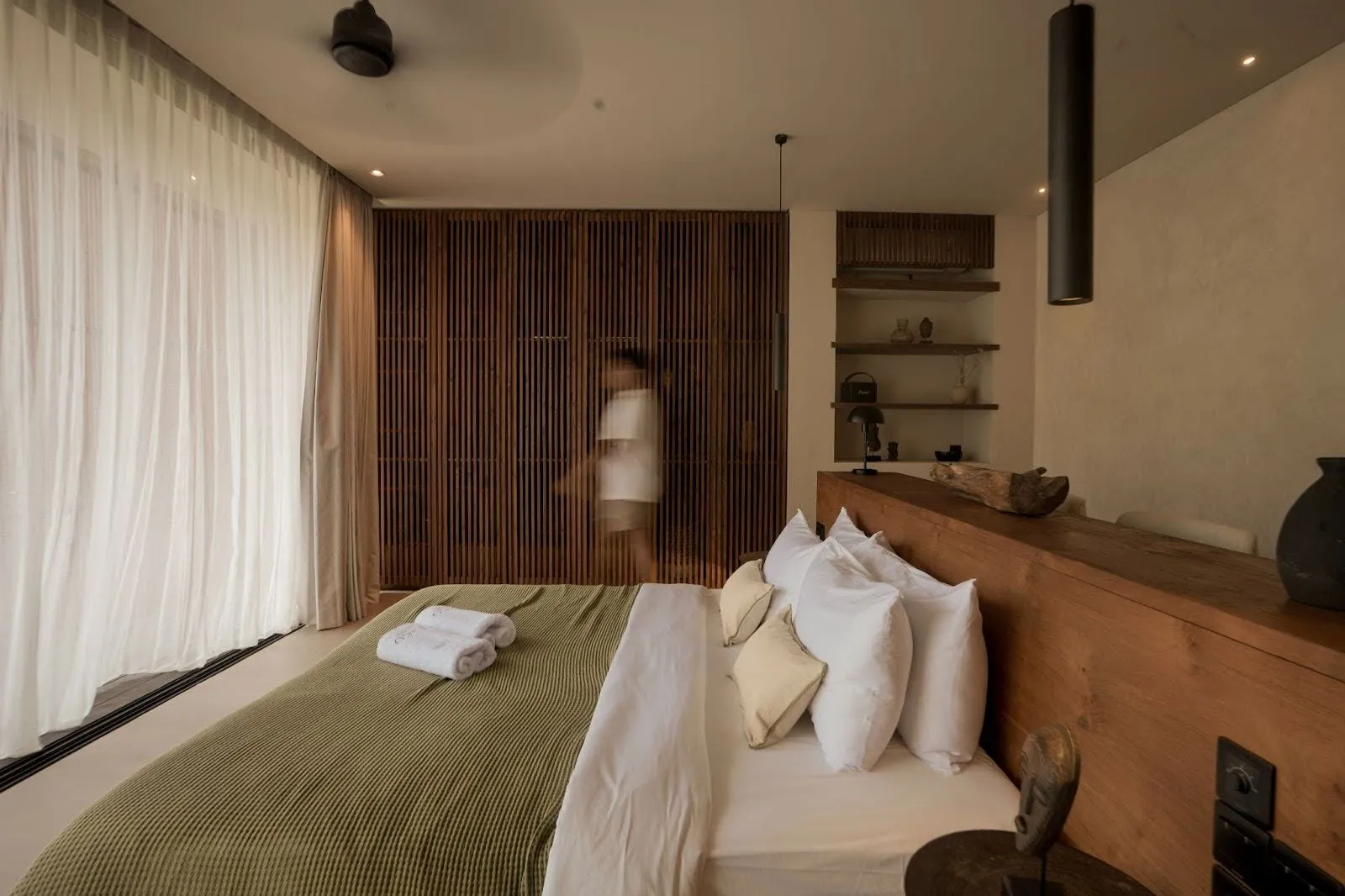
What this looks like in practice: the SLF (Sertifikat Laik Fungsi) is the step that stalls — it can take up to a year to come through. It's common for buyers to hold back around 5% of the purchase price until the developer actually delivers it, so build both that timeline and that retention into your plans.
Frequently asked questions
What happened to the 31 March 2026 Bali Airbnb deadline?
The Ministry of Tourism extended it to 31 May 2026, then reported about 1,600 unlicensed operators to the booking platforms on 2 June. Since 1 August 2026, listings without a valid NIB under the correct accommodation KBLI code can be removed from Airbnb, Booking.com, Agoda, Tiket.com and five other platforms.
What KBLI code does a villa need?
Under KBLI 2025, villa accommodation is 55203 (previously 55193). The right code depends on how the property is set up, so confirm it with a licensed Indonesian legal adviser.
Is Airbnb banned in Bali in 2026?
No. Short-term rentals remain legal. The 2026 change is tighter enforcement of existing licensing rules, mainly by requiring a verified NIB on the booking platforms — not a ban.
Can a foreigner get a villa rental licence in Bali?
Generally not personally. Foreigners are not normally able to hold a pondok wisata (homestay) licence. The compliant options are a properly structured PT PMA holding the correct hospitality licence, or operating the villa through a licensed local management company.
What documents do I need to be compliant?
At minimum a verified NIB under the correct KBLI code. Full compliance also involves tourism-zone land, a PBG building permit, and an SLF safety certificate — a process that often takes 6 to 12 months.
What happens to my villa if I don't comply?
Your listings can be hidden or delisted from Airbnb, Booking.com, Agoda and Expedia, which cuts off your main booking channels. The licensing exposure remains separate from that commercial hit.
Key takeaways
- The 31 March deadline has passed: since 1 August 2026, listings without a verified NIB under the correct accommodation code can be removed from the booking platforms.
- Full compliance also means tourism zoning, a PBG permit, and an SLF certificate — budget 6 to 12 months.
- Foreigners generally can't hold a pondok wisata licence; use a PT PMA or a licensed manager.
- It's enforcement, not a ban — but an unverified listing is effectively offline.
Get your villa compliant
If you'd like a straight read on where your villa stands and the shortest path to compliance, talk to us — no sales pressure, just a clear picture, and an introduction to the right legal and tax specialists if you need one. Learn more about villa management with Cabo.
A note on this. We're villa operators, not lawyers or tax advisors. This is general information on how the rules work as we understand them — informed by the legal and tax partners we work alongside — and not advice for your specific situation. Indonesian law changes often, so always confirm the specifics with a licensed Indonesian legal or tax professional before acting; we're glad to introduce you to ours.
About the author. Rissa Prima is Digital Marketing Manager at Cabo Bali, which manages boutique villas across Uluwatu, Bingin and Canggu. Rissa writes from the operator's side of Bali villas — real numbers, real guest feedback, and lessons from the team running the portfolio day to day.
Sources & References
This guide draws on Indonesian government licensing portals and regulations, the booking platforms' own host requirements, and industry data. Regulations change often — always confirm the current rules with a licensed Indonesian legal or tax professional.
- OSS (Online Single Submission) portal — where the NIB is issued, under Indonesia's risk-based business-licensing system.
- OSS RBA — KBLI 55130 (Pondok Wisata) — the homestay accommodation classification under KBLI 2020 (held by Indonesian citizens only); codes were renumbered under KBLI 2025.
- Ministry of Investment / BKPM — foreign investment (PT PMA) and business-licensing authority.
- Ministry of Tourism (Kemenpar) — confirmation that short-term rentals remain legal; tourism-accommodation policy.
- Antara (27 May 2026) — Kemenpar action against about 1,600 unlicensed accommodations on OTAs from August 2026.
- TTG Asia (3 June 2026) — the nine platforms and the planned OSS integration.
- BPS — KBLI 2020 to 2025 conversion table (April 2026) — the renumbered accommodation codes.
- Government Regulation PP No. 5/2021 — risk-based business licensing, since replaced by PP No. 28/2025.
- Government Regulation PP No. 16/2021 — building approvals: the PBG (successor to the IMB) and the SLF certificate of worthiness.
- Presidential Regulation Perpres No. 10/2021 (Positive Investment List) — rules governing foreign ownership through a PT PMA.
- Airbnb Help Center — Responsible hosting & local regulations — host registration and licence-verification requirements.
- Booking.com Partner Hub — partner registration, licence and tax-ID requirements for accommodations.
- BPS Bali (Statistics Indonesia, Bali) — official Bali tourism and accommodation statistics.
- AirDNA — short-term-rental market data for Bali (occupancy, ADR, supply).
- Seven Stones Indonesia — “Bali's Tourism Reset: Enforcement, Not New Regulation” (2026) — industry analysis of the platform-verification crackdown.
Related reading