By Rissa Prima, Digital Marketing Manager, Cabo Bali · Updated 25 June 2026 · 8 min read
Villa owners in Bali spend months on the build — architecture, interiors, pool finishes — and then treat the garden as the last line item to sort out in the final week before launch. It shows.
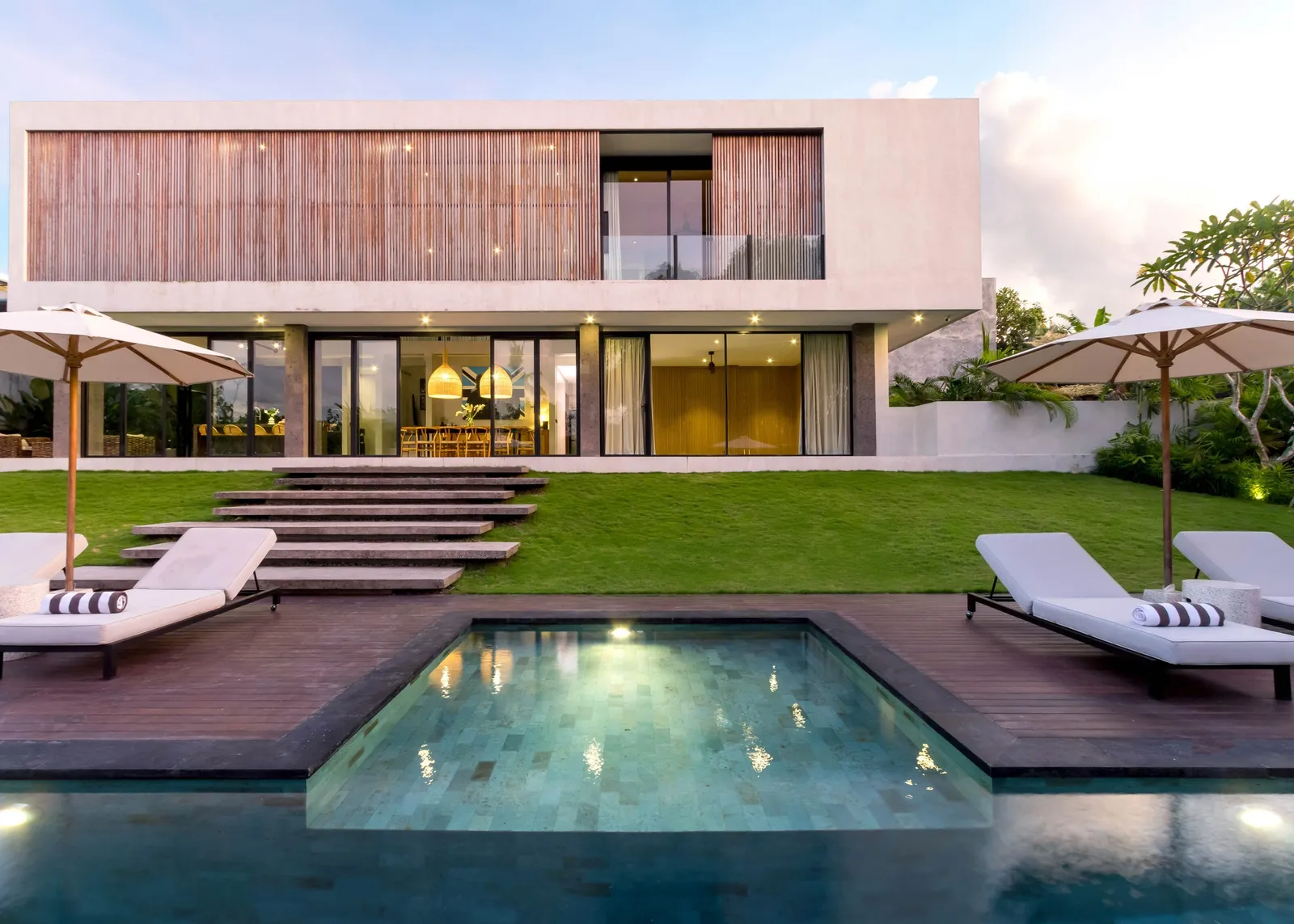
The garden is the first thing a guest photographs when they arrive and the last thing they post when they leave. It's in the background of every photo on your Airbnb listing. It determines whether a returning guest books again or finds somewhere that looks better maintained. And in Bali's climate, without a plan, it deteriorates fast.
This guide covers what to look for in a Bali villa landscaper, what real projects actually cost, and what to get right before you open to guests.
The short answer. The best Bali villa landscapers are the ones with genuine rental-property experience, zone-by-zone quoting, a written 3-month install warranty, and reliable bi-weekly maintenance — not whoever is cheapest or closest. Budget roughly Rp 25–45M for a full install and Rp 700k–1.2M a month for upkeep, and start the work at the tail end of the build rather than after it.
Quick answer:
- Best all-round vendor: Tropical Garden — the landscaper we use most across the Cabo Bali portfolio for installs, top-ups and replacements.
- Typical install cost: Rp 25–37M for a 1-bed villa, Rp 34–45M for a 2-bed — feature trees (coconut palms at ~Rp 2.25M each) drive the high end.
- Ongoing maintenance: Rp 700k–1.2M a month; bi-weekly visits are the realistic minimum for an actively rented villa.
- When to start: the tail end of the build — early enough for plants to establish, late enough to avoid construction dust.
- Biggest hidden lever: privacy screening and drip irrigation from day one — both protect the 5-star "private sanctuary" reviews that justify your nightly rate.
On this page
- Why Landscaping Is Always an Afterthought — And Why That's a Problem
- Privacy: The Luxury Most Villas Underinvest In
- What Makes a Good Bali Villa Landscaper
- Plant Selection: What Works and What Doesn't
- What Does Villa Landscaping Cost in Bali? Real Numbers.
- Maintenance Schedules: What Regular Actually Means
- Recommended Landscapers for Bali Villas
- Key Takeaways
- Frequently Asked Questions
- Finishing Your Villa? This Is the Moment to Think About Management Too
- Related Reading
- Sources & References
Why Landscaping Is Always an Afterthought — And Why That's a Problem
The pattern is almost universal. The build runs over time and over budget. By the time the villa is close to finished, the owner is focused on getting guests in and recovering costs. Landscaping gets compressed into the last few weeks, treated as decoration rather than infrastructure, and briefed to whoever is available rather than whoever is right.
The photo timing problem.
You can't wait until the garden is full to take your listing photos — but you can't plant too early either. Plants installed during active construction are killed by dust, concrete runoff, and zero maintenance. The window is tighter than it looks: you need to start the landscaping process earlier than feels natural, coordinate it with the tail end of the build, and accept that some growth will still be needed after photos are taken. The alternative — waiting until everything looks lush — means launching months later than necessary.
The management timing problem.
When you're finishing a villa, you're also figuring out who runs it. The two decisions are connected. A management company that's involved before launch will tell you what the garden needs to look like before photos are taken, not after the first guest review mentions the pool area looks sparse.
"Start landscaping earlier than feels natural. The window between 'construction dust will kill everything' and 'you needed this done yesterday' is shorter than most owners think."
Privacy: The Luxury Most Villas Underinvest In
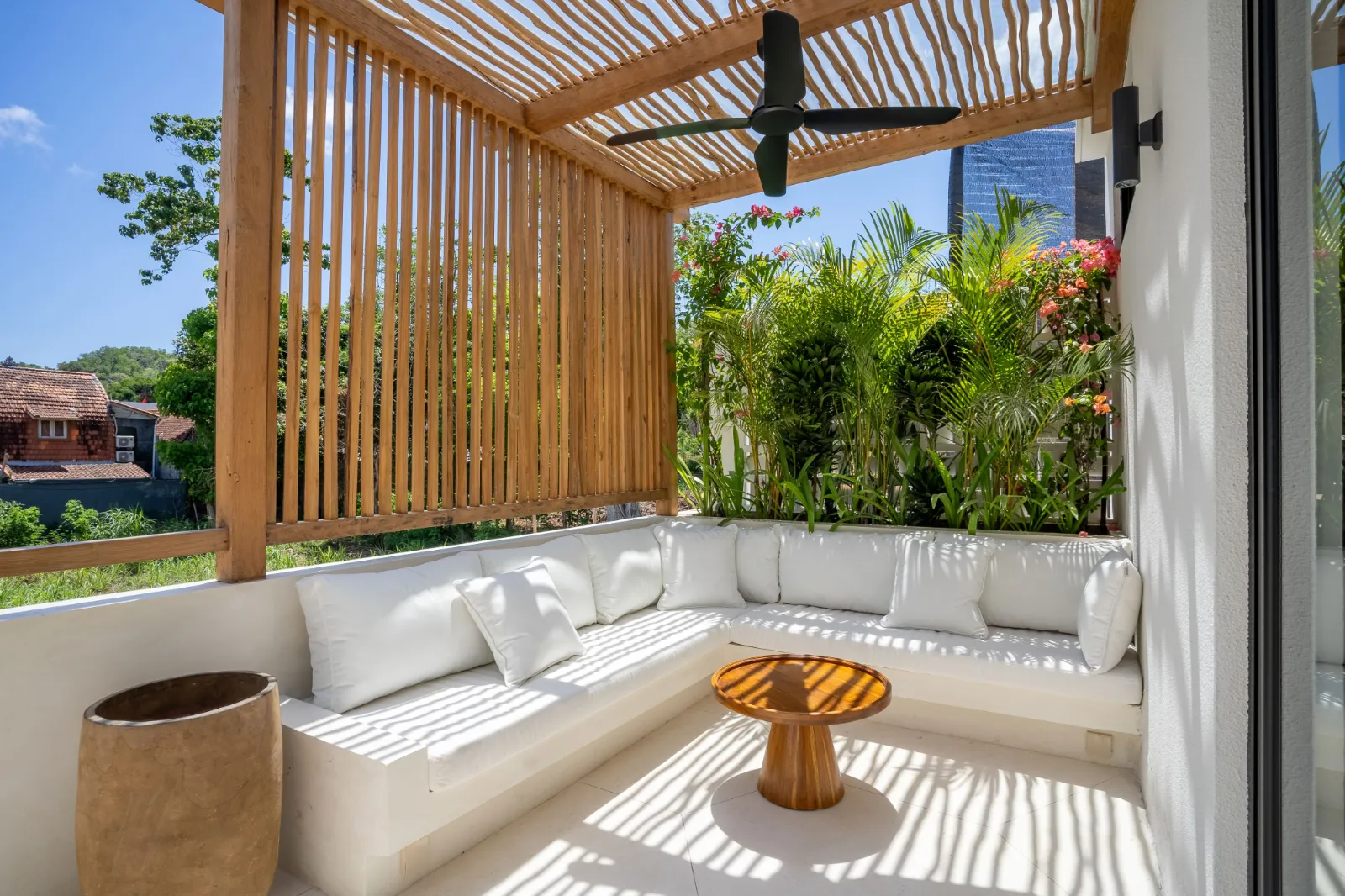
Privacy is the ultimate luxury in a Bali villa — and it's one of the most underused tools in landscaping. Many properties don't have ideal natural privacy from neighbouring villas, lanes, or higher ground. The default response is curtains or frosted glass, which solve the problem by removing the view entirely.
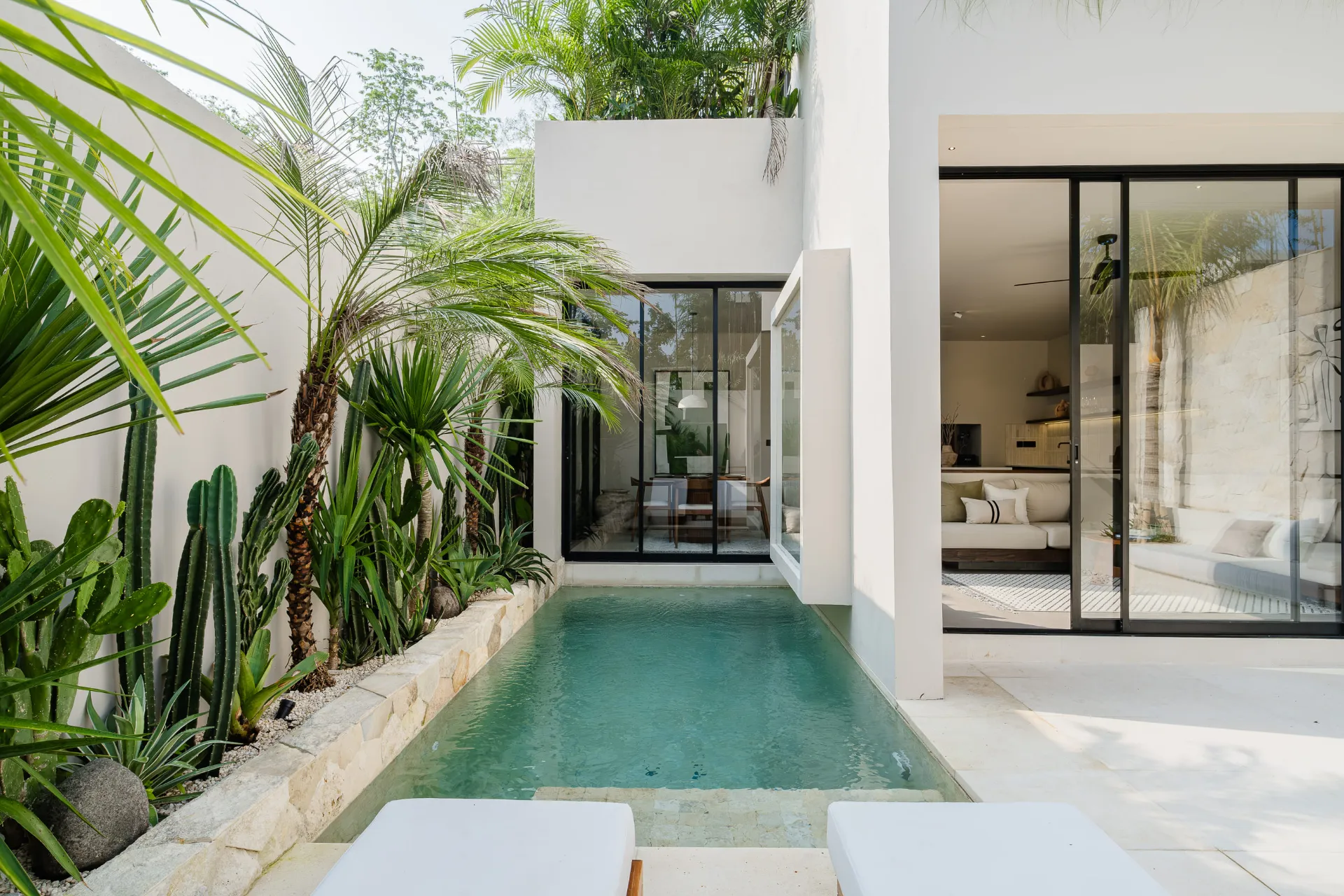
Good landscaping creates privacy without making your plot feel like a walled compound. Strategic planting — the right species, in the right positions, at the right height — screens sight lines from neighbouring properties while keeping the villa open, airy, and connected to the garden.
Guests who feel exposed close their curtains and lose the indoor-outdoor experience that makes Bali villa stays worth what they cost. A villa where the pool area is naturally screened from the lane, where the outdoor shower feels genuinely private, where the balcony doesn't look directly into another property — these are the details that drive the 5-star reviews that mention 'felt like a private sanctuary.'
Privacy solutions that actually work
Tall tropical screening plants. Dracaena arborea, large yuca, and mature palms placed on boundary lines create effective vertical screening that looks natural rather than constructed. These take time to establish — another reason to start early.
Bamboo walls. Effective for 2-storey buildings where you need screening at height that plants can't reach quickly. Honest caveat: bamboo walls look rough for the first 6 months before they fill out, and they require more maintenance than most owners expect — regular cutting, treatment against pests, and management of spread. The payoff is a full, lush screen that reads as natural from inside the property. Budget for the grow-in period and don't photograph from that angle until it's filled.
Layered planting at boundaries. A mix of heights — ground cover, mid-height shrubs, and taller structural plants — creates density at the boundary without a single obvious 'privacy hedge' that reads as defensive.
"Curtains solve the privacy problem by removing the view. Landscaping solves it by making the view private. These are not the same thing."
What Makes a Good Bali Villa Landscaper
The Bali landscaping market ranges from experienced specialists with detailed zone-by-zone quotes and plant warranties to general labour who will trim whatever you point them at. The difference in outcome over 12 months is significant.
Rental property experience specifically.
A landscaper who works on private residences or hotel grounds is not automatically the right choice for a villa rental. You need someone who understands that the pool surround needs to stay clear of leaf drop between cleanings, that fast-growing fillers can become overwhelming maintenance problems six months in, and that what looks lush at installation needs to still look good in a guest photo at 7am.
Zone-by-zone thinking.
Good landscapers quote and plan by zone — front entrance, pool area, balconies, boundary planting, garden area. This tells you they've thought about the property spatially rather than treating it as a single job. It also makes it easier to phase work if budget is a constraint: do the high-photo-impact zones first (pool area, entrance), secondary zones later. The other half of kerb appeal is signage — see what to get made, where to get it made, and what most owners get wrong.
A 3-month warranty on new installs.
Standard among the better vendors in Bali. The warranty should cover maintenance visits, fertilising, and plant replacement if anything dies in the establishment period. Get this confirmed in writing before work starts.
Communication and reliability.
The landscaper who is hardest to reach before you've paid will be harder to reach after. Responsiveness at quote stage is your clearest signal for what happens during the job.
Pro tip: Before signing any maintenance contract, ask how they handle weeks when your villa is at full occupancy and garden access is restricted. A good landscaper will have a protocol for working around guest schedules. One who hasn't thought about it will either skip visits or show up during a checkout.
What to ask — and what a good answer looks like
| What to ask | What a good answer looks like |
|---|---|
| Do you have experience with villa rental properties? | Yes — and they understand photos matter, not just healthy plants |
| Can you show me properties you currently maintain? | Recent photos or an active reference site you can visit |
| Do you have experience with coastal / Uluwatu conditions? | Specific plant and soil knowledge for exposed clifftop sites |
| What's included in monthly maintenance? | Clear scope: mowing, trimming, fertilising, pest, replanting threshold |
| How do you handle plant replacements? | Included or charged separately — get this in writing |
| Do you offer a warranty on new installs? | 3-month warranty with maintenance and replacements is standard among good vendors |
| Who is my point of contact and how do I report issues? | Named person, clear channel — not just a general number |
Plant Selection: What Works and What Doesn't
Structural plants first.
The plants that define the shape and density of a garden — palms, large-leaf tropicals, mature shrubs — take longest to establish and cost the most to replace. These should be the first design decision, not the last. A garden built around fast-growing filler with feature plants dropped in rarely holds up photographically after 12 months.
Desert and arid plants: low maintenance but use them carefully.
Cactus, agave, and yuca are genuinely low-maintenance and handle Bali's dry season well without irrigation. They're increasingly popular in Uluwatu and Bingin gardens where the clifftop aesthetic suits them. The risk: too little planting in this style makes a villa feel sparse and cheap rather than considered and minimal. If you're going arid, commit to density — layer sizes, vary species, use stone and gravel thoughtfully between plants to fill the space. A few isolated cacti in bare soil is not a design.
Understand the dry season.
Bali's dry season (roughly May to October) puts significant stress on gardens, particularly in the south. Plants that look lush in the wet season can look stressed and sparse by September without irrigation. Ask your landscaper specifically what the garden will look like in August — that's the honest test.
Pool surrounds: avoid heavy shedders.
Flowering trees and plants that drop petals and leaves into the pool create a constant maintenance burden and generate guest complaints. Pool surrounds should be planted with species that look good, stay relatively contained, and don't shed heavily. Palm phonix is a reliable choice — used across most of the Uluwatu villa projects we've been involved in.
Irrigation from day one.
Manual watering is the single biggest point of failure in Bali villa gardens. During busy turnover days it gets missed. During vacancies it gets entirely. A drip irrigation system on a timer costs a fraction of replacing a garden that's died back in a dry season. Install it at landscaping stage — retrofitting is messier and more expensive.
Pro tip: Bamboo walls take around 6 months to fill out properly. If privacy is part of your brief, plan for that timeline — and photograph from angles that don't show the bamboo until it's established. The maintenance requirement is also higher than most people expect: regular cutting, pest treatment, and management of the spread. Factor this into your ongoing maintenance budget from the start.
What Does Villa Landscaping Cost in Bali? Real Numbers.
Below are real benchmarks from Uluwatu villa projects, including work done across the Cabo Bali portfolio. These are actual prices, not estimates.
| Item | Frequency | Indicative cost (IDR) | Notes |
|---|---|---|---|
| Dracaena arborea (3m, feature) | One-off | Rp 1.2M | Strong structural plant |
| Coconut palm (4m, installed) | One-off | Rp 2.25M | Biggest cost variable |
| Japanese palm (5m, installed) | One-off | Rp 1.5M | Premium feature tree |
| Palm phonix (1.5m) | One-off | Rp 500k | Pool surround staple |
| Yuka M / Yuka S | One-off | Rp 300k – 650k | Size-dependent |
| Agave, cactus varieties (S–L) | One-off | Rp 75k – 500k | Per plant |
| Traveller palm M | One-off | Rp 900k | Window/living room areas |
| Good soil + fertiliser (all areas) | Per install | Rp 2.5M | Never skip this line |
| Installation (full villa) | Per install | Rp 3M – 3.5M | Separate line item |
| Full 1BR villa install (multi-zone) | One-off | Rp 25M – 37M | Varies by species & volume |
| Full 2BR villa install | One-off | Rp 34M – 45M | Feature trees drive the high end |
| Ongoing maintenance (negotiated) | Monthly | Rp 700k – 1.2M | Cabo Bali rate ~700k |
| Seasonal replanting / refresh | 2–3x/year | Rp 1.5M – 4M | Budget separately |
Full villa installs range widely based on species choices.
A well-specified 1BR install runs Rp 25–37M depending on how heavily you invest in feature trees and how many zones you're covering. The 2BR equivalent sits higher. These are 2023–2024 benchmarks — allow for some movement in 2026.
Coconut trees are the biggest single cost variable.
At Rp 2.25M each installed, four coconut trees can add Rp 9M to a quote before anything else is planted. They photograph beautifully and give immediate height and maturity — but be deliberate about whether they're in the budget before you fall in love with them on the mood board.
Volume negotiation is real and significant.
If you're developing a compound or multiple villas, brief all units together and negotiate as a single job. The discount available on a multi-unit order versus separate quotes is material — always worth asking for.
Ongoing maintenance: Budget Rp 700k–1.2M/month depending on property size. The lower end is achievable when there's volume or an established relationship with the vendor. Single villa rates tend toward the higher end of that range.
Maintenance Schedules: What Regular Actually Means
Active rental villas need more than monthly visits.
Monthly maintenance is the standard offering. For a villa turning over guests weekly, it's the minimum — not the plan. A garden can deteriorate significantly in four weeks: leaves accumulate, the pool surround gets messy, pests go unchecked. Bi-weekly visits are the realistic standard for villas running at high occupancy.
Seasonal work is separate from regular maintenance.
Twice yearly at minimum, the garden needs more than a tidy: soil conditioning, fertilising, replanting of anything that hasn't thrived, and addressing structural plants that have outgrown their space. Budget for this separately — it's rarely included in the standard monthly scope.
Turnover day coordination.
For villas with back-to-back bookings, a brief garden check should be part of the turnover clean. Issues get flagged early rather than discovered when the next guest checks in with a camera.
"Monthly maintenance is the standard offering. For a villa turning over guests weekly, it's the minimum — not the plan."
Recommended Landscapers for Bali Villas
These are vendors we've worked with directly across the Cabo Bali portfolio and Uluwatu villa projects. The Bali vendor community is small — these assessments are honest and based on real jobs.
Vendors we use directly
Tropical Garden ★ Our Go-To
Jl Raya Kerobokan No.88X | 085 238 311 687
Full villa installs, top-ups, and ongoing supply — the vendor we use most
- Our most-used landscaping vendor across the Cabo Bali portfolio — reliable, responsive, and knows how villa rental properties should look
- Handles everything from full multi-zone installs to individual plant top-ups and replacements between guest stays
- Covers installation, transport, and rubbish removal — not billed as extras
- Pricing transparent and consistent: phoenix palms around Rp 500k, dracaena arborea 3m at Rp 1.2M, Japanese palms 5m at Rp 1.5M, coconut palms at Rp 2.25M
- Responsive on WhatsApp — useful when you need something sorted quickly between bookings
Best for: Our first call for any landscaping job — installs, top-ups, or emergency replacements. Recommended as the starting point for any owner in Uluwatu or Canggu.
Greenshop Bali
Jl Raya Semer No 63, Kerobokan | 087862070213 | @greenshopbali | kemarajaya86@gmail.com
Full villa installs — detailed zone-by-zone quoting, Uluwatu experience
- Detailed, itemised quotes broken down by zone (front, pool, balconies, garden, tropical areas) — makes it easy to phase work and compare
- Real Uluwatu project experience — understands coastal and clifftop plant requirements
- Good species range including palms, agave, cactus, bromelia, dracaena — covers both tropical and arid styles
- Soil, fertiliser, and installation included in quotes — no hidden add-ons
Best for: Owners doing a full villa landscaping install from scratch, particularly in Uluwatu and Bingin. Good for comparison quoting alongside Tropical Garden.
Sari Pucuk Landscape
Contact: I Ketut Suena
Full installs with 3-month warranty — good for larger projects
- Provides a 3-month post-install warranty covering maintenance, fertilising, and plant replacement — useful for villa owners not on-island during establishment
- Can handle larger installs including feature trees (coconut palms, large structural palms)
- Good for comprehensive briefs — they quote across all zones and include all ancillary costs
Best for: Owners wanting a comprehensive install with post-install warranty protection. Particularly useful if you won't be on-island during the establishment period.
More established operations
Kapi Nala Landscape
@kapinala.landscape | Instagram
Full-spectrum contractor — Uluwatu, Canggu, Seseh portfolio
- Founded 2018, full-spectrum landscape contractor covering design, build, planting, and long-term maintenance under one team
- Real portfolio across Uluwatu, Canggu, and Seseh — relevant Bali South experience
- Design language leans tropical-modern grounded in Balinese principles — works with the landscape rather than imposing on it
- Maintenance is a core part of their operation: covers irrigation checks, scheduled pruning cycles, and seasonal adjustments for wet and dry seasons
- Good fit for owners who want a managed process from concept through to ongoing care, not just a one-off install
Best for: Owners with a larger budget wanting a more complete design-and-build process. Particularly good for villas where the garden is central to the property's identity rather than just backdrop.
Bali Landscape Company
@balilandscapecompany | balilandscapecompany.com | 35,000+ Instagram followers
The most established landscaping firm in Bali — full architectural service
- 35K+ Instagram following — the largest of any vendor on this list and a signal of sustained output over 8+ years
- Full landscape architectural service: concept design, 3D visuals, elevations, Bills of Quantities — the most thorough design process available in Bali
- Offers two tracks: a faster Design & Build Master Plan for straightforward projects, and a full architectural service for complex or large-scale builds
- Construction goes beyond planting — hardscaping, irrigation, lighting, structural landscape elements all in scope
- Canggu-based but works across the island; international client base and project consultation available for owners not on-island
Best for: Owners wanting the most comprehensive landscaping process available in Bali. Best for larger villas, resort-style properties, or owners who want the full architectural treatment as a single managed package.
Also worth getting a quote from
Adhi Putra Landscape
@adhiputra_landscape | Instagram: 8,000+ followers
One of Bali's most established landscapers — active since 1993
- Over 30 years of landscape contracting and design in Bali — the longest track record of any vendor on this list
- Active portfolio on Instagram covering villa and residential projects across the island
- Covers both design and build, not just supply
- Longevity in the Bali market is a meaningful signal: they've outlasted dozens of competitors and managed through multiple tourism cycles
Best for: Owners who want the reassurance of an established, long-running operation. Good for larger or more complex briefs where experience with Bali's conditions over time matters.
Bunga Plants Bali
@bungaplants.bali | bungaplants.com | Instagram: 10,000+ followers
Full-service design, planting, styling, and care — strong online presence
- Largest social following of any vendor on this list — 10K+ Instagram followers with an active, well-curated portfolio
- Full service offer: design, planting, styling, ongoing care, and indoor plant arrangements — one contact for the full scope
- Has a proper website with project portfolio and service descriptions — signals a more formal business operation
- Materials supply included: plants, stone, sand — can handle procurement as well as installation
Best for: Owners wanting a design-led approach with a vendor who has strong aesthetic sensibility. Good for villas where the garden needs to work as a visual brand, not just a plant job.
Petricont
@petricont.id | Instagram
Emerging landscaper with a design-focused portfolio
- Active on Instagram with a portfolio skewing toward contemporary and design-led garden projects
- Worth following and reaching out to directly — DM on Instagram is the fastest way to get contact details and see recent work
- Smaller operation than some of the others on this list — more owner attention on your job, more flexibility on brief
Best for: Owners looking for a fresh, design-forward approach. Best to review their recent Instagram posts and DM directly to assess fit before committing.
Getting quotes: Send the same brief to at least two vendors. Specify zones, style preference (tropical vs arid vs mixed), whether you need irrigation, privacy requirements, and your timeline. A vendor who responds with zone-by-zone line items is the one who's thought about your property. A vendor who sends a lump sum without breakdown is harder to assess and harder to hold to scope.
Key Takeaways
- Landscaping is infrastructure, not decoration — the garden is in every listing photo and drives the "private sanctuary" reviews that justify your rate.
- Hire for rental-property experience, zone-by-zone quoting and a written 3-month install warranty — not the lowest lump-sum quote.
- Real costs: Rp 25–37M (1-bed) to Rp 34–45M (2-bed) to install; Rp 700k–1.2M a month to maintain. Coconut palms are the single biggest cost variable.
- Install drip irrigation and privacy screening from day one — both are cheap insurance against dead gardens and exposed pool areas.
- Bi-weekly maintenance is the realistic minimum for an actively rented villa; budget separately for 2–3 seasonal refreshes a year.
- Start at the tail end of the build, and brief multiple villas together to unlock volume pricing.
Frequently Asked Questions
How much does villa landscaping cost in Bali?
A full villa install can range from Rp 25M to well over Rp 40M depending on the brief, species selection, and how many feature trees you include. Coconut palms at Rp 2.25M each are the biggest single cost variable — four trees add Rp 9M to a quote before anything else is planted. If you are installing multiple villas in the same compound, always brief them together and negotiate as a single job. Ongoing maintenance runs Rp 700k–1.2M per month depending on property size and your negotiated rate.
When should I start landscaping my Bali villa?
Earlier than feels natural — but not so early that construction dust and zero maintenance kill the plants. The window is the tail end of the build. Coordinate with your contractor on when the site will be clean enough for planting, then start the landscaping brief immediately. Waiting until the villa is 'finished' means launching months later than necessary with photos taken before the garden looks its best.
How do I create privacy at my Bali villa without closing it in?
Strategic planting on boundary lines — tall dracaena, large yuca, mature palms — creates effective vertical screening without walling the property in. Layered planting at different heights adds density without looking defensive. For 2-storey properties, bamboo walls are effective but require a 6-month grow-in period and more maintenance than most owners expect. The goal is screening sight lines, not building a barrier.
Are desert plants a good choice for a Bali villa garden?
Yes, with caveats. Cactus, agave, and yuca handle Bali's dry season well and are genuinely low-maintenance. The risk is sparseness — too little planting in this style reads as cheap rather than minimal. If you're going arid, commit to density: layer plant sizes, vary species, and use stone and gravel thoughtfully. A few isolated cacti in bare soil is not a design.
How often should I have my rental villa garden maintained?
Bi-weekly is the realistic minimum for a villa in active rental. Monthly maintenance — the standard offering from most vendors — leaves too long a window for the garden to deteriorate between guest stays. Budget for seasonal deep maintenance 2–3 times per year on top of regular visits.
Finishing Your Villa? This Is the Moment to Think About Management Too
The landscaping decision and the management decision happen at the same time for most villa owners — because finishing the build and preparing to open to guests are the same process.
A management company worth working with will have a view on your garden before you list, help you brief and coordinate your landscaping contractor, and make sure the villa looks the way it needs to look before the first guest photo is taken. We've seen what the gap between a good and poor pre-launch looks like in occupancy and reviews over the first year.
At Cabo Bali, pre-launch preparation — including garden readiness — is part of how we onboard every property. We manage 20+ boutique villas across Uluwatu, Bingin and Canggu at an average 91% occupancy — well above the roughly 46% market-wide average AirDNA reports for Bali — alongside a 4.84/5 guest rating from 750+ reviews.
If you're finishing a villa and thinking about management: talk to the Cabo Bali villa management team before you open, not after.
About the author. Rissa Prima is Digital Marketing Manager at Cabo Bali, which manages boutique villas across Uluwatu, Bingin and Canggu. Rissa writes from the operator's side of Bali villas — real numbers, real guest feedback, and lessons from the team running the portfolio day to day.
Related Reading
- → How to Get Your Bali Villa Verified on Google Maps
- → How Much Does Villa Management Cost in Bali?
- The Complete Guide to Direct Bookings for Bali Villas (coming soon)
Sources & References
This guide draws on first-hand vendor quotes and project data from the Cabo Bali portfolio (2023–2024 Uluwatu installs), cross-referenced with the following public sources:
- BMKG (Badan Meteorologi, Klimatologi, dan Geofisika) — Bali dry-season climatology (≈ May–October). bmkg.go.id
- AirDNA — Bali short-term-rental occupancy and ADR benchmarks. airdna.co
- Airbnb Help Center — listing photography guidance for hosts. airbnb.com/help
- Royal Horticultural Society (RHS) — drought-tolerant and tropical planting guidance. rhs.org.uk
- Royal Botanic Gardens, Kew — Plants of the World Online (Dracaena, palm and agave species). powo.science.kew.org
- Missouri Botanical Garden — Plant Finder care notes for tropical species. missouribotanicalgarden.org
- Bali Landscape Company — landscape-architecture portfolio (vendor profiled above). balilandscapecompany.com
- Bunga Plants Bali — design, supply and styling vendor (profiled above). bungaplants.com
- Greenshop Bali — zone-by-zone install vendor (profiled above). @greenshopbali
- Kapi Nala Landscape — design-build contractor (profiled above). @kapinala.landscape
- Adhi Putra Landscape — established Bali landscaper, active since 1993 (profiled above). @adhiputra_landscape