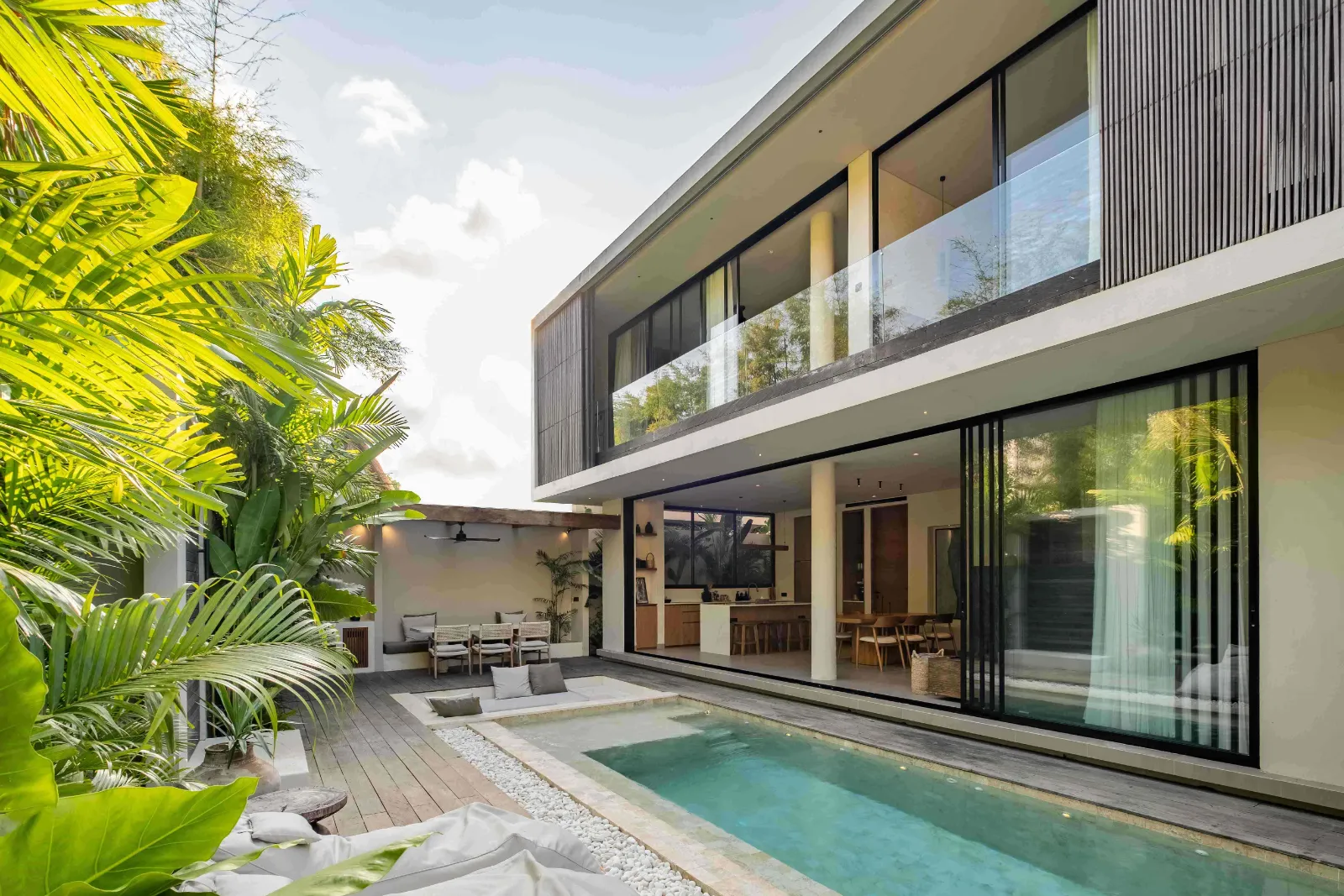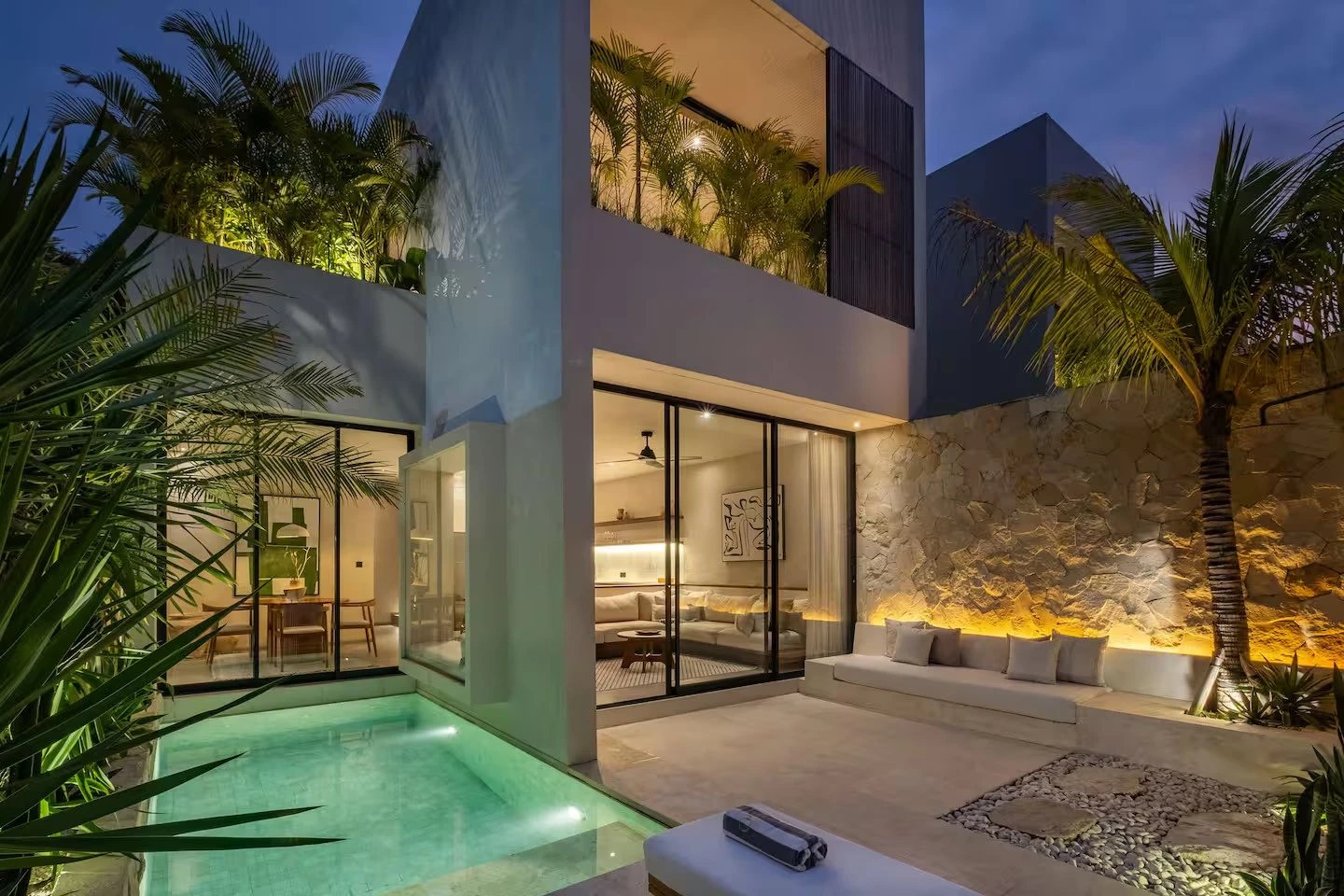
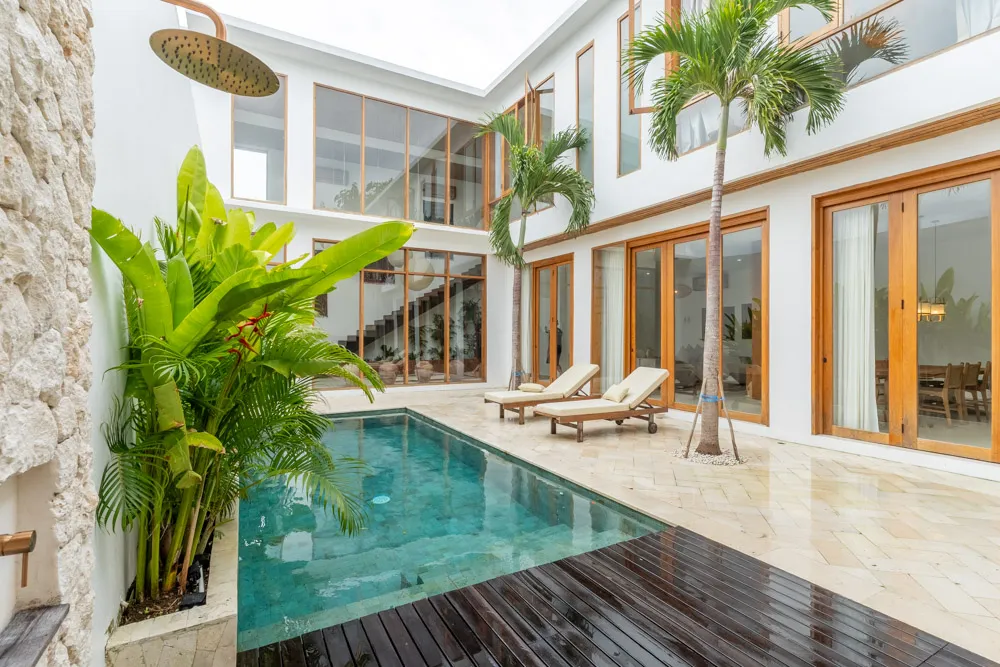
An Uluwatu real estate agent's honest guide to investing in a villa on Bali's Bukit Peninsula. Five submarkets, realistic ROI, the mistakes new buyers make, and the leasehold reality most sales decks won't show you. For the island-wide case rather than one peninsula, see why Bali is still a top real-estate investment destination in 2026.
On this page
- TL;DR
- Why I'm Writing This
- The Five Submarkets
- Three Mistakes That Cost More Than Any Market Move
- The Leasehold Reality Most Sales Decks Skip
- When You're Ready, the Management Decision Is Next
- FAQ
- About the Author
TL;DR
- The Bukit is not one market. It's five. Pecatu, Bingin, Nyang Nyang, Ungasan, and Pandawa have different price points, different yields, different buyer profiles, and genuinely different risk.
- Yield ranges widely by submarket and build quality. A well-built, well-managed 1BR in Bingin can produce RevPAR in the $120s — roughly 26% above the AirDNA Luxury 4.9★ benchmark for the area. A poorly conceived 3BR in the wrong pocket of Pecatu can sit at half the benchmark indefinitely.
- Three mistakes cost more than any market move: buying on aesthetics rather than yield, underestimating operating costs, and choosing a management company after the villa is built instead of before.
- Freehold is a myth for foreign buyers in practice. Leasehold is the standard instrument. Understand the depreciation curve on lease years remaining before you model exit.
- The management decision belongs inside the acquisition decision. If you're buying for yield, picking a manager is not a post-purchase problem — it's a build-stage input. See what full-service Bali villa management actually covers.
Why I'm Writing This
I'm a real estate agent working in the Bukit. I sell property to foreign buyers, mostly European. I don't manage villas — that's a different business. I'm writing this on the Cabo Bali blog because they asked me to share what I actually tell my clients before they sign anything, not because I'm contracted to recommend them.
Everything below is the conversation I'd have across a coffee table with a buyer who asked me to be straight. Where I think a specific Cabo view is relevant — like how management shapes yield — I'll say so. Where I disagree with what the market is telling buyers, I'll say that too.
The Five Submarkets
The Bukit Peninsula runs from Jimbaran in the north to Nyang Nyang in the south. For investment purposes, you should treat it as five distinct micro-markets. Each has a different entry price, a different guest profile, and a different answer to the question "will this actually rent."
1. Pecatu
Pecatu is the most developed submarket on the Bukit. Infrastructure is mature, road access is the cleanest, plots tend to be larger, and you'll find more 3BR and 4BR family villas here than anywhere else on the peninsula.
Who it's for: Family-villa investors. Buyers who want scale (a 3BR+ villa that rents to groups) and don't want to fight for land on a cliff.
Yield reality: Good Pecatu villas run at healthy occupancy but ADR compresses against Bingin because the location lacks the clifftop scarcity. Returns are driven by higher guest count per booking rather than higher nightly rate.
Risk: Supply is the real one. Pecatu has more new inventory than anywhere else on the Bukit right now, and a lot of it is undifferentiated 3BRs with a pool. If you buy here without a genuine design edge, you'll compete on price with everything else on AirDNA's comparable list.
2. Bingin
Bingin is the tightest and most desirable submarket on the Bukit, and it has been for a decade. Surf-driven, cliff-framed, the guest profile skews to higher-spend couples and small groups, and supply is structurally limited by topography — there simply isn't a lot of buildable land.
Who it's for: Yield-focused investors buying smaller footprints. 1BR and 2BR villas are the sweet spot. Bigger builds exist but the cost per square metre kills the return.
Yield reality: This is where the numbers look best. A well-built 1BR with proper management consistently runs at RevPAR around $120+, against an AirDNA Luxury 4.9★ benchmark of roughly $98. The 26% outperformance is real and repeatable, but it's conditional on build quality and management — the submarket gives you the rate ceiling; execution determines whether you actually reach it.
Risk: Entry price is high and still rising. Plot-finding is the bottleneck, not buyer demand. And the submarket punishes bad builds harder than the rest of the Bukit — guests paying Bingin prices expect Bingin standards.
3. Ungasan
Ungasan runs along the eastern cliff and includes the Six Senses and Alila corridors. This is the high-end resort zone — villas here compete with, and adjacent-position against, five-star hotel infrastructure.
Who it's for: Larger-capex buyers. 2–4BR luxury villas, often with wellness or retreat positioning. You're buying into a neighbourhood where the guest is already primed to spend $500+/night.
Yield reality: ADR is the highest on the Bukit. Occupancy is slightly lower because the luxury segment books longer lead times and the shoulder season softness is real. RevPAR remains competitive, but the capex to get there is materially higher — a proper Ungasan villa costs significantly more to build than a comparable Bingin villa.
Risk: You're depending on the resort corridor staying strong. Any softness in Six Senses or Alila bookings drags villa demand with it. Also the most capex-heavy submarket by far — overspecification is the common mistake.
4. Pandawa
Pandawa sits on the eastern side of the Bukit, facing sunrise rather than sunset. More traditional, less saturated, mid-market pricing. The infrastructure story is still playing out but the direction is clear — this is where a lot of 2026–2028 development is pointing.
Who it's for: Longer-horizon investors willing to trade current yield for land appreciation. Also a good entry point for first-time Bukit buyers who can't justify Bingin or Ungasan pricing.
Yield reality: Currently below Bingin and Ungasan on both ADR and occupancy. Should improve meaningfully as infrastructure catches up and supply consolidates into a more defined positioning.
Risk: Timing. You're buying ahead of the market thesis. If the thesis is wrong, the land appreciates slowly and yield sits at Bukit-low levels for longer than you modelled.
5. Nyang Nyang
Nyang Nyang is the southern tip of the peninsula — the most remote, the most open, and the lowest entry price per square metre. Large plots still available, dramatic ocean views, but infrastructure is thin and guest access is a real factor.
Who it's for: Land investors and patient capital. People building something meaningful — retreat concepts, larger estates, developments — rather than single rental villas.
Yield reality: Current rental performance is the weakest of the five submarkets. The villas that do rent strongly are the ones with a specific positioning (retreat, wellness, event-capable) rather than generic short-term rentals.
Risk: This is a land play, not a yield play. If you're buying here expecting 2-year payback on a rental villa, the numbers will not cooperate. If you're buying here expecting land appreciation over a 10-year lease window, the thesis is more defensible.
Pro tip for buyers. When a broker pitches you a villa and says "Uluwatu," ask which submarket. If they can't give you a specific answer, they don't know the market well enough to sell you into it. The five submarkets above are not interchangeable and your yield model needs to be submarket-specific from day one.
Three Mistakes That Cost More Than Any Market Move
I've watched enough buyers make the same three mistakes to write them down. Each one is avoidable and each one costs serious money.
Mistake 1: Buying on aesthetics rather than yield
The most common mistake. Buyer walks the property, loves the design, imagines themselves hosting friends there, signs. The yield model is a rounding exercise that happens after the emotional decision is made.
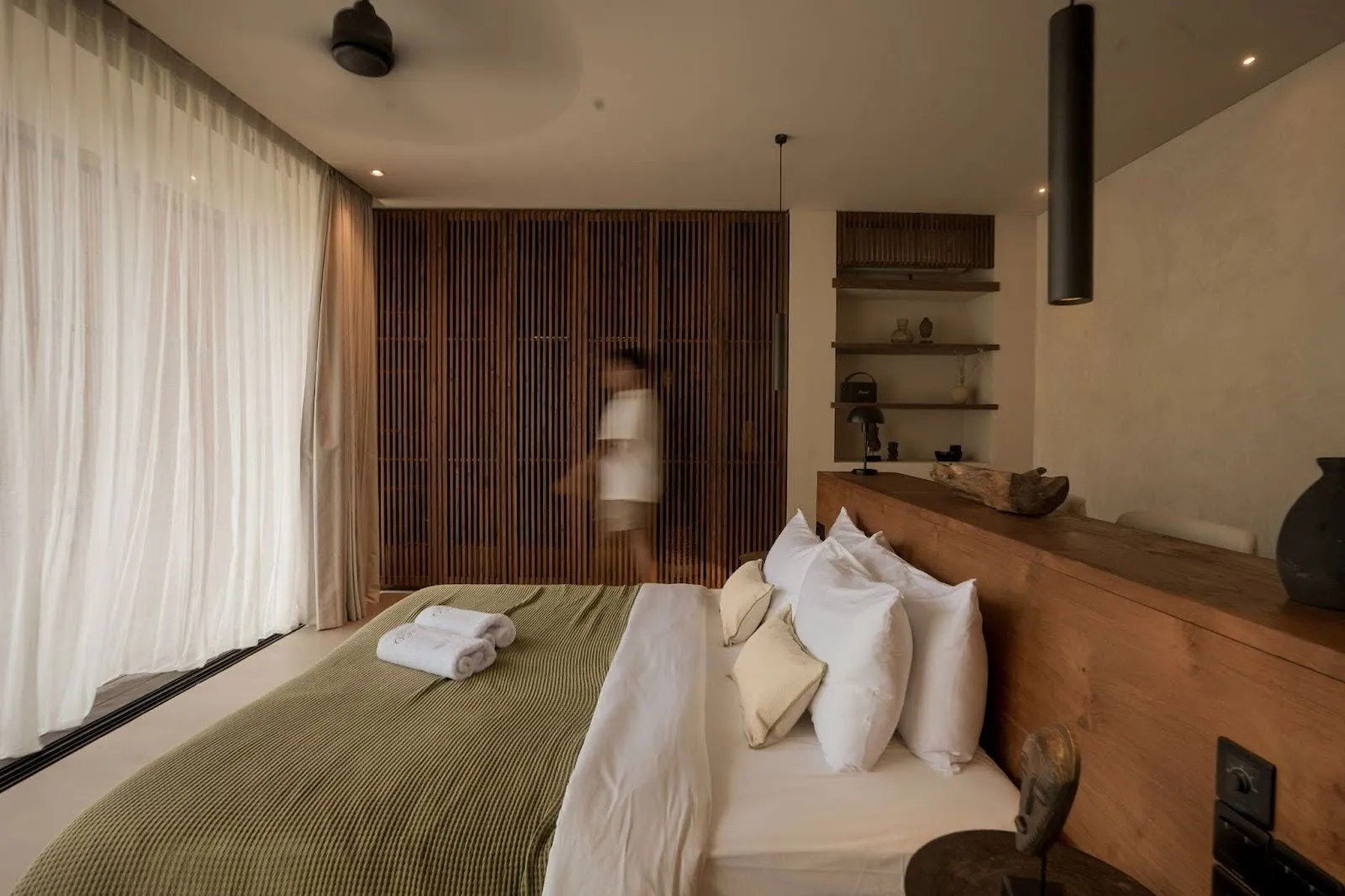
The villas that rent consistently are not the most beautiful ones. They're the ones designed around what guests actually pay for: strong primary bedroom, functional outdoor space, a pool that photographs well, an arrival sequence that feels premium, fast WiFi, and a layout that matches the guest profile the submarket attracts.
A Bingin 1BR that forgot to include a dining table for four will underperform a less-beautiful Bingin 1BR that got the basics right. Every time.
Mistake 2: Underestimating operating costs
Sales decks show you gross rental revenue. They rarely show you the true cost of running a villa well, which is why the projected ROI and the actual ROI diverge so sharply in year one.
The full stack, conservatively:
- OTA commissions: 15–18% across Airbnb, Booking.com, VRBO, Agoda, Expedia blend.
- Management fees: 15–20% of gross on a proper management arrangement. A 13% rate that then invoices you separately for PMS software, marketing, engineer time, and staff training is not a 13% rate.
- Indonesian hotel tax (Pajak): 10% on the booking, commonly missed in owner projections.
- Staff costs: 4–6 staff for a 3BR operating at full standard — housekeeping, pool, garden, engineering, butler. Fixed monthly cost regardless of occupancy.
- Consumables and maintenance: Toiletries, cleaning supplies, pool chemicals, minor repairs — typically 5–10% of gross revenue.
- Furniture and soft-good replacement cycle: Sheets, towels, mattresses, cushions, rugs degrade in Bali's climate faster than buyers expect. Budget 3–5 year replacement on most soft goods and 5–7 years on furniture.
- Sinking fund for major repairs: Waterproofing, pool resurfacing, AC system overhauls, roof work — these come for every villa eventually. 2–3% of gross revenue set aside annually is a reasonable starting position.
Net yield after all of this is often 40–50% of gross, not the 70–80% the sales deck implied.
Pro tip for buyers. Before you sign, ask to see a genuine 12-month P&L from a comparable villa managed by a real operator. Not a projection. Not a pro forma. Actual historical performance. If no one will show you one, that's your answer about what to expect from your own.
Mistake 3: Choosing a management company after the villa is built
The sequence most buyers follow: buy the villa, build the villa, take photos, then start interviewing managers. By the time the manager is involved, the villa has already been designed and built without their input, and a lot of the things that would have lifted yield — bathroom layout, kitchen sizing, pool shape, storage for housekeeping — are locked in.
The better sequence: engage a management perspective before you finalise the design. A good manager will tell you the five things your architect got wrong from a rental yield perspective and the five small changes that will add 10–15% to your annual revenue. Those changes cost nothing to make at the design stage and a fortune to retrofit after build.
This doesn't mean signing a management contract on day one of the acquisition. It means including the management view as an input to the design, the same way you'd include the structural engineer's view or the landscaper's.
Pro tip for buyers. If you're in the design phase now, ask at least one experienced Bukit manager to walk the plans with you. A 30-minute conversation will tell you more about the rental economics of your build than three months of ROI modelling.
The Leasehold Reality Most Sales Decks Skip
Foreign buyers in Indonesia cannot, in practice, own freehold land. The instruments available are:
- Leasehold (Hak Sewa) — the standard approach. Typically a 25–30 year lease with extension options. Simpler, faster, and more common.
- Hak Pakai (Right of Use) — available under specific residency and use conditions. More limited.
- PT PMA structure — a foreign-owned Indonesian company that holds Hak Guna Bangunan (HGB) rights. More complex, higher overhead, used for larger or longer-horizon holdings.
Most Bukit villa sales to foreign buyers are leasehold. That's fine — but it has one implication that sales decks tend to gloss over: the value of a leasehold depreciates as years are used.
A villa sold with 28 years of lease remaining is not the same asset as a villa sold with 18 years of lease remaining, even if the build is identical. Exit pricing needs to account for this. If you plan to hold for 10 years and exit, the remaining lease term at exit determines your sale price as much as the physical asset does.
What this means in practice:
- Buy as much lease term as you reasonably can at acquisition. A few extra years at the front end of a lease is disproportionately valuable because it gives future buyers more runway.
- Understand extension rights before you sign. Some leases include defined extension mechanics; some require a fresh negotiation with the landowner. The first is a meaningfully better instrument than the second.
- Model exit scenarios realistically. A 25-year leasehold bought today and sold in year 10 has 15 years of runway remaining for the next buyer, which prices very differently to the 25 you bought.
This is not a reason to avoid the Bukit. It's a reason to structure the acquisition properly and to bring a lawyer into the process who has actually done leasehold transactions for foreign buyers before, not one who is doing their first.
When You're Ready, the Management Decision Is Next
If you've read this far, you're further into the acquisition thinking than most buyers are when they sign. The last question is who runs the villa after it's built — and I'd encourage you to make that decision early rather than late, for the reasons above.
There are over a hundred villa management companies operating in Bali. A handful are genuinely excellent. Most are average. A few will cost you money while charging you for the privilege. If you want a structured view on how to choose — including the five questions that separate the strong operators from the rest — the guide I wrote for the Cabo Bali blog covers the framework: Best Villa Management Companies in Bali 2026.
For submarket-specific notes on how management actually works across the five Bukit submarkets above, there's also a separate piece: Villa Management in Uluwatu: The Submarket Guide for Owners.
FAQ
What's a realistic ROI on a Bukit villa in 2026?
Gross yields on well-positioned 1BR and 2BR villas in Bingin and Ungasan can reach 10–14% on total acquisition cost. Net yield after all operating costs lands closer to 5–8%. Larger villas and secondary submarkets typically run below this range. Anyone quoting you a flat 15–20% net without submarket specifics is either inflating the numbers or hasn't modelled operating costs properly.
How long before a new Bukit villa breaks even?
Payback on acquisition alone (not including land) is commonly 7–10 years for well-managed villas in strong submarkets. Factor in land cost and lease structure and the full breakeven sits longer. If a broker tells you 4–5 years, ask to see the working.
Is Pecatu a better investment than Bingin because it's cheaper?
Cheaper entry doesn't mean better return. Bingin's yield performance on a per-dollar-of-acquisition basis is often stronger than Pecatu's despite the higher entry price, because the ADR ceiling is higher and supply is more constrained. Match the submarket to your thesis — don't just buy the cheapest land on the Bukit.
Should I use a PT PMA or stick with leasehold?
For a single villa investment with a 10–15 year holding horizon, leasehold is simpler, faster, and the right instrument for most buyers. PT PMA makes sense for larger portfolios, longer holds, or buyers who want more operating flexibility. Your lawyer should advise on the specifics for your situation.
How involved should a management company be during the build?
More than most buyers expect. A good manager will review plans, flag operational friction points (housekeeping access, pool equipment placement, staff quarters, storage), and shape small design decisions that compound into materially better yield post-launch. This is a one-hour plan review and a site walk, not a full engagement. Every serious manager should offer this, often without charge.
What's the biggest operational cost buyers consistently underestimate?
Staff. A 3BR villa running at proper standard needs 4–6 staff to cover housekeeping, pool, garden, engineering, and guest services. Staffing costs are fixed monthly regardless of occupancy, which compresses margins in soft months. Buyers coming from European or North American rental markets underestimate this consistently.
About the Author
Anton is the founder of Sundown Real Estate, a boutique agency guiding European buyers through villa acquisition in Uluwatu and the wider Bukit Peninsula. Sundown specialises in leasehold and investment properties across Bali's south, with a focus on transparent ROI modelling and honest guidance that extends beyond the transaction. Read Anton's companion guide: You've Bought a Villa in Bali. Now What?
This article reflects the author's independent assessment and does not constitute financial or legal advice. Figures and benchmarks sourced from AirDNA, Cabo Bali portfolio performance data, and submarket observations verified April 2026. All figures subject to change.
Related reading: