By Rissa Prima, Digital Marketing Manager, Cabo Bali
Uluwatu isn't one market. It's five. A submarket-by-submarket guide to how villa management actually works on the Bukit — the operational realities most owners don't learn until they're a season into owning. For the buy-side view of the same submarkets, see our Bukit Peninsula villa investment guide.

On this page
- Quick answer
- The five submarkets of Uluwatu, and what defines each
- Why managing a villa in Uluwatu is different from managing one in Canggu
- What returns on an Uluwatu villa actually look like
- What running an Uluwatu villa actually involves
- Case studies: Cabo Bali villas across the Uluwatu submarkets
- How much does villa management cost in Uluwatu?
- Seven questions to ask before choosing an Uluwatu villa manager
- Key takeaways
- Frequently asked questions
Quick answer
- Uluwatu isn't a single rental market. Pecatu, Bingin, Nyang Nyang, Ungasan, and Pandawa have meaningfully different competitive sets, guest profiles, operational constraints, and pricing dynamics. A manager without submarket-specific experience is guessing.
- Your competitive set is resort brands, not other villas. In most of Uluwatu, guests are comparing your villa against Six Senses, Bulgari, Alila, and Raffles — not the villa down the lane. That changes what you're being rated on and what your pricing ceiling actually is.
- The operational realities are different here than in Canggu or Seminyak. Construction volatility, dry-season water logistics, 1-hour airport distance, and surf-driven seasonality create specific challenges you don't face in north Bali.
- Cabo Bali currently manages villas across Pecatu, Bingin, and Nyang Nyang — including two properties holding Airbnb's top 10% trophy. This piece walks through what we've learned about operating across the Uluwatu submarkets, written for owners evaluating management partners or considering buying here.
The five submarkets of Uluwatu, and what defines each
"Uluwatu" is used loosely to describe the entire southern tip of the Bukit peninsula, but when you're managing a villa, the submarket matters more than the umbrella name. Here's how we think about the five main areas:
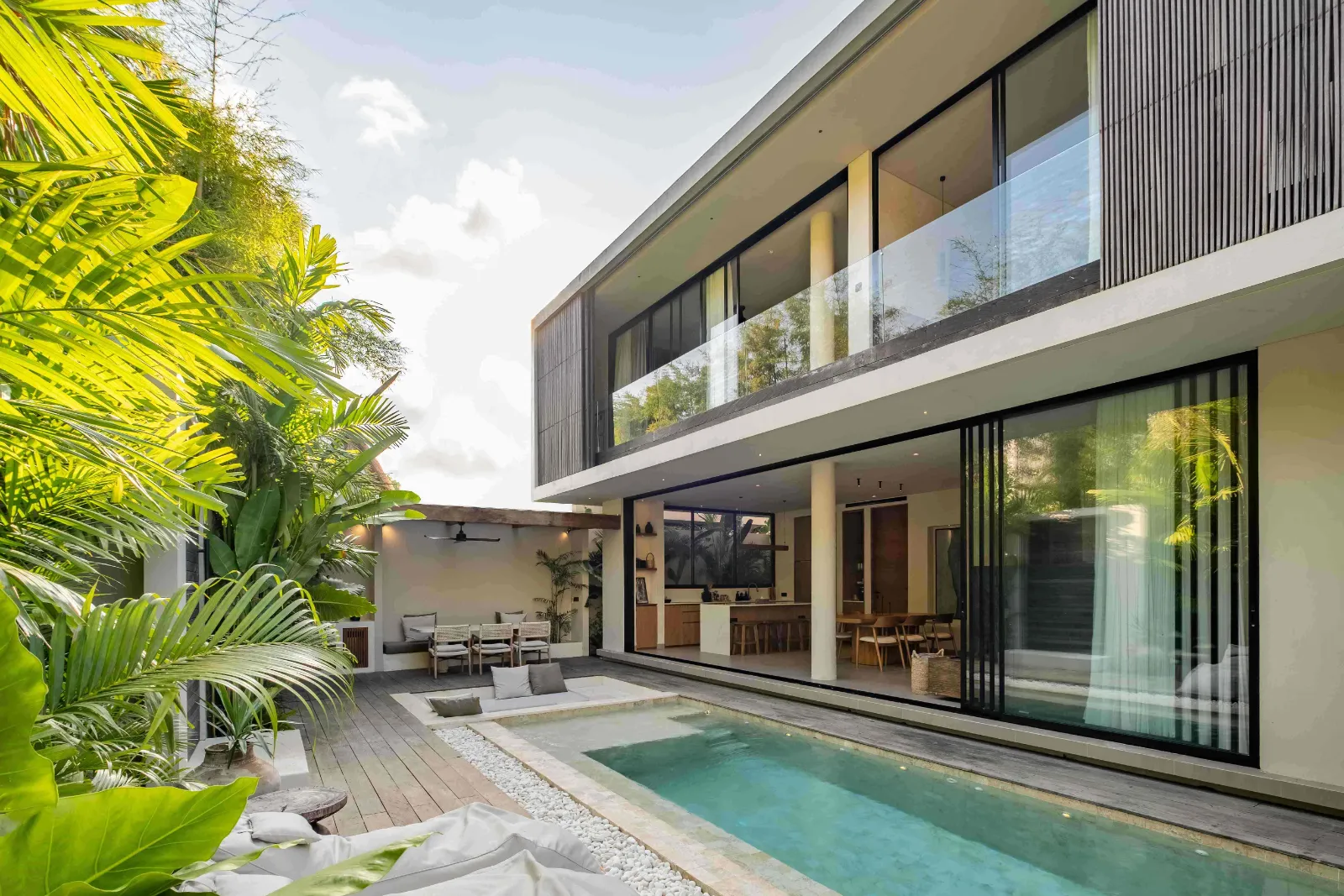
Pecatu is the luxury anchor zone. Six Senses Uluwatu sits here, as does the cluster of high-end resort development that defines the guest expectation set for the whole peninsula. Villas in Pecatu — including Marevita Villas in our own portfolio — compete directly with resort rooms a few minutes away. The guest profile skews older, higher-budget, design-conscious. The operational reality: standards have to be resort-calibrated because the comparison set is.
Bingin is the surf and bohemian zone. Narrower lanes, dense villa development, proximity to Bingin Beach and Dreamland. The guest profile is younger, more surf-oriented, willing to pay for character and location over pure luxury. The competitive set includes boutique properties rather than resort villas. Bingin's structural challenge is density — construction on adjacent plots is a constant reality, not an exception. Luro Villas, Little Asia, and Casa Del Beso all sit here.
Nyang Nyang is the remote clifftop zone. Long, dramatic beach access, much more spread out, a longer drive to most restaurants and amenities. Guest profile is privacy-seeking — honeymooners, remote workers, groups wanting isolation. The operational challenge is logistics: everything takes longer because distances are greater. Kona Villas is our property in this submarket.
Ungasan sits between Jimbaran and Uluwatu proper. More residential, less dense than Bingin, fewer luxury anchors than Pecatu. The guest profile is often families or longer-stay travellers looking for value in a quieter setting. Pricing ceilings are typically lower here because the resort comparison set isn't as close. For a clifftop example in Pecatu, see our Marevita Villas review.
Pandawa and the Uluwatu temple area is more tourist-facing — closer to Suluban, Single Fin, and the temple itself. Higher foot traffic, busier roads, less privacy. Villa management here is affected by the tourist flow in ways the other submarkets aren't.

Here's the quick comparison:
| Submarket | Luxury anchor | Guest profile | Key operational reality | Cabo villas |
|---|---|---|---|---|
| Pecatu | Six Senses, Bulgari nearby | Older, higher-budget, design-conscious | Resort-calibrated standards required | Marevita |
| Bingin | The Edge, boutique cluster | Younger, surf-oriented, character-seeking | Construction density is the norm | Luro Villas, Little Asia, Casa Del Beso |
| Nyang Nyang | Raffles, Alila nearby | Privacy-seekers, honeymooners, remote workers | Logistics distance, everything takes longer | Kona |
| Ungasan | Less direct resort presence | Families, longer stays, value-seekers | Lower pricing ceiling | — |
| Pandawa / Ulu proper | Tourist beach anchors | Mixed, more transient | Traffic and tourist flow volatility | — |
Pro tip for owners. Before anything else, ask a prospective manager which submarket your villa is in — and what specifically changes about their approach because of that. If they treat Uluwatu as one market, they're going to apply Canggu logic to a Pecatu property, or Bingin pricing to a Nyang Nyang one. Neither works.
Why managing a villa in Uluwatu is different from managing one in Canggu
A manager with a strong Canggu track record does not automatically perform well in Uluwatu. The two markets look similar on paper — both in Bali, both popular with foreign guests, both served by Airbnb — but the operational realities are different enough that a Canggu playbook applied to an Uluwatu villa will underperform. Five specific reasons:
1. The guest reference point is a resort, not a villa. In Canggu, a guest booking a private villa is typically comparing against other private villas. In Uluwatu, especially in Pecatu and Nyang Nyang, the guest has also looked at Six Senses, Bulgari, Alila, or Raffles. That means their expectations — on service responsiveness, housekeeping standards, pre-arrival communication, in-stay attentiveness — are calibrated to properties that employ dedicated staff per guest. A villa that would be rated five stars in Canggu can quietly pick up a 4.7 in Uluwatu from the same guest, because the reference point has shifted. We wrote about this in detail in our piece on the top 10% of villas in Uluwatu.
2. Construction volatility is the rule, not the exception. The Bukit is in an active build-out phase. At any given time, at least one neighbouring plot near any given villa is likely to be in construction. In Bingin particularly, where density is highest and lanes are narrowest, the probability approaches 100% over any 12-month period. Managing an Uluwatu villa means having an active playbook for construction: how to word the listing honestly without killing conversion, when to adjust pricing, how to brief guests, when to push for new photos. We learned this hard with Luro Villas — you can read the full story in our Luro Villas RevPAR case study, including what happened when we tested overly-defensive listing copy and page views dropped to near zero inside days.
3. Dry-season water logistics. The Bukit is largely limestone, and water access in the dry season (roughly May to October) is a real operational constraint. Many villas rely on trucked-in water during peak months. A manager who hasn't planned for this ends up with emergency water orders at the worst moment — typically mid-guest-stay. Good management means tank monitoring, supplier relationships, and proactive refills scheduled around booking density.
4. Airport distance changes communication. Uluwatu is about an hour from Ngurah Rai Airport (vs 20 minutes for Canggu). That distance affects everything: transfer logistics, arrival-window communication, how guests budget their day, how frustrated they get if anything goes wrong mid-journey. A pre-arrival guide that works fine in Canggu is insufficient in Uluwatu. Guests need more context, clearer timing windows, and a manager who picks up WhatsApp reliably during the transfer hour.
5. Surf-driven seasonality is different from North Bali. Uluwatu's demand patterns are shaped by surf swell and the dry-season cliff-front conditions in a way that Canggu's aren't. Peak surf season (roughly April to October) overlaps with Europe's high season, creating a compounding demand spike. The shoulder months look different too. A dynamic pricing strategy built for Canggu's more even demand curve will leave money on the table in Uluwatu.
What returns on an Uluwatu villa actually look like
This is where most owner-focused content gets vague. Let's be specific.
From our own published data on Luro Villas, benchmarked against AirDNA for the South Kuta / Bukit Peninsula over December 2025 to February 2026:
| Metric (1BR, Bingin) | Luro Villas (Cabo Bali) | Luxury 4.9★ benchmark | Difference |
|---|---|---|---|
| Occupancy | 96% | 67.87% | +41% |
| ADR | $129.25 | $145.20 | −11% |
| RevPAR | $124.50 | $98.54 | +26% |
Two things to notice. First, these are real numbers, not marketing projections — they're from actual booking data and AirDNA market benchmarks. Second, the benchmark is deliberately the Luxury 4.9★ tier, not the market average. We benchmark against the top tier because the market average is the wrong reference point for any property being managed properly.
The headline: a well-managed 1BR villa in Bingin can produce $124.50 RevPAR, beating the top-tier benchmark by 26%, even while running the ADR roughly $15/night below the ceiling. The ADR gap is deliberate — it's what buys the 96% occupancy. Closing that gap while holding occupancy above 90% is the ongoing optimisation work.
For a 1BR Bingin villa running 330 bookable nights per year, the RevPAR difference between "average management" ($98.54) and "intentional management" ($124.50) works out to roughly $8,500 in additional annual revenue. That's the gap any owner-facing management conversation should start from — because that's the number that justifies a management fee.
Pro tip for owners. Ask any prospective manager to show you actual published RevPAR numbers against the AirDNA Luxury 4.9★ benchmark for your specific submarket. Not projected returns, not "up to" figures, not testimonials. Published data from real properties. Managers who can't produce this either don't measure themselves this way (a problem) or don't like what their numbers show (a bigger problem).
What running an Uluwatu villa actually involves
Most villa management marketing lists services in bullet form — "housekeeping, guest communication, pricing." That tells you nothing about whether the manager is any good. Here's what those functions actually look like in Uluwatu specifically, broken down by the five operational pillars that determine whether a villa performs.
1. Housekeeping calibrated to resort standards
The Bukit's cliff-front locations have a specific housekeeping challenge that Canggu doesn't: salt spray, fine volcanic dust, and an outdoor-indoor architectural style that means every surface is exposed to the elements. A cleaning protocol built for a Canggu townhouse will leave visible residue on an Uluwatu villa within hours.
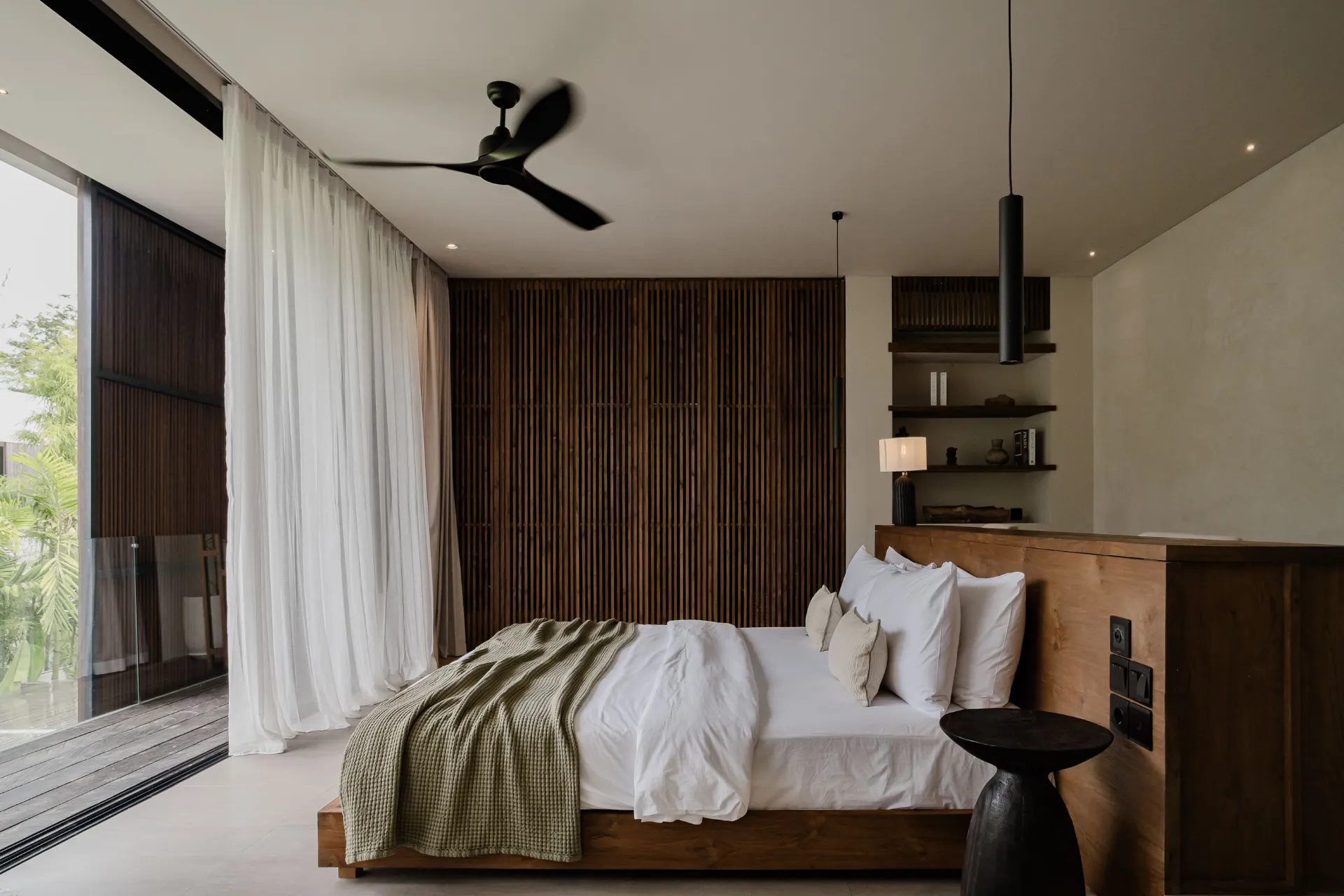
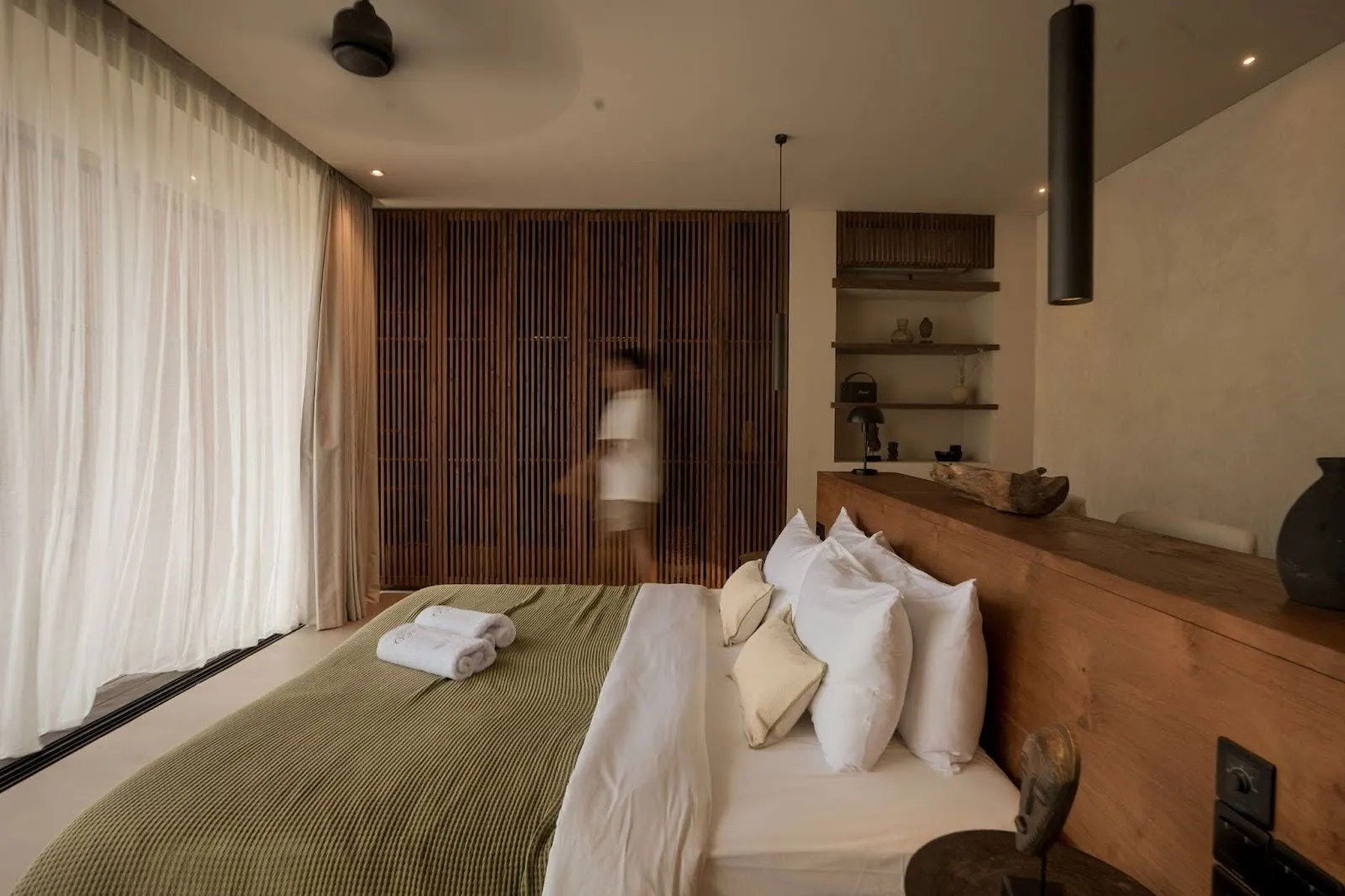
What this means operationally: daily light cleans during guest stays, not just turnover cleans. Specific products for salt-exposed surfaces. Pool surround cleaned twice a day during peak winds. Glass and stainless maintained to a different standard because guests see them against an ocean backdrop that shows every smudge. This is one of the reasons both Marevita and Luro Villas hold 5.0 on Cleanliness across all reviews — not because the standard is higher than elsewhere, but because it's calibrated to the specific realities of the location.
2. Pricing that reflects Uluwatu demand curves
Dynamic pricing tools like PriceLabs handle the algorithmic layer, but the default settings applied without regular human review will quietly erode revenue through stacking discounts and ceiling caps that were set when the villa launched and never revisited.
Uluwatu-specific pricing work means: weekly review of every active rule, adjustments for surf season and swell forecasts, recalibration around holidays and shoulder periods, and a deliberate strategy for peak months (June–August) vs low season (February–March). It also means understanding submarket dynamics — a Pecatu villa should price differently than a Nyang Nyang one even at the same specifications, because the competitive set and guest profile are different.
3. Communication built for the airport hour
Every Uluwatu guest has to survive a 60-90 minute transfer from the airport. Most guests haven't budgeted mentally for that. Good communication means setting expectations before they land (the drive is longer than Canggu, here's what to expect, here's when to expect dinner), real-time support during the transfer hour, and a visible point of contact the whole way.
The Marevita 4.8 Communication score we wrote about in the top 10% hub piece is specifically the gap we're working on closing here — tightening first-response windows, strengthening the pre-arrival guide, making the in-stay contact clearer. Luro Villas, under the same team, holds a 5.0 on Communication, which tells us the standard is hittable.
4. Location curation as an active function
Location is the one sub-score most managers treat as uncontrollable. We don't. Guests rating the Location category aren't actually rating coordinates — they're rating whether they found the right restaurants, surf breaks, sunset points, and local spots. Which means Location is a curation problem, not a geography one.
For Uluwatu specifically, this means custom guest maps for each villa, exclusive perks at partner restaurants across the peninsula, butler briefings on the specific submarket around each property, and pre-arrival itineraries tailored to what the guest has said they want. We went into detail on why this matters in our piece on the top 10% of villas in Uluwatu.
5. Maintenance and garden care built for the dry season
Uluwatu villas need a different maintenance rhythm than Canggu ones. Salt air accelerates hinge, fitting, and appliance wear. Dry season puts stress on gardens and pools that a monthly maintenance schedule won't keep up with. Landscaping requires bi-weekly visits and seasonal refresh work, not just mowing. We wrote about the specific landscaping economics — including real vendor costs and recommended suppliers — in our guide to Bali villa landscapers.

Case studies: Cabo Bali villas across the Uluwatu submarkets
Rather than describing the work in the abstract, here are three of our Uluwatu villas across three different submarkets, each with a specific operational story.
Marevita Villas (Pecatu)
What it is: A modern 2-bedroom cliffside villa in Pecatu with a private pool and sweeping ocean views, sitting in the same submarket as Six Senses Uluwatu.
The operational focus: Resort-calibrated standards across every guest touchpoint, because the competitive set is literally a resort. Currently holds Airbnb's top 10% trophy with a 5.0 overall rating.
Score profile: 5.0 Cleanliness, 5.0 Accuracy, 5.0 Check-in, 5.0 Location, 5.0 Value, 4.8 Communication. The Communication score is the one we're actively closing.
Read more: Marevita Villas · The top 10% of villas in Uluwatu
Luro Villas (Bingin)
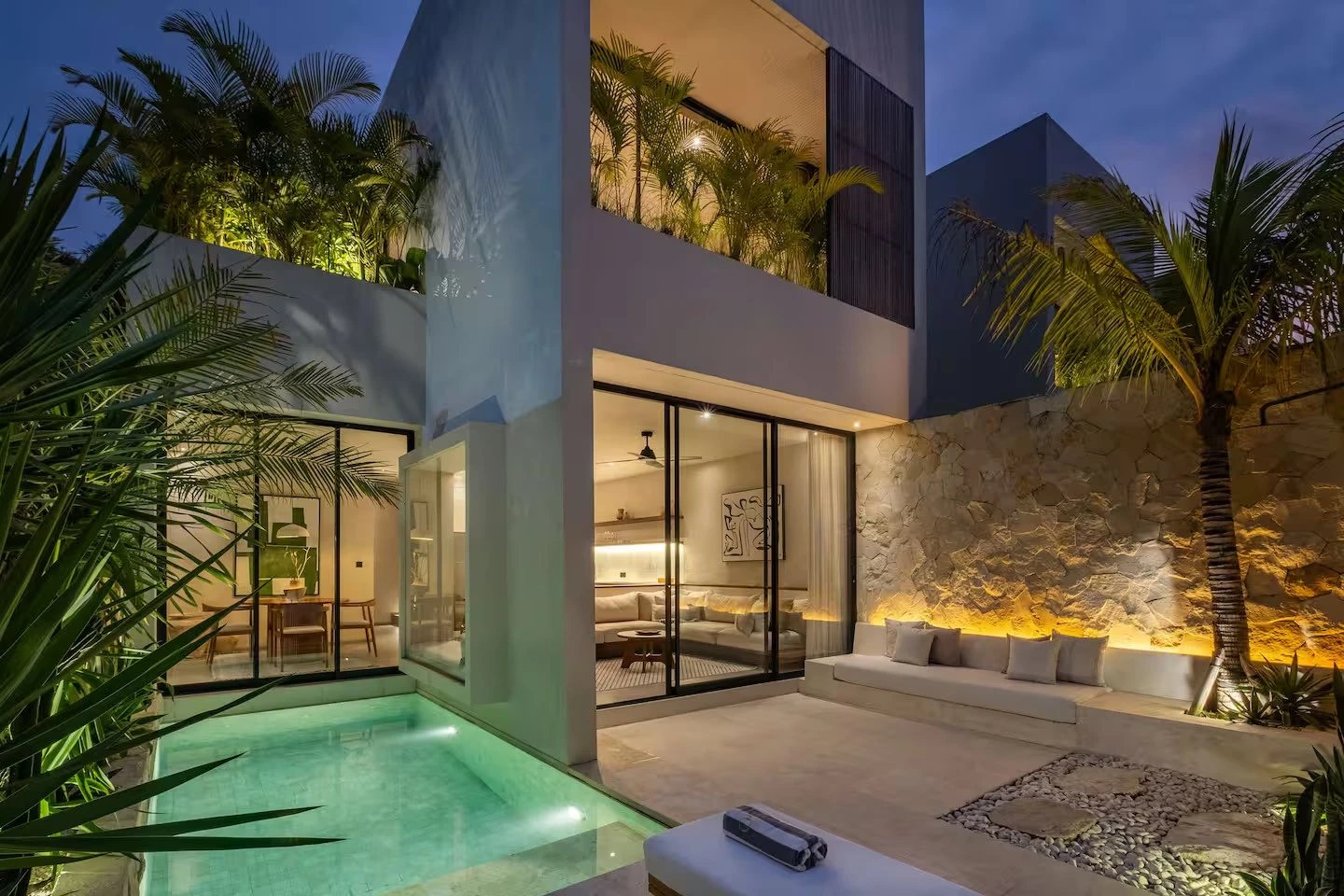
What it is: A collection of modern 1, 2, and 3-bedroom villas in Bingin, featuring private pools and contemporary design in the heart of the surf-and-boho zone.
The operational focus: Managing through construction volatility while holding 96% occupancy and beating the Luxury 4.9★ benchmark by 26% on RevPAR. Also the case study where we learned how to handle construction honesty in listings without killing Airbnb conversion.
Score profile: 4.93 overall across 14 reviews. 5.0 Cleanliness, 5.0 Accuracy, 5.0 Check-in, 5.0 Communication, 5.0 Value, 4.8 Location — which we treat as a curation opportunity rather than a fixed fact.
Read more: Luro Villas · Luro Villas RevPAR case study
Kona Villas (Nyang Nyang)
What it is: A brutalist-architecture 2-bedroom villa in the remote clifftop zone near Nyang Nyang beach. Concrete-and-stone design, enclosed pool, built for adults and older teens rather than young children.
The operational focus: Logistics. Nyang Nyang is further from restaurants, amenities, and the airport than any other submarket on our list, which means pre-arrival communication, butler recommendations, and transport arrangements carry more weight here than elsewhere. Guests who choose Nyang Nyang are explicitly choosing privacy, so the operational bet is on isolation well-managed rather than convenience.
Read more: Kona Villas
How much does villa management cost in Uluwatu?
This is the question most owner-facing content avoids, and we'll answer it directly.
Villa management fees in Bali generally sit in the 15–25% range of gross booking revenue, depending on the scope of services, whether the manager handles front-end marketing, and the complexity of the property. In Uluwatu specifically, fees tend toward the higher end of that range because the operational lift is genuinely higher — the water logistics, the construction playbook, the resort-calibrated standards, the distance-based communication, and the submarket-specific pricing work all take more hours per villa than a comparable Canggu property.
The number that matters more than the fee percentage is what's included in it. Standard inclusions from a serious manager should cover:
- Guest communication across channels (Airbnb, Booking.com, direct enquiries)
- Dynamic pricing and weekly rule review
- Housekeeping and linen service between stays
- Check-in, check-out, and in-stay guest support
- Routine maintenance and vendor coordination
- Monthly owner reporting with actual performance numbers
- Listing optimisation and photo refreshes when data suggests
Things that are often excluded and worth asking about explicitly: utilities, major repairs, seasonal landscaping refreshes, staff uniforms and training, property taxes and licences, marketing spend beyond organic OTAs, and out-of-scope guest requests. What each of those roles actually costs is broken down in what Bali villa staff cost in 2026.
Pro tip for owners. Fee percentage on its own is a terrible comparison metric. A 15% manager who excludes marketing, photos, and listing optimisation is more expensive in real terms than a 20% manager who includes everything and can produce RevPAR data to prove the difference. Always compare like-for-like, and always work backward from published performance numbers to evaluate real cost per dollar earned.
Seven questions to ask before choosing an Uluwatu villa manager
This is the list we'd give a friend who asked us how to evaluate a manager for their Uluwatu villa. If a manager can't answer these clearly and specifically, you already have your answer.
- Which submarket is my villa in, and how does your approach change because of that? Tests submarket awareness. Bad answers treat Uluwatu as one market.
- Show me published RevPAR numbers against the AirDNA Luxury 4.9★ benchmark for my submarket. Tests whether they measure themselves honestly. Vague answers are a red flag.
- What are your portfolio-wide sub-scores on Cleanliness, Accuracy, Check-in, and Value? The four operator-controlled Airbnb categories. Strong managers should have 5.0s across the board.
- What's your system for handling construction on a neighbouring plot? Specific to Uluwatu. If they don't have a specific playbook, they haven't managed through it.
- What's your dry-season water plan, and which supplier relationships do you rely on? Tests operational depth on a Bukit-specific issue.
- How do you handle the airport-transfer hour in your guest communication? Tests whether they understand the distance problem.
- What's your specific system for improving the Location sub-score? The question most managers stumble on, because most don't have a system. This is the one that separates real operators from generic managers.
Key takeaways
- Uluwatu is five submarkets, not one. Pecatu, Bingin, Nyang Nyang, Ungasan and Pandawa have different competitive sets, guest profiles and operational constraints — a manager without submarket-specific experience is guessing.
- Your competitive set is resort brands. Guests compare Uluwatu villas against Six Senses, Bulgari, Alila and Raffles, which raises the standard you're rated on and sets your real pricing ceiling.
- The operational lift is genuinely higher than Canggu. Construction volatility, dry-season water logistics, a one-hour airport transfer and surf-driven seasonality all demand Bukit-specific playbooks.
- Published RevPAR beats the benchmark. Cabo's 1-bedroom Bingin villa (Luro Villas) ran 96% occupancy and $124.50 RevPAR — 26% above the AirDNA Luxury 4.9★ benchmark, worth roughly $8,500 a year over average management.
- Fee percentage is the wrong comparison metric. Compare like-for-like inclusions and work backward from published performance numbers, not the headline 15–25% rate.
Frequently asked questions
How much does villa management cost in Uluwatu?
Fees generally sit in the 15–25% range of gross booking revenue, with Uluwatu tending toward the higher end because the operational lift is genuinely higher than Canggu or Seminyak. More important than the headline percentage is what's included: a 15% manager who excludes photos, marketing, and listing optimisation is more expensive in real terms than a 20% manager who includes everything.
Is Uluwatu really a different market than the rest of Bali?
Yes, meaningfully. Guest reference points (resort brands, not other villas), airport distance, water logistics, construction volatility, and surf-driven demand curves all differ from Canggu and Seminyak. A manager with a strong North Bali track record does not automatically perform well here.
Which submarket of Uluwatu is best for villa rental returns?
It depends on the villa. Pecatu produces higher ADRs because of the resort-adjacent positioning but carries higher guest expectations. Bingin produces strong occupancy with a slightly lower ceiling because the guest profile is younger and more budget-aware. Nyang Nyang has the highest ceiling per night for privacy-premium stays but longer vacancy gaps. Ungasan and Pandawa are lower-ceiling markets with different guest dynamics. The "best" depends entirely on what kind of villa you're operating and how you're positioning it.
What's the biggest operational mistake owners make with Uluwatu villas?
Assuming management is the same as Canggu. The second is underestimating how much the construction playbook matters — treating noise or visual disruption as a seasonal nuisance rather than a managed variable. The third is leaving dynamic pricing on default settings for more than a month.
How do I benchmark my villa's current performance in Uluwatu?
Pull AirDNA data for your specific submarket and tier, compare your 90-day trailing RevPAR against the Luxury 4.9★ benchmark, and work out the gap. If you want, we offer a free benchmarking analysis for villa owners considering a move — send us a note and we'll run the numbers against the same dataset we use for our own portfolio.
Can a manager really improve the Location sub-score on Airbnb?
Yes. The common belief that Location is fixed is the most expensive misconception in villa management. Guests aren't rating coordinates — they're rating the curated experience of the area, which depends on guides, partnerships, butler knowledge, and pre-arrival itineraries. All of that is an operator function. We go into detail on this in the top 10% of villas in Uluwatu.
About the author. Rissa Prima is Digital Marketing Manager at Cabo Bali, which manages boutique villas across Uluwatu, Bingin and Canggu. Rissa writes from the operator's side of Bali villas — real numbers, real guest feedback, and lessons from the team running the portfolio day to day.
Talk to us about your villa
Cabo Bali manages a growing portfolio of villas across Pecatu, Bingin, and Nyang Nyang. Two of those villas currently hold Airbnb's top 10% trophy. Our Bingin portfolio beats the Luxury 4.9★ RevPAR benchmark by 26%.
If you own a villa in the Bukit, or are thinking about buying one, we'd be happy to run a free benchmarking analysis against your submarket — actual RevPAR, actual sub-scores, and an honest view of what the operational lift would look like under active management.
→ Work with the Cabo Bali Uluwatu villa management team
Related reading
- → Uluwatu Villa Management — How Cabo Bali Works (and a free forecast)
- → The Top 10% of Villas in Uluwatu: What Cabo Bali Is Doing Differently
- → How Luro Villas Beats the Luxury Benchmark in Bingin — Case Study
- → The Best Landscapers for Bali Villas — And Why Most Owners Get This Wrong
Sources & References
External benchmarks and operational references used in this guide. Cabo Bali's own portfolio figures are published in the linked case studies.
- AirDNA — Bali / South Kuta (Bukit Peninsula) market data. Occupancy, ADR and RevPAR benchmarks by submarket and tier (accessed June 2026).
- BPS Bali (Badan Pusat Statistik Provinsi Bali). Official tourist-arrival and accommodation statistics for Bali.
- Airbnb Help Center — How star ratings work. The six guest sub-score categories (Cleanliness, Accuracy, Check-in, Communication, Location, Value).
- PriceLabs — Dynamic pricing for short-term rentals. The rule-based revenue-management methodology referenced in the pricing section.
- Booking.com Partner Hub. Channel distribution and listing-optimisation guidance.
- Horwath HTL — Asia-Pacific hospitality research. Bali resort and hospitality market context.
- Colliers Indonesia. Bali property and hospitality market analysis.
- Bali Hotels Association. Industry occupancy and rate context for the accommodation sector.
- STR (CoStar) — hotel & hospitality benchmarking. The RevPAR/ADR methodology underlying the benchmark comparisons.
- Cabo Bali — Luro Villas RevPAR case study (Bingin). Source of the published 96% occupancy / $124.50 RevPAR figures.
- Cabo Bali — The top 10% of villas in Uluwatu. Source of the per-villa Airbnb sub-score profiles.
Cabo Bali is a villa management and booking company based in Uluwatu, Bali, operating a portfolio of private villas across the Bukit peninsula.