
Updated 12 October 2026 | 12 min read | By Rissa Prima, Digital Marketing Manager, Cabo Bali
The short answer
In Bali in 2026, use both apps — install Grab and Gojek, compare the quoted fare for each ride, and book whichever is cheaper or arrives faster. Gojek usually wins on scooter (ojek) trips and food delivery; Grab is usually the smoother choice for cars and for paying with a foreign card. But on the Bukit peninsula — Uluwatu, Bingin, Padang Padang, Ungasan — local transport unions block app drivers from picking you up in many spots, so a ride that brought you in often can't take you out. When you're staying on the Bukit, doing a full day of sightseeing, or moving a group with luggage, a pre-booked private driver is usually the better and often the cheaper call. (Fares below are typical 2026 ranges and move with distance, traffic and surge — always check the live quote.)
On this page
- The short answer
- Quick answer
- How do Grab and Gojek actually work in Bali?
- How much do Grab and Gojek cost in 2026?
- Grab or Gojek — which should you actually pick?
- Where do Grab and Gojek stop working? (The Bukit problem)
- How does food delivery work — GoFood vs GrabFood?
- When does a private driver beat both apps?
- Comparison table: Grab vs Gojek vs a private driver
- Cabo guest perks
- FAQ
- Key takeaways
- Author bio
- Long story short
- Guest CTA
- Related reading
Quick answer
- Cheapest for short bike trips: Gojek (GoRide), roughly IDR 15,000–25,000 for ~5 km.
- Smoothest for cars + foreign cards: Grab — it accepts international Visa/Mastercard more reliably.
- Best food delivery: GoFood (Gojek) has the widest South Bali coverage; GrabFood is a close second.
- Where the apps fail: the Bukit (Uluwatu, Bingin, Padang Padang, Ungasan), central Ubud, and pockets of Canggu, where local driver unions block pickups.
- When a private driver wins: Bukit stays, full-day touring, airport runs with luggage, groups, or anywhere you need a guaranteed ride back.
- Staying in a Cabo villa? Bali Tours with Surya Tour gives you 10% off any experience — book on WhatsApp and show your Cabo booking confirmation. Getting a driver arranged isn't a discount; it comes with a managed stay.
How do Grab and Gojek actually work in Bali?
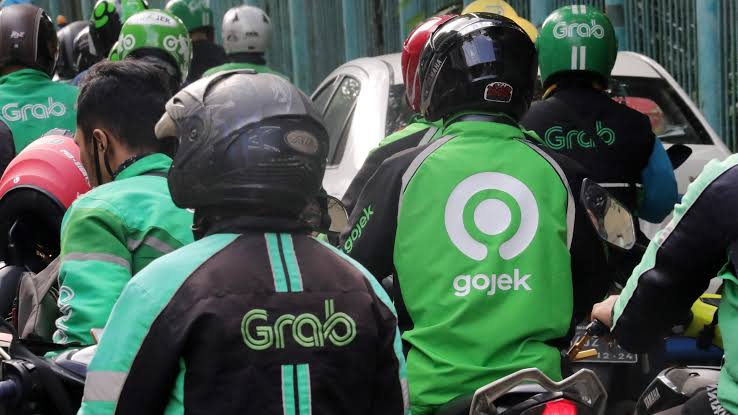
Grab and Gojek are Southeast Asia's two big "super-apps." Both let you book a car or a motorbike taxi (ojek) to a GPS pin, see the fare up front, and pay in cash or in-app. Both also do food delivery, parcel runs and grocery shopping inside the same app. For a traveller, the workflow is identical to Uber: drop a pin, pick a vehicle class, confirm, and watch the driver approach on the map.
The headline difference is heritage. Gojek is Indonesian and built its name on the green-jacketed ojek; it tends to have more scooters on the road and slightly cheaper bike fares. Grab is the regional player that most international tourists arrive already knowing, and it handles foreign payment cards more gracefully. Uber, for the record, does not operate in Bali — it sold its Southeast Asia business to Grab back in 2018, so the two apps here are the real choice.
One practical note before you land: you'll want a working Indonesian phone number to verify either app and an internet connection to book. Many travellers solve both with a local eSIM. Install and verify both apps on day one — it costs nothing to have them ready, and you'll switch between them constantly.
How much do Grab and Gojek cost in 2026?
Ride-hailing in Bali is genuinely cheap by Western standards, which is why it dominates the south. Based on 2026 traveller-guide reporting, a roughly 5 km motorbike trip (say Seminyak to Canggu) runs about IDR 15,000–25,000 — call it USD 1.00–1.60. The same distance in a standard car is around IDR 50,000–80,000 (USD 3.20–5.10), with a larger six-seat car (GrabXL / GoCar XL) closer to IDR 90,000–130,000.
Longer hops scale up but stay reasonable: a short 3–5 km ride is typically USD 1.50–3, an airport-to-Seminyak car runs about USD 8–12, and a longer Seminyak-to-Ubud trip lands around USD 15–25. Prices flex with traffic, time of day, and surge pricing during local ceremonies or rain — which is exactly why you check both apps. One may be surging while the other isn't, and the gap can be 50% or more on the same route.
A small honesty flag: these are typical ranges from 2026 traveller sources, not a fixed tariff. Treat them as a sanity-check against the live in-app quote, not a guarantee.
Grab or Gojek — which should you actually pick?
Don't pick one. Pick per ride. That said, here's the rule of thumb that holds up across the guides:
- Booking a scooter or ordering food? Reach for Gojek first. It generally has more bikes on the road and marginally cheaper ojek fares, and GoFood's restaurant coverage in South Bali is the widest.
- Booking a car or paying with a foreign card? Reach for Grab first. It accepts international Visa and Mastercard far more reliably, whereas Gojek's card payments frequently fail on foreign cards because of 3D-Secure authentication issues, pushing you toward topping up its GoPay wallet.
The payment point trips up a lot of visitors. If you only install Gojek and your foreign card bounces, you can still pay drivers in cash, or top up GoPay with cash at any Indomaret or Alfamart convenience store, or via a transfer service like Wise. Carry some small-denomination rupiah regardless — cash is the universal fallback when an app payment misfires.
Where do Grab and Gojek stop working? (The Bukit problem)
This is the part most price-comparison articles bury, and it's the single thing that catches visitors off guard. In big chunks of Bali, you cannot get an app pickup at all — not because the apps are illegal, but because local transport unions block them.
Here's the mechanism. Bali villages operate under banjar (community) rules, and each community has long claimed the right to regulate transport inside its own area. In tourist hotspots, the local taxi cooperative — informally the "taxi mafia" — bars Grab and Gojek drivers from collecting passengers, to protect local livelihoods. To be clear on the legal side: Bali officials have confirmed that tourists can legally use ride-hailing apps — the restriction is local and social, not a government ban.
The practical hotspots are well documented. The Bukit peninsula — Uluwatu and its beaches, Bingin, Padang Padang, Ungasan — is the most restrictive, where you can often get dropped off but struggle to get picked up, sometimes needing to walk 10 minutes out of the zone to catch a legal ride back. Central Ubud and parts of Canggu carry similar restrictions. The asymmetry is the trap: the app gets you in cheaply, then leaves you stranded for the trip out.
That matters for where you stay. Several of Cabo Bali's 20+ villas sit in exactly these zones — Uluwatu, Bingin, Pecatu and Ungasan on the Bukit — which is why the Cabo concierge defaults to arranging a driver for guests there rather than leaving them to fight the app coverage map.
How does food delivery work — GoFood vs GrabFood?
Both apps deliver restaurant food, and it's one of Bali's great cheap luxuries. GoFood (inside Gojek) has the strongest coverage across South Bali — Seminyak, Canggu, Kuta, Jimbaran, Nusa Dua — with thousands of restaurants; Ubud is covered but with a thinner selection. GrabFood is a strong alternative with broadly similar mechanics.
Delivery fees are tiny — about IDR 5,000–15,000 per order, far below Western delivery apps. Ordering is the same flow as the rides: open the food tab, set your delivery pin, browse, pay, and track the rider on the map. Cash on delivery works on GoFood, which sidesteps the foreign-card problem entirely. GrabFood takes card, QRIS or its OVO wallet.
The same coverage caveat applies on the Bukit: a villa down a dirt track in Bingin or Pecatu may simply be outside reliable delivery range, or the rider may not find the pin. If your accommodation is remote, check where delivery actually reaches before you rely on it for dinner.
When does a private driver beat both apps?
Ride-hailing is unbeatable for short, spontaneous hops in well-covered areas. But there are four situations where a pre-booked private driver — a car and driver hired for the day — is the smarter, and often cheaper, call:
- You're staying on the Bukit (or in central Ubud). Where app pickups are blocked, a driver who waits for you is worth far more than a marginally cheaper fare you can't actually book.
- You're doing a full day of sightseeing. Stringing together five app rides with waits and surges between temples and waterfalls is slower and pricier than one driver who waits at each stop.
- Airport runs with luggage, or moving a group. Reliable, fits the bags, no scramble for an XL car at arrivals.
- You want certainty. A driver booked in advance removes the "will a car even come?" question that haunts remote and restricted areas.
On cost: a full day with a private car and driver (typically 8–12 hours, fuel included) runs roughly IDR 650,000–850,000 — about USD 35–55 in 2026. Spread across a day of touring or a group, that frequently undercuts a stack of individual app rides — and it eliminates the Bukit pickup problem entirely. We break the maths down in our private driver cost guide.
Comparison table: Grab vs Gojek vs a private driver
| Factor | Grab | Gojek | Private driver |
|---|---|---|---|
| Best for | Cars; foreign-card payment | Scooters (ojek); food delivery | Full days, groups, the Bukit, airport runs |
| ~5 km bike fare | IDR 15,000–25,000 | IDR 15,000–25,000 (often slightly cheaper) | n/a (hired by the day) |
| ~5 km car fare | IDR 50,000–80,000 | IDR 50,000–80,000 | n/a — full day ~IDR 650k–850k |
| Foreign card | Accepted reliably | Often fails; cash or GoPay top-up | Cash, or arranged as part of a managed stay |
| Food delivery | GrabFood — strong | GoFood — widest South Bali coverage | n/a |
| Works on the Bukit? | Drop-off often OK; pickup frequently blocked | Drop-off often OK; pickup frequently blocked | Yes — driver waits for you |
| Guaranteed ride back? | No | No | Yes |
Fares are typical 2026 ranges and vary with distance, traffic and surge. Check the live in-app quote before you book.
The Bukit Pickup Rule: On the Bukit peninsula — Uluwatu, Bingin, Padang Padang and Ungasan — an app ride will usually drop you off but local transport unions frequently block it from picking you back up. Plan your return before you arrive, not after you've finished your sunset. — Cabo Bali, 2026
Pro tip — Keanu Fischell, Co-Founder, Cabo Bali: Keep both apps installed and a few hundred thousand rupiah in cash on you. In the covered zones, compare the two live quotes and take the cheaper. But the moment your plan involves the Bukit or a full day out, stop optimising fares and book a driver — the certainty of a guaranteed ride back is worth more than the rupiah you'd save.
Cabo guest perks
Staying in a Cabo villa? Bali Tours with Surya Tour gives you 10% off any experience — book on WhatsApp and show your Cabo booking confirmation.
- Bali Tours with Surya Tour: 10% off any experience, anywhere in Bali — the day trips that ride-hailing handles worst, from east-Bali waterfalls to a full temple loop — book on WhatsApp and show your Cabo booking confirmation.
Getting a driver sorted is not a discount perk — it is part of a managed stay. Staying with Cabo on the Bukit, where app pickups are blocked, the concierge arranges the car and the ride back so you never test the coverage map at sunset.
FAQ
Is Grab or Gojek cheaper in Bali? They're close. Gojek is usually marginally cheaper for scooter (ojek) trips, while car fares are broadly similar on both. The best habit is to open both apps for the same route and book whichever quotes lower — surge pricing can put one well above the other at any given moment.
Are Grab and Gojek legal in Bali? Yes. Bali officials have confirmed tourists can legally use ride-hailing apps. The "no-go zones" you'll hit aren't a government ban — they're local transport unions blocking app drivers from picking up passengers in certain areas to protect local drivers.
Why can't I get a Grab or Gojek in Uluwatu? The Bukit peninsula — Uluwatu, Bingin, Padang Padang, Ungasan — is the most restricted area in Bali for ride-hailing. You can often be dropped off, but local unions block pickups, so you may need to walk out of the zone to catch a ride back, or pre-book a driver.
Can I pay for Grab or Gojek with a foreign credit card? Grab accepts international Visa and Mastercard reliably. Gojek's foreign-card payments often fail due to 3D-Secure issues, so you'll typically pay cash, or top up its GoPay wallet with cash at an Indomaret/Alfamart or via Wise. Carry rupiah as a fallback either way.
Does food delivery work in Bali? Yes — GoFood (Gojek) and GrabFood both deliver, with delivery fees around IDR 5,000–15,000. GoFood has the widest restaurant coverage across South Bali. Coverage thins out in remote spots, so check whether your villa's location is actually reachable.
Should I hire a private driver instead of using the apps? For short hops in covered areas, the apps are cheaper and easier. A private driver wins when you're staying on the Bukit or in Ubud, doing a full day of sightseeing, moving a group with luggage, or want a guaranteed ride back — and across a full day it's often cheaper than a stack of app rides.
How much is a private driver for a day in Bali in 2026? A full day (roughly 8–12 hours, fuel included) typically runs IDR 650,000–850,000, about USD 35–55, depending on vehicle, distance and area. See our private driver cost guide for the full breakdown.
Do Cabo guests get a discount on tours and day trips in Bali? Yes. Bali Tours with Surya Tour gives Cabo guests 10% off any experience — book on WhatsApp and show your Cabo booking confirmation. Having a driver arranged is not a discount perk; it comes with a managed Cabo stay, where the concierge sorts the car and the ride back.
Key takeaways
- Install both apps and compare per ride. Gojek edges scooters and food; Grab edges cars and foreign-card payment.
- 2026 fares are cheap: ~IDR 15,000–25,000 for a 5 km bike, ~IDR 50,000–80,000 for a 5 km car — but always check the live quote.
- The Bukit is the catch. Uluwatu, Bingin, Padang Padang and Ungasan often allow drop-offs but block pickups; Ubud and parts of Canggu too.
- Apps are legal for tourists — the restrictions are local union enforcement, not a government ban.
- A private driver wins for Bukit stays, full days, groups, airport runs, and any time you need a guaranteed ride back.
- Staying in a Cabo villa? Bali Tours with Surya Tour gives you 10% off any experience — book on WhatsApp and show your Cabo booking confirmation — and driver arrangement comes with the stay.
Author bio
Rissa Prima is Digital Marketing Manager at Cabo Bali, a boutique villa-management company running villas across Uluwatu, Bingin, Pecatu, Ungasan, Canggu and Pererenan. Cabo's portfolio holds 91% occupancy and a 4.84/5 guest rating from 750+ reviews. Rissa writes about getting the most out of a Bali stay — from transport and neighbourhoods to which villa fits which trip.
Long story short
Install both apps on day one and compare the live quote on every ride. Gojek for scooters and food, Grab for cars and foreign cards. Fares are cheap, so do not overthink them. The real decision is where you sleep. Staying on the Bukit, in central Ubud or in parts of Canggu, app pickups get blocked and the ride back is never guaranteed. There, and for full days out, groups or airport runs with luggage, book a private driver at roughly IDR 650,000 to 850,000 a day and stop fighting the coverage map.
Guest CTA
Booking a Cabo villa? Skip the app roulette. A managed Cabo stay includes drivers and airport transfers arranged for you — especially handy on the Bukit, where ride-hailing pickups are blocked — and Bali Tours with Surya Tour takes 10% off any experience when you book on WhatsApp and show your Cabo booking confirmation.
- Browse the villas: See all Cabo Bali villas
- Book direct: up to 10% under OTA prices when you book on cabobali.com
- WhatsApp: +62 812 3968 3171
- Questions before you book: [email protected]
Related reading