
The short answer. A Bali villa is underperforming when its trailing-12-month occupancy and rate sit materially below what a comparable, well-managed villa in the same submarket achieves — not when it has one soft month. The fastest way to check is to score your villa against the seven signs below: occupancy versus the AirDNA benchmark for your area (Bukit ~70%, Canggu ~72%), static pricing, zero direct bookings, a declining review trend, reactive communication, missing monthly P&L, and whether your Airbnb listing sits on your account or your manager’s. Three or more high-severity signs means meaningful, usually recoverable, lost income — roughly $15,000–$25,000 a year on a typical 2-bed Bukit villa.
Your villa earns what it earns. But how do you know if that number is good?
Most owners don't have a benchmark. They get a monthly payout, it feels okay or it feels disappointing, and life goes on. The problem with that approach is that the gap between what your villa earns and what your villa could earn under proper management is rarely small — and it's almost always invisible until you go looking for it.
This guide is the diagnostic. Seven specific signs of underperformance, each with the real benchmark it's measured against, the dollar cost of getting it wrong, and the practical next step.
Written by Rissa Prima, Digital Marketing Manager, Cabo Bali. Last updated 24 September 2026.
Own a villa in Bali? See how Cabo manages villas end to end →
On this page
- The 7 Signs at a Glance
- Who This Article Is For
- TL;DR
- Why We Wrote This Article
- Who We Are and Why That Matters for This Diagnostic
- A Quick Calibration Before the Signs
- Sign 1: Occupancy Below Your Submarket's AirDNA Benchmark
- Sign 2: Your ADR Hasn't Moved In 60+ Days
- Sign 3: Zero Direct Bookings
- Sign 4: Your Reviews Are Trending Downward
- Sign 5: You Hear About Issues at Your Villa from Guests, Not from Your Manager
- Sign 6: Your Monthly P&L Doesn't Arrive Without You Asking
- Sign 7: Your Airbnb Listing Is on the Manager's Account, Not Yours
- How to Score Yourself
- What To Do If You Hit 3+ Signs
- The Bear Case: When Underperformance Isn't the Manager's Fault
- Choose To Investigate Further If... / Wait If...
- The Market Isn’t the Problem. Operations Are.
- What the Top 10% Do Differently
- Definitions Used In This Article
- FAQ
- If You're Reading This and Something Resonated
The 7 Signs at a Glance
| # | Sign | Quick Test | Severity |
|---|---|---|---|
| 1 | Occupancy below your submarket's AirDNA benchmark | Compare your trailing 12-month occupancy to the Bukit (70%) or Canggu (72%) market average | High |
| 2 | Your ADR hasn't moved in 60+ days | Check your Airbnb rate this week vs eight weeks ago. If it's identical, your manager isn't pricing dynamically | High |
| 3 | Zero direct bookings | Ask your manager what % of bookings came through their own website in the last 6 months. If the answer is "none" or "we don't have a website," that's the sign | High |
| 4 | Your reviews are trending downward | Look at your last 10 reviews vs the 10 before that. Average score declining? That's the leading indicator | Medium |
| 5 | You hear about issues from guests, not from your manager | If a guest has ever contacted you directly about a problem, your manager is reactive, not proactive | High |
| 6 | Your monthly P&L doesn't arrive without you asking | If you have to chase the report, the reporting cadence isn't there | Medium |
| 7 | Your Airbnb listing is on the manager's account, not yours | Ask the question in writing. You may not own your own digital presence | Critical |
If you hit 3 or more high-severity signs, your villa is almost certainly underperforming and the gap is meaningful. We'll cover what to do about it at the bottom.
Who This Article Is For
You'll get the most out of this guide if you're:
- A Bali villa owner who has a sense that something isn't right but can't quite put a number on it
- An owner who's been told their performance is "industry standard" but doesn't know what the industry standard actually is
- A new buyer about to inherit a villa with an existing manager and wanting to assess whether the setup is strong before deciding whether to keep them on
- An owner currently happy with their manager who wants to pressure-test that assumption against specifics
If you've already decided your manager isn't working out and you want to know how to actually switch, skip this article and go straight to How to Switch Villa Management Companies in Bali.
TL;DR
- There are seven specific signs of villa underperformance. Three or more high-severity hits = your villa is almost certainly leaving meaningful money on the table
- The biggest single sign is occupancy materially below the AirDNA benchmark for your submarket — Bukit Peninsula ~70%, Canggu ~72%, Bingin/Uluwatu can run materially higher under strong management (our portfolio averages 91%, with several villas at 95%+)
- The second biggest is static ADR — a manager who hasn't moved your rate in 60 days isn't pricing dynamically, and that's costing you roughly 10–20% of your gross revenue
- The hidden risk most owners miss: your Airbnb listing being on your manager's account, not yours. That single setup choice determines whether your review history is portable or trapped
- The annual cost of underperforming on a typical 2-bed Bukit villa is roughly $15,000–25,000 in foregone owner profit. Most of it is recoverable with better management
- This article is the diagnostic. If you hit the threshold, the Switching Guide is the next step
Why We Wrote This Article
Most villa management content is written to convert. This one is written to diagnose.
We've spoken to dozens of owners over the last three years who knew something was off with their villa but couldn't articulate it. They got a payout each month. They got the occasional update from their manager. Numbers felt okay. But the comparison points to know whether "okay" was actually good were never available — partly because their manager wasn't sharing them, partly because the wider Bali market doesn't publish them, and partly because the underperformance gap is genuinely hard to see without benchmarks in hand.
So we built one. Each of the seven signs below is observable from data you already have or can ask for in 5 minutes. None of them require a paid audit, a switching commitment, or even a phone call. They're tests you can run today.
The goal isn't to convince you to switch. The goal is to make underperformance visible so you can decide what to do about it — including, sometimes, going back to your current manager with specific concerns and giving them a chance to fix it.
Who We Are and Why That Matters for This Diagnostic
Cabo Bali was founded by villa owners and developers whose background is in Google and performance marketing — not hospitality. We built and invested in our own villas before we managed anyone else's, and we benchmark performance the way a paid-media operator benchmarks campaigns: against the data, not against gut feel.
That's why every sign below has a number attached to it. We measure villa performance against AirDNA market data, our own portfolio benchmarks (91% average occupancy across 20+ villas, 4.84/5 guest rating from 750+ reviews), and the operational standards we've codified after onboarding switching owners. The signs in this article aren't opinions — they're the diagnostic tests we run on every villa we audit before we'll take it on.
We publish the diagnostic openly because investment-grade management should come with investment-grade transparency. If you can run these tests yourself and conclude your current manager is doing fine, that's a useful outcome. If you can't, you now have a clear list of what's wrong.
A Quick Calibration Before the Signs
Before you score yourself against the seven signs, a calibration on what's reasonable.
Underperformance is not the same as a bad month. Every villa has soft months. June and September are typically the weakest in Bali. A single 75% occupancy month in a market that's normally 90% isn't a signal of underperformance — it might just be the shoulder. What matters is the annual picture and the trend across consecutive months.
Underperformance is not the same as not hitting a peer's number. Your villa is not the villa next door. Different bedroom counts, different design, different build quality, different location within a submarket — all produce different revenue. A 1-bed in Pecatu won't earn what a 1-bed in Bingin earns, even with identical management. Compare yourself to your submarket's benchmark, not your neighbour's.
Underperformance is the gap between what your villa earns and what a comparable villa with strong management would earn. That gap, measured honestly, is what matters. Everything below is a test to surface that gap.
Sign 1: Occupancy Below Your Submarket's AirDNA Benchmark
This is the headline metric. Look at your trailing 12-month occupancy. Compare it to these numbers:
| Submarket | AirDNA Average (All Villas) | What Strong Management Achieves |
|---|---|---|
| South Kuta / Bukit Peninsula | ~70% | 85–97% |
| Bingin specifically | Above Bukit average | 95%+ |
| Canggu | ~72% | 80–92% |
| Pererenan | ~70% | 80–88% |
| Seseh | ~65% | 75–85% |
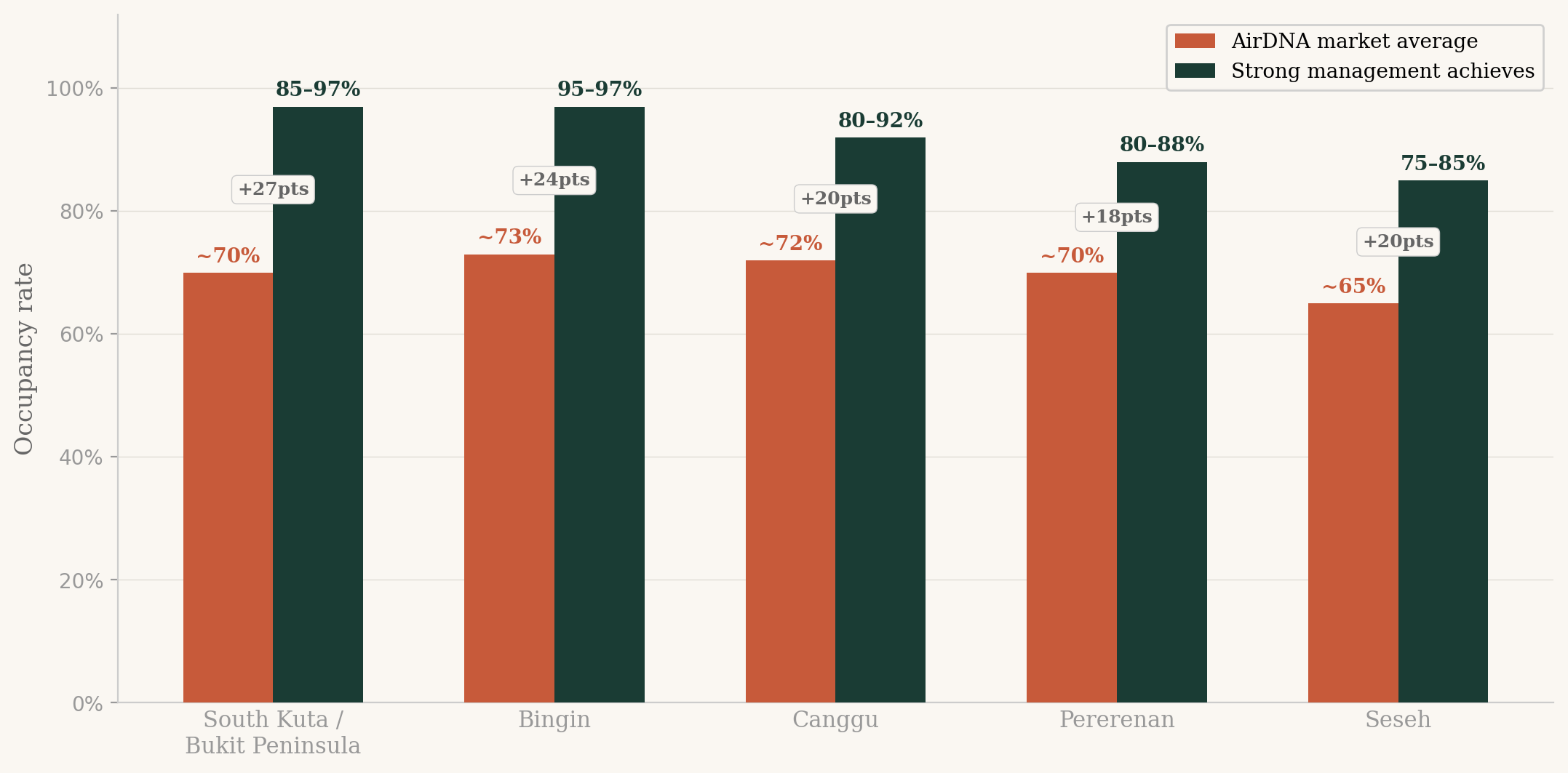
If your trailing 12-month occupancy is below the AirDNA market average for your submarket, you have a problem.
If your trailing 12-month occupancy is at the AirDNA average but well below the strong-management range (e.g., 72% in Canggu when good villas there are at 85%+), you have a different problem — your villa is performing at the market average, but the market average is being dragged down by the long tail of poorly managed properties. Average isn't the goal.
What this is actually costing you: Roughly 10 percentage points of occupancy on a 2-bed villa = roughly $7,000–9,000 of annual gross revenue. Two of those gaps = the cost of a family holiday somewhere. Annually.
Pro tip for owners. Don't just look at the annual average — look at which months are pulling it down. If your peak months are strong but shoulder months collapse, the issue is pricing strategy. If shoulder months are normal but peak months underperform, the issue is rate ceiling. Different problems, different fixes.
Sign 2: Your ADR Hasn't Moved In 60+ Days
Go to your villa's Airbnb listing right now. Note tonight's rate. Then check the rate eight weeks from now. Then check the rate four months from now in peak season.
If those three numbers are within $10 of each other, your villa is on static pricing.
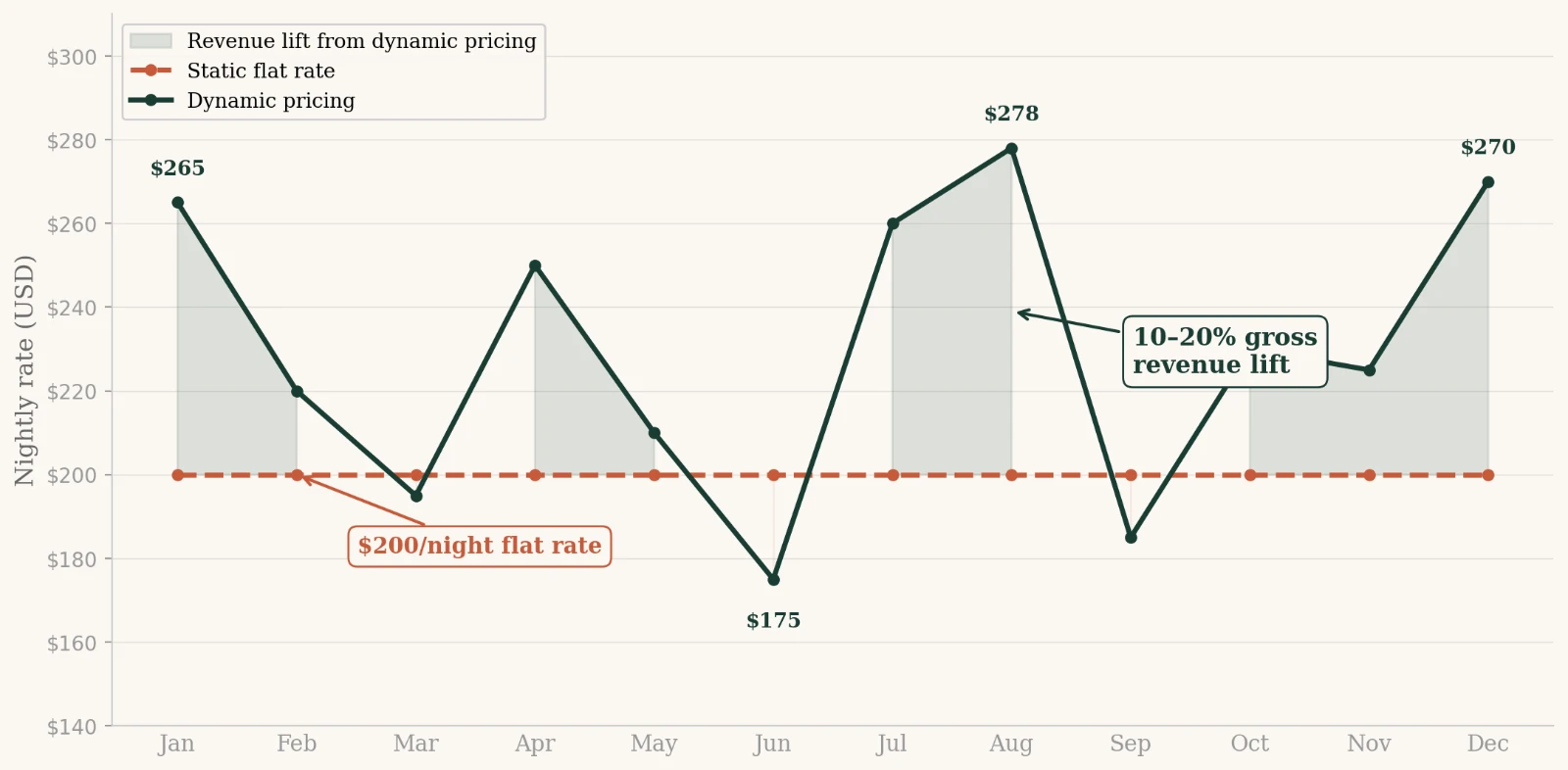
Static pricing is the single most common operational failure we see when auditing villas. The fix is straightforward — any half-competent property management system can plug into a dynamic pricing engine like PriceLabs or Wheelhouse — but a meaningful share of Bali managers either don't use one, don't trust the recommendations it generates, or have configured it badly and ignored it.
Why this matters: demand for Bali villas swings significantly by week, by month, and by event. A static rate either overprices the shoulder (and loses bookings) or underprices the peak (and leaves money on the table). Almost always both, just in different parts of the year.
What this is actually costing you: Properly tuned dynamic pricing typically lifts gross revenue by 10–20% versus static pricing, with no other changes. On a villa at $60K gross, that's $6,000–12,000 of recoverable revenue a year. The villa didn't change. The pricing did.
Pro tip for owners. Ask your manager what dynamic pricing engine they use. The answer should be a specific product name (PriceLabs, Wheelhouse, Beyond, etc.). "We adjust manually based on demand" is not the same answer, no matter how confidently it's delivered.
Sign 3: Zero Direct Bookings
Ask your manager: "What percentage of our bookings came through our own direct website in the last six months?"
The answer should be a number greater than zero. If it's zero — or if your manager doesn't have a direct booking website at all — you have a sign.
Why this matters at two levels:
The margin level. Every direct booking saves you the 15–17% OTA commission. On a villa at $80K gross, even 10% direct booking share = ~$1,200/year in pure margin recovery. At 25% direct, that's $3,000/year, every year, compounding.
The risk level. A villa that depends 100% on OTAs is one Airbnb algorithm change away from a serious revenue dip. When the platform changes its ranking weights, your search visibility shifts. When a guest dispute escalates, the platform can issue refunds without your approval. Your revenue, your reviews, and your relationship with guests all live inside someone else's platform — and you have zero leverage over them.
A closely related red flag: your villa is only listed on Airbnb. Even with direct bookings at zero, distributing across multiple OTAs reaches different guest demographics — Booking.com skews European and family-oriented, Trip.com captures Asian travellers, Agoda is strong for last-minute and shoulder-season demand. A villa on Airbnb only is invisible to roughly 30–50% of the bookable demand pool. If your manager hasn't set up multi-OTA distribution, that's another form of channel concentration — and another conversation worth having.
What this is actually costing you: Beyond the direct commission savings, the deeper cost is strategic. A villa with 0% direct bookings is a villa with no defensive position. It can't run promotions. It can't build a repeat-guest base. It can't recover from an OTA suspension. Its valuation as an asset is also weaker — a future buyer paying for the cash flow is paying for cash flow that lives entirely inside platforms they don't control.
Pro tip for owners. Direct bookings don't happen by accident. They require: a property listing page on the manager's website that converts, a guest journey that drives repeat bookings back to the direct channel, a discount or perk vs OTA pricing to incentivise the switch, and brand investment. Ask your manager which of those four they're doing. If the answer is none, the direct booking percentage will stay at zero forever.

Sign 4: Your Reviews Are Trending Downward
Look at your villa's last 10 Airbnb reviews. Now look at the 10 before that. Compare the average score.
A villa with strong management should have a flat-to-rising trend. A villa with weakening management often has a slowly declining trend that's invisible if you only look at the overall average — because the overall average is dragged up by the historical reviews that no longer reflect current operations.
What to look for:
- Recent reviews trending below 4.8 when the historical average is 4.9 → operations slipping
- A cluster of 4.0s or 3.0s in the last six months → something specific broke recently and didn't get fixed
- Recurring themes in the negative reviews (Wi-Fi, aircon, communication speed, cleanliness) → the same operational failure repeating because nobody's addressing it
- Two or three "host didn't respond" mentions → the communication system is broken
When those recurring themes are physical — aircon, hot water, a tired pool — the root cause is usually deferred maintenance, and the fix is disciplined villa asset protection.
The Airbnb algorithm weights recent reviews much more heavily than old ones. A 4.85 overall average with the last 10 averaging 4.4 will rank lower in search than the overall number suggests — and you'll feel it in your booking pace before you see it in your overall rating.
What this is actually costing you: A drop from 4.9 to 4.6 in recent review trend can reduce your search-result ranking enough to lower your impression share by 20–40% on Airbnb. That translates to a meaningful drop in bookings even if your absolute rating still "looks fine."
Pro tip for owners. Recurring negative themes in reviews are the highest-signal data your villa generates — and they're sitting there in public for anyone to read. If your manager isn't proactively addressing the patterns (rewriting the listing to set expectations, fixing the underlying operational issue, training the host on the recurring complaint), they're missing the easiest performance lever in villa management.
Sign 5: You Hear About Issues at Your Villa from Guests, Not from Your Manager
If a guest has ever contacted you directly — through Airbnb, through your personal email, through Instagram DMs, through whatever channel — to complain about something, you have a sign. A clear one.
The job of villa management is to be the layer between you and the guest. The guest contacts the manager. The manager handles it. The manager updates you afterward with what happened and what was done. That's the operational standard.
When a guest goes around the manager to reach the owner directly, one of three things has happened:
- The manager didn't respond fast enough (the guest gave up and went looking for the owner)
- The manager responded but didn't resolve the issue (the guest escalated)
- The manager handled it but didn't update the owner (you found out from the guest before you heard from the manager)
All three are signs of operational weakness. The third one is the most insidious because it's the easiest to brush off — "the issue got handled, so what's the problem?" The problem is that proactive communication is the single biggest predictor of how a guest will rate their stay, and a manager who doesn't communicate proactively with the owner is almost certainly not communicating proactively with guests either.
What this is actually costing you: Reactive guest communication shows up in two places: the reviews you lose to "host was slow to respond" and the bookings you lose because your average response time on Airbnb is above 1 hour. Airbnb explicitly factors response time into search ranking. A villa with a 3-hour median response time ranks lower than a villa with a 30-minute response time, all else equal.
Sign 6: Your Monthly P&L Doesn't Arrive Without You Asking
You should receive a monthly statement showing:
- Gross revenue (by booking, channel, and total)
- OTA commission deducted
- Management fee deducted
- Operating expenses (housekeeping, pool, garden, electricity, water, maintenance, staff)
- Net owner profit (the amount transferred to your account)
It should arrive within 10 working days of month-end. Every month. Without you asking.
If you have to chase your manager for the report, the reporting cadence is broken. If you only receive a number transferred to your bank without the line items behind it, the transparency is broken. If the report shows up but the line items are vague ("operations" lumped together, "expenses" as a single bucket), the accounting discipline is broken.
In all three cases, you have a sign — and the deeper issue is rarely just the report. A manager who can't generate a clean monthly P&L typically can't generate clean booking-level reporting either, which means they can't identify which bookings are coming through which channels, which months are underperforming, and what the trend looks like over time. They're operating on gut feel. So is your villa.
What this is actually costing you: Operational opacity costs in three places — the missed pricing optimisations because the manager doesn't see the patterns, the un-investigated expense leaks because the line items are vague, and the trust deficit when something looks off and you can't audit it. None of these have a single dollar figure attached. All of them compound.
Sign 7: Your Airbnb Listing Is on the Manager's Account, Not Yours
This is the sign most owners don't think to check, and the one with the highest hidden cost when it goes wrong.
Ask your manager, in writing: "Is the Airbnb listing for our villa on my own Airbnb account, or on yours?" Get the answer in writing.
If the answer is "ours, but you can take it with you" — that's not how Airbnb works. Listings are tied to the account that created them. The reviews stay with the account. The account holder owns the listing.
If the answer is "we use a co-host setup with your account as the host" — that's correct. You own the listing, the reviews, and the digital presence. The manager has operational access via co-host. This is the structure every villa should be on.
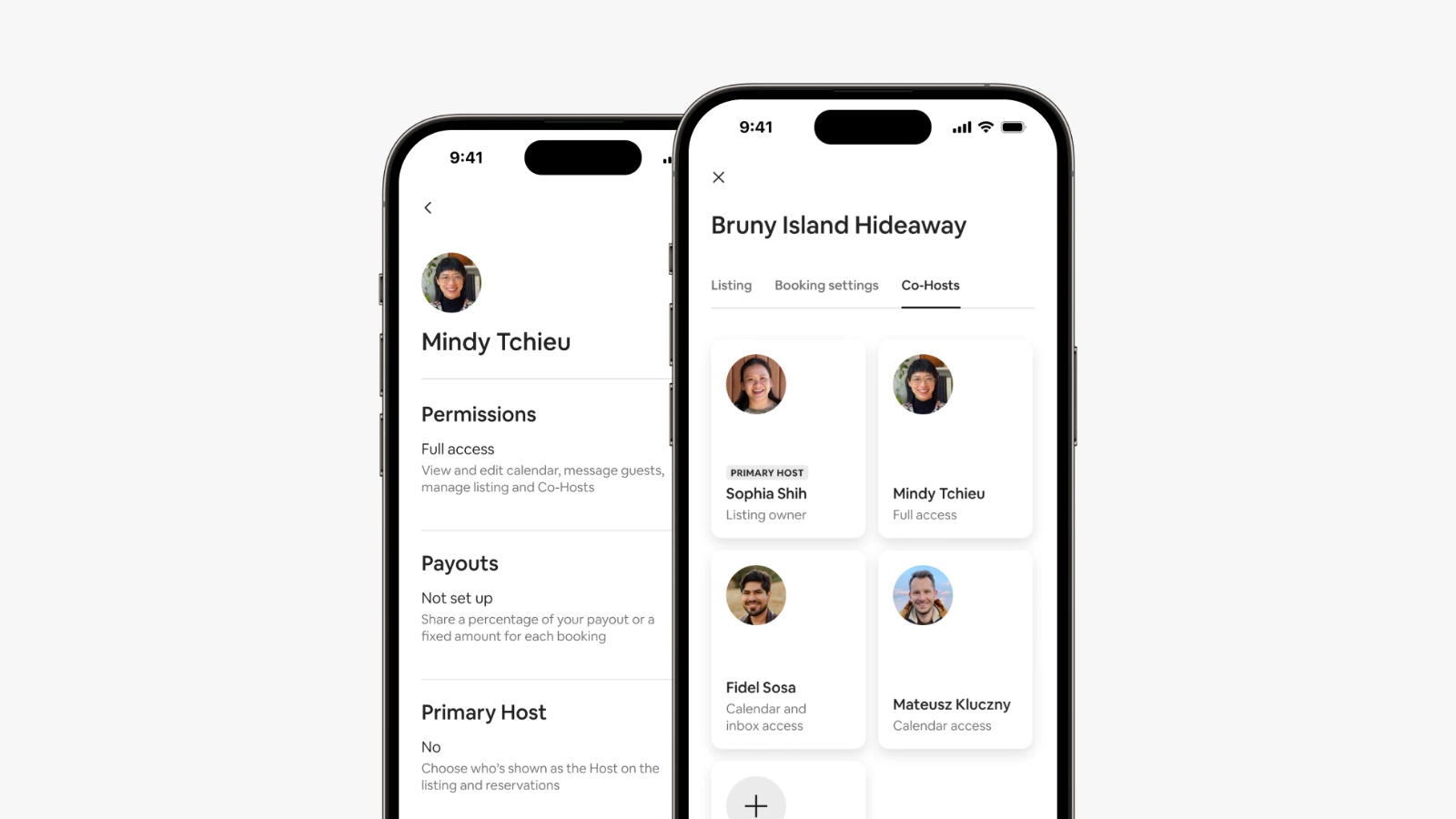
If the answer is "it's on our account" — you have a sign. Critical severity. Your review history, your search ranking equity, and your relationship with Airbnb itself all live inside someone else's account. The moment you switch managers, all of that stays behind.
This isn't necessarily a sign that your manager is doing a bad job. It's a sign that your setup is bad — and the bad setup may have been agreed to at the start without you fully understanding what you were agreeing to.
What this is actually costing you: Nothing today — until the day you want to switch managers, sell the villa with its review history, or have any dispute with your current manager that affects access. On that day, the cost is the entire accumulated value of your Airbnb listing's review velocity. That's typically equivalent to 6–12 months of revenue catch-up time on a fresh listing.
Pro tip for owners. Even if your current setup is on the manager's account, you can negotiate a transition to a co-host structure on your own account while remaining with your current manager. The reviews on the old listing won't transfer, but you'll establish ownership of all future review history. The earlier you do this, the more it protects you in the long run.
How to Score Yourself
Count how many signs apply to your villa. Be honest.
| Score | What It Means | What To Do |
|---|---|---|
| 0–1 signs | Your villa is in strong shape | Keep doing what you're doing. Maybe push your manager on the one weak signal |
| 2 signs | One or two operational gaps that are likely fixable with your current manager | Send the specific signs as a written brief to your manager and ask for a response within two weeks |
| 3–4 signs | Meaningful underperformance. The gap to where you should be is roughly $10,000–20,000/year on a 2-bed | The honest test: did your manager already know about these gaps, and what's their plan? If they don't have one, start the audit-first process |
| 5+ signs | Structural underperformance. You're leaving substantial money on the table and you have systemic operational risk | Move to an audit immediately. If the audit confirms what you suspect, switch |
What To Do If You Hit 3+ Signs
The instinct is to immediately fire the current manager and start interviewing replacements. Don't.
Three things to do first, in this order:
1. Write the signs down with specifics. Not "occupancy is low" but "trailing 12-month occupancy is 67% vs the Bukit AirDNA benchmark of 70% and the strong-management range of 85–97%." Quantify each sign you hit. This becomes the brief you give your current manager — and if you do switch, it becomes the brief you give the new one.
2. Send the brief to your current manager. Give them two weeks to respond with concrete actions, not reassurances. "We hear you, we'll work on it" is not a response. "Here are the four specific things we're changing, with deadlines, and here's how we'll report progress" is.
3. If they don't respond with specifics — or if they do but nothing changes within 60 days — start the audit process. The audit-first approach is covered in detail in How to Switch Villa Management Companies in Bali. The short version: get a free performance audit from a prospective new manager (we offer one), use it to confirm the gap is real, and use it as the basis for switching cleanly.
The Bear Case: When Underperformance Isn't the Manager's Fault
Honest section. Sometimes the villa underperforms and it's not because the manager is bad. Three patterns where that's true:
The villa itself is the problem. Bad layout, dated finishes, noisy location, poor photography that can't be fixed because the spaces are genuinely uninspiring. No management company can rescue a property that needs design work. The fix isn't a switch — it's a renovation or a price-positioning honest enough to reflect what the villa actually is.
The submarket is shifting. Some Bali pockets have softened genuinely over the past two years — too much identical supply, infrastructure issues, traffic deterioration. If your specific submarket has structural headwinds, switching managers won't restore peak-season numbers from 2022. The numbers won't come back because the market has changed.
Your expectations are mis-calibrated. Some owners benchmark against the deck their broker showed them at purchase, which projected 85% occupancy at $200 ADR with 25% expenses. The actual market never supported those projections. The villa earning $40K gross might be doing fine relative to reality, just not relative to the projection. The honest answer is to recalibrate, not switch.
In all three of these cases, switching managers won't fix the underlying issue. We'll tell you that during the audit if it's what we see. Sometimes the answer is "your villa is being managed well — the expectation is just off."
Pro tip for owners. A good performance audit will tell you which signs are manager-driven and which are villa-driven or market-driven. If the audit comes back saying "the villa itself is great but the management is wrong" — that's a switching case. If it comes back saying "the management is fine but the villa needs design work" — that's a renovation case. Different problems, different fixes.
Choose To Investigate Further If... / Wait If...
A decision framework if you're partway through this article and not sure where you stand.
Investigate further if:
- You hit 3 or more signs and can't articulate to yourself why your manager hasn't already addressed them
- Your occupancy or ADR has been declining year-over-year for the past two years and you don't know why
- You've raised any of the signs above with your manager in the past 6 months and got vague reassurances instead of specific actions
- You don't know what dynamic pricing engine your villa uses (because it's probably not on one)
- You don't know what your direct booking percentage is (because it's probably zero)
Wait if:
- You hit 0–2 signs and the ones you hit are minor versions of the signal
- You're in the first 90 days with a new manager — they probably haven't had time to move the numbers yet
- The "underperformance" you're worried about is one bad shoulder month rather than a 12-month trend
- You bought the villa within the last 6 months and the historical baseline you're comparing against is the previous owner's setup, not yours
The Market Isn’t the Problem. Operations Are.
A common reaction to weak numbers is to blame the market. There is some truth in it. Bali has 84,428 short-term rental listings (AirDNA, 2026), up from around 20,000 in 2022. Supply grew roughly 18% year-on-year while booking values fell 21.6% over the same period (Villa Finder Market Report, 2025). The average listing earns around $20,000 a year.
But demand is not the problem. Bali welcomed over 16 million visitors in 2024, including 6.3 million international tourists. There are plenty of guests. There are also too many identical, poorly managed villas competing for them.
Most of the new supply looks the same: the same concrete box, the same layout, the same Airbnb listing with phone photos and a fixed nightly rate. Those villas are interchangeable in search results, so they compete on price and nothing else. Oversupply is a problem for generic listings. For well-managed, clearly differentiated villas, it is an opportunity.
Pro tip for owners. Audit your competitive set within a 2km radius before you touch pricing. How many listings look like yours? What are they charging? What is their review score? If your villa is visually indistinguishable from 50 others, no amount of pricing optimisation will fix it. Differentiation comes first.
What the Top 10% Do Differently
In strong locations, the top 10% of Bali villas run 80 to 93% occupancy and earn multiples of the market average in net revenue. The seven signs above cover pricing, distribution, reviews, communication, reporting and listing ownership. The best operators also get five other things right that rarely show up in a manager’s pitch.
They let a human overrule the pricing tool
Dynamic pricing tools like PriceLabs do not know about Bali-specific events. Nyepi shuts the island down completely. Galungan, surf competitions, local construction news and even a viral TikTok about a neighbourhood all move demand. Strong operators override the tool by hand 2 to 3 times a week based on what they see on the ground. The tool sets the floor. Human judgement sets the ceiling.
They make direct bookings easy to pay for
Getting paid as a villa operator in Indonesia is genuinely difficult. International payment processing is limited, bank transfers are slow and many global payment gateways either do not operate here or charge heavy fees. If a direct booking ends in a bank transfer to an Indonesian account, most guests go back to Airbnb because paying there is easier. We use Xendit, which handles IDR, USD, AUD and other currencies, takes cards and digital wallets, and integrates with Guesty. Mature listings that get this right can see direct bookings grow to 25 to 35% of total revenue.
They shoot for the thumbnail, and style before they shoot
The listing photo decides whether someone clicks. Professional photography is usually the highest-return spend an owner can make, but it cannot rescue a villa that is not styled for guests. We reshoot every villa we onboard, shoot for the 3:2 crop that appears in search results so the hero image works at 300px wide on a phone, and shoot at golden hour because warm late-afternoon light outperforms midday.
They build reviews on purpose
A new listing with zero reviews is close to invisible, and one 3-star review on a listing with fewer than 10 reviews can pull the average below the 4.8 level Airbnb rewards in search. The fix is deliberate. Price a new villa 15 to 20% below market for the first 60 days, aim for 10+ five-star reviews as fast as possible, then raise rates once the rating and review pace are there. We documented this playbook in our 91% occupancy case study.
They maintain before things break, and plan for wet season
In Bali’s climate, humidity, salt air, sun and heavy rain wear things out fast. A broken pool pump on a Saturday costs the repair and the review. Strong operators run daily reporting (we use Breezeway), scheduled inspections and a contractor network that responds the same day, and they replace pool equipment on a 2 to 3 year cycle instead of waiting for it to fail.
They also treat November to March as a season to sell, not a season to write off. That means monthly rates for remote workers, long-stay discounts (10% weekly, 15 to 20% monthly), listing copy and photos that show fast Wi-Fi, workspaces and covered outdoor areas, and marketing to guests who prefer quieter periods. A villa that runs at 65% in wet season instead of 40% typically earns $5,000 to $8,000 more over those five months.
They get compliance sorted
Regulation of short-term rentals in Indonesia is tightening. Government Regulation PP No. 28/2025 requires accommodation businesses to hold proper licensing through the OSS system with the correct KBLI classification, and foreign owners need a PT PMA entity. Enforcement has been inconsistent, but it is increasing. We do not give legal advice, and we recommend every owner gets a compliance audit from a qualified Indonesian legal firm.
None of this is magic. All of it is systems. We break it down further, with data from our portfolio, in our Top 10% of Uluwatu villas article.
What owners say after switching
“I spoke with a few of the top villa management companies in Bali before choosing Cabo. From the start, they were hands-on and easy to collaborate with. Our villa is high-end and we were looking for a host-style level of service — they’ve really delivered.” Aidan, Dubai
“We were nervous handing over management, but Cabo has been a huge relief. Better photos, better performance, instant communication, and fast fixes when issues come up.” Paco, Spain
“As a software developer, I was curious how they achieved such high occupancy with strong rates. Keanu walked me through the numbers, which I appreciated. Seeing the bookings roll in, I’m super happy.” Mike, Los Angeles
Definitions Used In This Article
- Occupancy: The percentage of available nights that were booked over a given period. Always report on available nights, not calendar nights — owner-stay nights should be excluded from the denominator
- ADR (Average Daily Rate): Total gross revenue divided by the number of nights occupied. The headline rate per booked night
- RevPAR (Revenue Per Available Room/Night): Total gross revenue divided by available nights. Combines occupancy and ADR into one metric. The cleanest single number for property performance
- Dynamic Pricing: Rate-setting that moves daily/weekly based on demand signals, typically via PriceLabs, Wheelhouse, or Beyond. The opposite is static pricing — a flat rate set once and rarely changed
- OTA (Online Travel Agency): Booking platforms like Airbnb, Booking.com, Trip.com that bring guests in exchange for a 13–17% commission
- Direct Booking: A booking that comes through the manager's own website (or your own), bypassing the OTA platforms. Saves the commission and removes platform leverage
- AirDNA: Industry-standard market data provider for short-term rentals. Their benchmarks for the Bukit Peninsula and Canggu are the reference points we use for occupancy and ADR
- Listing Ownership: The Airbnb (or Booking.com) account on which your villa's listing was originally created. The account holder owns the reviews and the listing equity
- Co-host: An Airbnb feature that lets a primary host grant operational access to another account without transferring ownership. The correct setup for owners using a management company
Key takeaways
- Underperformance is the gap between what your villa earns and what a comparable, well-managed villa in the same submarket earns — not a single soft month.
- The headline test is occupancy versus your submarket’s AirDNA average (Bukit ~70%, Canggu ~72%). Strong management runs 85–97% on the Bukit; Cabo’s portfolio averages 91% across 20+ villas, well above AirDNA’s ~46% all-listings Bali average.
- Static ADR (unchanged 60+ days) and zero direct bookings are the two most common, most expensive failures — together often 10–20%+ of gross revenue.
- The biggest hidden risk is listing ownership: if your Airbnb listing sits on the manager’s account, your review equity is trapped the day you want to leave.
- Hit 3+ high-severity signs? Quantify each one, hand your manager a written brief with a 60-day window, then audit. Most of a $15,000–$25,000/year gap is recoverable.
FAQ
How do I know if my Bali villa is underperforming?
Run the seven signs check. Compare your trailing 12-month occupancy to the AirDNA benchmark for your submarket (Bukit ~70%, Canggu ~72%). Check whether your ADR has changed in the last 60 days. Ask your manager what percentage of bookings came through direct channels. Look at the trend in your most recent reviews. If you hit three or more signs, you have meaningful underperformance.
What occupancy should my Bali villa actually have?
It depends on the submarket and the management quality. Bukit Peninsula AirDNA average is around 70%; strong management consistently delivers 85–97% on the Bukit. Canggu AirDNA average is around 72%; strong management delivers 80–92%. Our portfolio averages 91% across 20+ villas. If your villa is meaningfully below the AirDNA average, you have a problem. If you're at the average but well below the strong-management range, you have a different (but real) problem.
How much money am I losing to underperformance?
On a typical 2-bed Bukit villa, the annual difference between mediocre management ($49K gross / 7.7% net yield) and strong management ($80K gross / 14% net yield) is approximately $20,000 of owner profit per year. The villa is the same. The management isn't.
Should I confront my current manager about underperformance?
Yes — but with specifics, not generalities. Write down the signs you've identified with the actual numbers (your occupancy vs the benchmark, your ADR change history, your direct booking percentage). Send the brief in writing. Give them two weeks to respond with concrete actions. "We'll work on it" is not an action; "we're switching to PriceLabs dynamic pricing within 14 days" is.
How long should I give my current manager to improve before switching?
Sixty days is usually enough to know whether they're going to engage. If, after your written brief, they implement concrete changes within two weeks and you see measurable performance improvement in the next 60 days, give them more time. If after 60 days nothing has changed, the next step is the switching audit process.
Can I check these signs without my manager knowing?
Mostly yes. Your Airbnb listing rate, recent reviews, and direct booking visibility (or lack thereof) can all be checked from the public listing page. Your occupancy and historical ADR are visible in your owner-facing data if you have a dashboard or P&L. The listing ownership question (sign 7) is the only one that requires a direct ask — though if your manager can't or won't answer that question in writing, that's itself a critical sign.
Can I transfer my Airbnb listing to a new manager?
Mostly no — with one specific exception. Airbnb supports transferring an entire host profile (the whole account, with every listing on it), but it does not support extracting an individual listing out of a multi-listing manager's account. So if your current manager runs your villa on their host profile alongside other villas they manage, you cannot pluck your listing from theirs and move it. The only clean "listing transfer" is when you self-managed your villa on your own profile from day one — in that case your new manager comes in as a co-host on your existing account and the reviews stay intact.
If you're not in that situation, the answer is to start fresh on a new listing. That's less catastrophic than it sounds. Airbnb's algorithm weights recent performance heavily, which means a clean listing with strong early reviews under good management often outranks a damaged historical listing within 60–90 days. If your existing rating is below 4.7 or your recent reviews are trending down, the fresh start is genuinely a net positive — it retrains the algorithm on current operations, not the damaged history.
Should my villa be listed on more than just Airbnb?
Yes — a villa listed only on Airbnb is a single-platform dependency, and that's a channel-concentration risk in its own right. The strongest setup is multi-OTA distribution (Airbnb + Booking.com + Trip.com + Agoda) plus a direct booking channel through your manager's website. Different platforms reach different guests: Booking.com leans European and family-oriented, Trip.com captures more Asian travellers, Agoda is strong for last-minute and shoulder-season demand. Limiting yourself to Airbnb alone means missing 30–50% of addressable demand and exposing your revenue to a single platform's algorithm and policy changes. If your manager hasn't set up the other channels, ask why — the answer is usually that they don't have a channel manager configured, which is the same operational gap that causes static pricing.
What if my manager only manages one or two villas — are these benchmarks still relevant?
Yes. The benchmarks aren't about manager scale — they're about operational standards. A solo manager with one villa can absolutely run dynamic pricing, multi-channel distribution, direct bookings, and proactive communication. Scale isn't the issue; discipline is. Some of the best villa operations in Bali are run by individuals who treat one or two properties as professional asset management. Some of the worst are run by companies with 50+ properties on autopilot.
Is occupancy the only metric that matters?
No. Occupancy at the wrong rate isn't useful. A villa at 95% occupancy with a $90 ADR is earning less than a villa at 80% occupancy with a $250 ADR. RevPAR (gross revenue per available night) is the cleaner single metric because it combines both. Always check both occupancy and ADR before drawing conclusions — and ideally check RevPAR against the submarket benchmark.
What if I hit 5+ signs? Is my villa unsalvageable?
No. Five or more signs means structural underperformance that's almost certainly a management issue, but the villa itself is rarely the problem. We've onboarded switching owners whose villas were hitting 50% of their potential gross revenue under previous managers — within 90 days of taking over, performance was at portfolio benchmark levels. The villa was always capable; the operations weren't.
How is this different from "How to Choose a Villa Management Company"?
That article is for owners hiring a manager for the first time. This one is for owners with an existing manager who suspect (or want to confirm) that something's wrong. Different starting point, different decision. If you confirm the underperformance and decide to switch, the next article is How to Switch Villa Management Companies in Bali — that's the practical mechanics piece.
Does Bali's villa oversupply mean there aren't enough guests?
No. Bali welcomed over 16 million visitors in 2024, including 6.3 million international tourists. The problem is too many identical, poorly managed villas competing for those guests, not a shortage of guests. Differentiated, well-run villas still fill.
Why does payment infrastructure matter for direct bookings?
Getting paid in Indonesia is genuinely difficult. If a direct booking ends in a bank transfer instead of an easy card or digital-wallet checkout, most guests go back to Airbnb because paying there is easier. Working payments are what turn a direct booking website into direct revenue.
How should a new Bali villa build its first reviews?
Price 15 to 20% below market for the first 60 days to fill the calendar quickly and earn 10+ five-star reviews. That review base is what lifts the listing in Airbnb search. Once the rating and review pace are strong, raise rates.
If You're Reading This and Something Resonated
We do free performance audits of your existing villa setup. Not a sales pitch — a 15–25 minute Loom walking through your listing performance, pricing strategy, channel mix, review trend, and the specific signs we see from this diagnostic.
If we see the gap is small, we'll tell you and recommend you stay with your current manager (often with a clear improvement brief you can hand them). If we see the gap is substantial, we'll show you the numbers and let you decide what to do with them.
About the author. Rissa Prima is Digital Marketing Manager at Cabo Bali, which manages boutique villas across Uluwatu, Bingin and Canggu. Rissa writes from the operator's side of Bali villas — real numbers, real guest feedback, and lessons from the team running the portfolio day to day.
Related reading:
- How to Switch Villa Management Companies in Bali
- How to Choose a Villa Management Company in Bali
- What a 2-Bed Villa in Bingin Actually Earns (2026)
- What a 1-Bed Villa in Uluwatu Actually Earns (2026)
- How We Hit 91% Occupancy in Under 3 Months — On a Brand New Villa With Zero Reviews
Sources & References
This diagnostic is built on third-party market data and Cabo Bali’s own portfolio performance, so you can check the benchmarks yourself. The submarket occupancy averages cited above (Bukit Peninsula ~70%, Canggu ~72%) come from AirDNA market data current to April 2026; AirDNA’s all-listings Bali average sits near 46%, which is the baseline our portfolio’s 91% average occupancy across 20+ villas is measured against. External figures are attributed inline by source and date; Cabo’s figures are drawn from 20+ villas under management with 750+ guest reviews through 2025.
- AirDNA — short-term rental market data (South Kuta/Bukit Peninsula and North Kuta/Canggu submarket occupancy & ADR; all-listings Bali averages), accessed April 2026.
- PriceLabs — dynamic pricing methodology and revenue-uplift case-study data.
- Wheelhouse — dynamic pricing impact benchmarks for short-term rentals.
- Airbnb Help Center — co-host vs host account structure, listing/account transfer rules, and search-ranking factors (response time, recent reviews), accessed June 2026.
- Booking.com Partner Hub — multi-OTA distribution and channel-mix guidance.
- BPS Bali (Statistics Indonesia, Bali Province) — official Bali tourism and hotel occupancy statistics.
- Bali Hotels Association — Bali accommodation market context.
- Horwath HTL — Indonesia hotel & hospitality market reports.
- Colliers Indonesia — Indonesia hospitality and property market research.
- STR (CoStar) — hospitality benchmarking definitions for occupancy, ADR and RevPAR.
- SunDown Real Estate — Bali agent partner referenced for buyer-side market context.
- Cabo Bali portfolio data — 20+ villas under management, 4.84/5 from 750+ guest reviews, 91% average occupancy (internal, 2025).