

You've already decided to switch. This article assumes that. We're not going to talk you into it or out of it — we're going to show you exactly how to do it, in the right order, without losing bookings, money, or your Airbnb review history along the way.

Switching a Bali villa management company is more mechanical than emotional, even though it feels the other way around. There are six steps. Most of them are straightforward. One of them — the question of who actually owns your Airbnb listing — is the one that catches almost every owner off guard, and it's the one we'll spend the most time on.
Written by Rissa Prima, Digital Marketing Manager, Cabo Bali. Last updated May 2026.
Own a villa in Bali? See how Cabo manages villas end to end →
On this page
- Key Steps at a Glance
- Who This Guide Is For
- TL;DR
- Why We Wrote This Guide
- Who We Are and Why That Matters for This Guide
- The Audit-First Principle — Why You Should Sometimes NOT Switch
- The Real Cost of Inertia — Why Most Owners Wait Too Long
- The 6-Step Switching Process
- What Actually Happens to Your Airbnb Listing When You Switch
- What Happens to Bookings During the Notice Period
- What Happens to Your Staff and Vendors
- What Cabo Does in Onboarding (Our Playbook)
- The Bear Case: What Goes Wrong in Switches
- Choose To Switch Now If... / Wait If...
- Definitions Used In This Guide
- FAQ
Key Steps at a Glance
Key Steps at a Glance
| Step | What You Do | Timeline |
|---|---|---|
| 1 | Audit first. Confirm switching is the right call before you give notice | 1–3 days |
| 2 | Check your contract. Notice period, exit fees, booking obligations | 1 day |
| 3 | Clarify listing ownership. Find out if your Airbnb account is yours or theirs | Same day |
| 4 | Choose your new manager. Vet, contract, set start date | 1–4 weeks |
| 5 | Coordinate the handover. Calendar block, vendor transfer, staff handover | 1–2 weeks |
| 6 | Onboard with the new manager. Photography (if needed), new listings, go live | 2–4 weeks |
| Total elapsed time — from decision to fully operational with a new manager | 4–12 weeks |
Who This Guide Is For
You'll get the most out of this guide if you're:
- An owner already paying a Bali villa management company and considering moving — because performance is poor, communication is bad, fees are unclear, or you're not sure if you're being treated fairly
- An owner who has already given notice (or is about to) and needs a clear sequence for what happens next
- A buyer who's about to inherit a management arrangement from the previous owner and wants to know how to extract yourself cleanly
If you haven't hired a manager yet and you're choosing for the first time, read How to Choose a Villa Management Company in Bali instead — that's the pre-decision article. This one is for owners already in a relationship who want out.
TL;DR
- Total elapsed time from decision to fully operational with a new manager: typically 4–12 weeks
- Most contracts have a 30–90 day notice period. Read yours before you do anything else
- The single most important question to answer first: whose Airbnb account is your listing on? It determines whether your reviews come with you or stay behind
- The cost of staying with a poor manager for one extra year on a typical 2-bed Bukit villa is roughly $15,000–25,000 in foregone owner profit. The cost of switching is mostly time and a 2–4 week revenue gap
- The honest test: ask your current manager to explain in writing what's driving your underperformance and what they're changing. If they can't answer that clearly within a week, that's the real signal
- We approach this differently. Cabo runs a free audit of your current setup before we accept the management contract — and we'll sometimes recommend you stay with your current manager, with a clear improvement brief, rather than move to us
Why We Wrote This Guide
Most articles on switching villa managers are written by villa managers selling themselves. The advice inside them is, predictably, "you should switch — to us."
We've written this differently. We do want your business if it's a fit. But we also know that the wrong reason to switch is because you read a marketing article. The right reason to switch is because you've done an honest audit, your current manager has been given a chance to fix it, and the answer is still no.
This guide covers the practical mechanics — contract notice, Airbnb listing ownership, the calendar handover, the 6-step process. It also covers the question most articles skip: should you actually switch, or is the problem fixable with the manager you have?
If you read this guide and decide your current manager is doing fine, we've done our job. If you read it and decide you do want to move, you'll know exactly what to do — and you'll know what to look for in whoever comes next, including us.
Who We Are and Why That Matters for This Guide
Cabo Bali was founded by villa owners and developers whose background is in Google and performance marketing — not hospitality. We built and invested in our own villas before we managed anyone else's, and we've onboarded enough switching owners by now to have a clear view of where the process goes well and where it goes wrong.
That background shapes the advice in this guide. We've been on both sides of the table — as the owner getting frustrated with an underperforming manager, and as the manager taking over a property where the previous setup was wrong. The mistakes are predictable and the fixes are mostly mechanical. Most of the difficulty owners encounter when switching is because nobody told them what to expect.
We treat your villa as a financial asset, not a hospitality project. That framing affects how we onboard switching owners specifically: we focus first on the things that move yield — pricing, listings, channel mix, photography, review velocity — and second on the things that affect day-to-day operations. Most managers do this in reverse, which is why the first three months after a switch often feel busy but don't actually move performance.
The Audit-First Principle — Why You Should Sometimes NOT Switch
When we speak to a villa owner in Uluwatu, Bingin, or Canggu who is considering switching, we don't tell them to move to us. We record a full Loom audit of their villa — the listing quality, the pricing strategy, the review responses, the channel distribution, the photography, the visibility on each OTA — and send it to them. Our recommendation, by default, is to use the audit as a brief to their current manager first. Give them the specific feedback. See if they respond.
If the current manager acts on the brief and performance improves, the owner wins. They keep continuity, they keep their reviews, they avoid the operational disruption of switching. We don't get the business — and that's fine. We'd rather lose a deal than help an owner switch into a worse situation.
If the current manager doesn't respond, or responds with vague reassurances and no concrete changes, the owner now has evidence. They have a clear performance brief. They have a baseline for what to expect from whoever comes next, including us. And they have the right to walk into the next management conversation with specifics, not gut feel.
The audit-first approach also protects you from switching to someone worse. A new manager with a polished pitch is still an unknown. A specific performance brief means you can hold any manager accountable — not just the current one. It also tends to filter out the new managers who can't engage with the brief on its specifics, which is often a useful early signal.
Pro tip for owners. A free audit is the cheapest insurance you can buy against a bad switch. If a prospective new manager won't audit your current setup before you sign with them, they're selling pitches, not performance. Walk away.
The Real Cost of Inertia — Why Most Owners Wait Too Long
The reason owners stay with underperforming managers longer than they should isn't laziness — it's loss aversion. The disruption of switching feels concrete and scary. The cost of staying feels abstract and survivable.
It usually isn't.
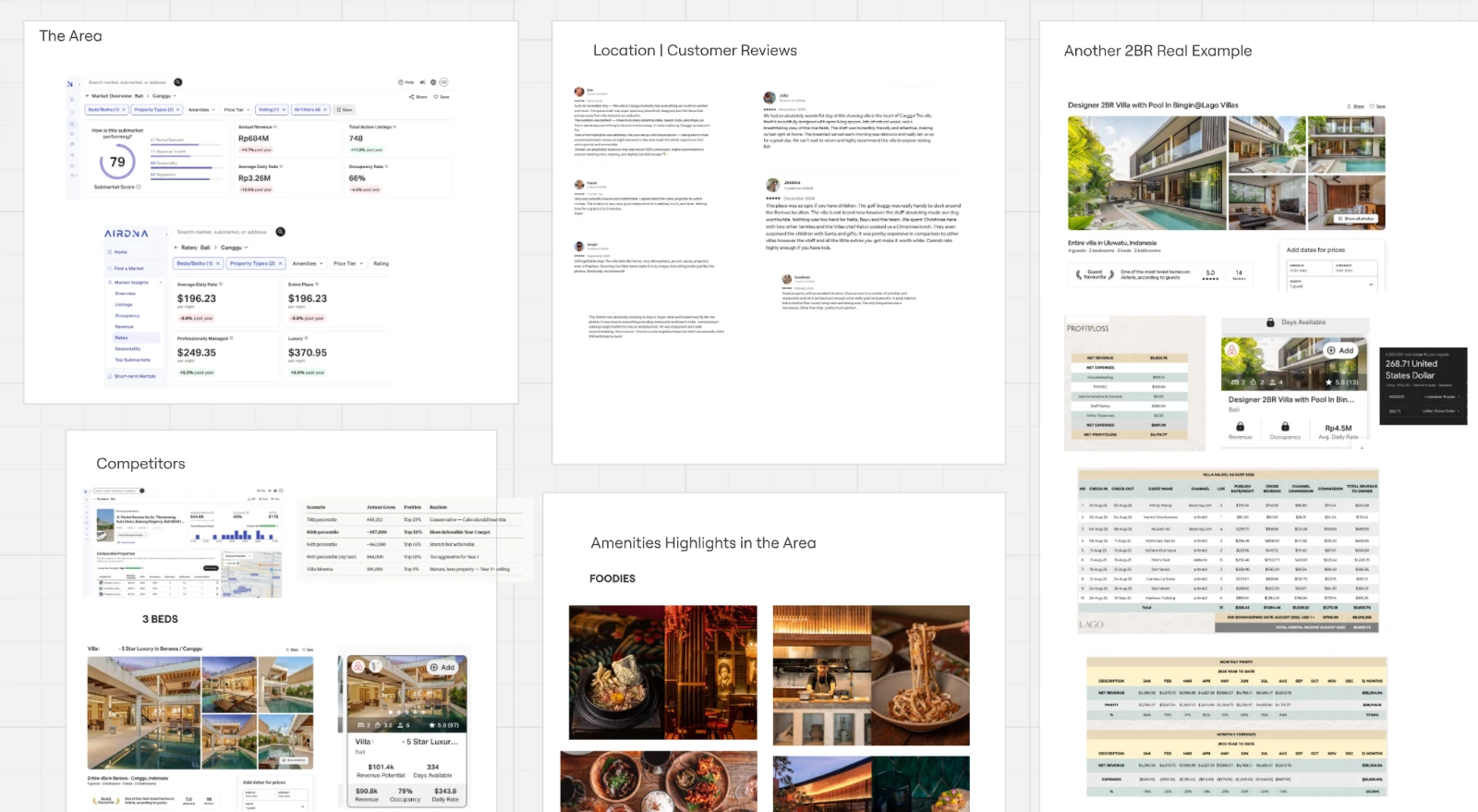
Here's what a year of staying with a poor manager actually costs, using real numbers from our portfolio benchmarks. Take a 2-bed Bukit villa with a $310K acquisition cost. Under strong management, the villa earns roughly $80K gross / $44K net owner profit / 14% net yield. Under mediocre management — let's say 75% occupancy at $180 ADR with reactive maintenance and zero direct booking channel — the same villa earns roughly $49K gross / $24K net profit / 7.7% net yield.
That's a $20,000 annual difference in owner profit on a single 2-bed villa, from the same property, in the same location, in the same year. The villa didn't get worse. The management did.
| Scenario | Annual Gross | Annual Owner Profit | Net Yield on $310K |
|---|---|---|---|
| Strong management | $80,000 | $44,000 | 14.2% |
| Mediocre management | $49,000 | $24,000 | 7.7% |
| Annual delta | +$31,000 gross | +$20,000 profit | +6.5 pts |
The cost of switching, by contrast, is roughly:
- 2–4 weeks of operational gap where revenue is reduced or zero (~$3,000–5,000 in lost gross)
- Possible photography re-do if your existing photos are owned by the outgoing manager (~$800–1,500)
- Time and emotional energy for the handover (real, but bounded)
- Possible loss of Airbnb review history (depends on listing ownership — we'll cover this next)
If switching takes 12 weeks end-to-end and the cost is ~$5,000 of disruption, the breakeven is roughly 3 months at the improved performance level. After that, every additional month at the better rate is pure upside.
The math is rarely the reason owners don't switch. The mechanics are. That's what the rest of this guide is for.
Pro tip for owners. The hardest cost to see is the one that doesn't show up on a P&L — the revenue your villa could be earning if it were managed properly. A poor manager doesn't take 20% of your gross; they take 30–40% of your potential. Run your own numbers against the portfolio benchmarks and see where you sit.

The 6-Step Switching Process
Step 1: Audit First, Then Decide
Covered above in detail. Before you give notice, get a clear, evidence-based view of whether the problem with your current manager is fixable or structural. Use that audit as a brief to your current manager. If they respond, great — you may not need to switch at all. If they don't, you now have a clear baseline for what to expect from whoever comes next.
Step 2: Check Your Contract
Most Bali villa management contracts have a notice period — typically 30 to 90 days. Some have longer notice periods for exiting in peak season (June–August, December) so the manager isn't left with operational gaps on bookings already taken. Read yours before you do anything else.
You need to know:
- What notice is required to terminate (calendar days, business days, written or otherwise)
- Whether there are any fees for early exit
- What happens to bookings that fall within the notice period — most contracts require the outgoing manager to honour bookings already taken
- What happens to the commission on bookings in the notice period — is it paid to the outgoing manager, the incoming manager, or split?
- Who is responsible for maintenance, repairs, and emergency response during the notice period
- Whether there are any non-compete clauses (rare in Bali, but worth checking)
If you're not sure how to read your contract, get a Bali-experienced lawyer to spend 30 minutes on it. Cost: typically $50–100. Value: knowing exactly what your obligations are before you commit.
Step 3: Clarify Listing Ownership Immediately
This is the most important step. We'll spend an entire section on this below — but the practical version is: before you give notice, ask the outgoing manager in writing, "Is the Airbnb listing on my account or yours?" Get the answer in writing. This single question determines whether your review history comes with you or stays behind. Owners who skip this step at the start of any management relationship pay for it later.
Step 4: Choose Your New Manager
The new manager search is its own process and deserves its own article — we've written it here. But the short version: vet thoroughly, ask for real performance data on comparable properties, check fee structures including any "admin" or "extras" hidden behind the headline percentage, and require a free audit of your current setup before signing.
Most importantly: agree on a start date with the new manager before you give notice to the current one. A handover with a 6-week gap because the incoming manager isn't ready is a self-inflicted wound. Coordinate first, then give notice.
Step 5: Coordinate the Handover Date
Once you have a new manager confirmed and a start date set, you can give written notice to the outgoing manager.
Verbal notice isn't enough. Send your termination notice via email so there's a clear record with a date and time. Be direct and professional — you don't need to explain your reasoning in detail. A simple "I'm terminating our management agreement effective [date] in accordance with the [X-day] notice period in our contract" is enough.
Between the outgoing manager's last day and the new manager's first day, there is a window where your calendar needs to be coordinated. The cleanest version is no gap — the new manager goes live the same day the old manager hands over. The reality is often messier because of OTA listing transitions, channel manager setup, and PMS migration.
If there has to be a gap, block the calendar across all channels during the gap window. A property with no active manager but open bookings is a problem waiting to happen. Coordinate the dates carefully.
Step 6: Rebuild the Operational Setup
Every manager does things differently. Check-in process, housekeeping schedule, maintenance vendors, pricing settings, channel distribution, security protocols, owner reporting cadence — none of it transfers automatically.
Give your new manager a handover document covering:
- All access codes, lockbox codes, alarm codes
- Vendor contacts (pool, garden, electrician, plumber, internet provider, AC servicing)
- Owner preferences (e.g., owner-stay protocols, response time expectations, preferred communication channel)
- Known property issues (the dodgy circuit breaker, the noisy aircon in bedroom 2, the gate that sticks in wet season)
- Existing maintenance contracts and renewal dates
- Insurance policy details
- Bank account where revenue should be transferred
- Tax registration status (NPWP, etc.)
The faster they get up to speed, the faster performance improves. Owners who under-invest in the handover document spend their first three months under a new manager re-answering questions that should have been settled day one.
What Actually Happens to Your Airbnb Listing When You Switch
This is the question owners get most wrong — and the one that causes the most hesitation about switching at all.
The short answer: your Airbnb listing is tied to the account that created it. If your current manager created the listing on their Airbnb host account, you don't own it. You can't transfer it. The reviews stay with their account, not with your property.
The options when you switch are:
- If the listing is on your own Airbnb account: your new manager can be granted co-host access, and your review history stays intact
- If the listing is on the manager's account: you start a new listing on your own (or your new manager's) account. No review history transfers
Most owners assume starting fresh is a disaster. It's often not — particularly if your existing listing has a mediocre rating.
A 4.5-star listing with 40 reviews and poor performance metrics can actually rank lower in Airbnb's algorithm than a new listing with no reviews, because Airbnb weights recent performance heavily. A listing with 4.2 stars and a pattern of recent complaints about maintenance or communication is actively working against you in the algorithm. Starting fresh removes that history. It's not ideal — but it's frequently better than inheriting the damage.
The honest position:
- If your current rating is above 4.8 and your listing has genuine review volume (50+), losing that history is a real cost. Factor it in
- If your current rating is 4.7–4.8, the loss is moderate but the fresh start can recover within 60–90 days under proper management
- If your current rating is below 4.7, the fresh start is often the right call. Starting from zero with strong management beats trying to drag a damaged listing back into ranking
Pro tip for owners. At the very start of any management relationship — including the new one you're about to enter — make sure the Airbnb account is created on your email, with your phone number, in your name. The manager gets co-host access. You own the account, the reviews, and the property's digital presence. This single thing protects you from every future switch.
What Happens to Bookings During the Notice Period
Most Bali contracts require the outgoing manager to honour bookings already taken during the notice period. They handle check-in, guest comms, and operations through to checkout, and they keep the commission on those bookings.
What you need to negotiate cleanly:
- For bookings that fall after the notice period ends: these should transfer to the new manager and the commission should reset
- For bookings that span the transition: check-in handled by outgoing, check-out handled by incoming — or vice versa. Pick one cleanly. Don't split mid-stay
- For new bookings that come in during the notice period: depending on your contract, the outgoing manager may or may not be obliged to take new bookings. Some manage this honestly. Some take whatever they can to maximise their last paycheck. Confirm what the contract says
- Calendar visibility: make sure the incoming manager has access to the live calendar 7+ days before their start date so they can prepare for the existing bookings they're inheriting
What Happens to Your Staff and Vendors
If your villa has dedicated staff (housekeeping, host, security, gardener), the question is whether they're employed by the management company or by you (or by a separate operating entity).
In Bali, most villa staff are employed by the management company under PKWTT or PKWT contracts. When you switch managers, the staff don't automatically come with you. The outgoing manager may keep them on for other properties; the incoming manager will typically introduce their own team.
Three patterns we see:
- Full staff turnover: Most common. The outgoing manager keeps their employees; the new manager brings in their own. Operational continuity is rebuilt from scratch
- Owner-employed staff: If specific staff members were employed directly by you (or via a foundation/PT structure you control), they stay with the property regardless of who manages it. Less common in Bali but worth checking your structure
- Negotiated transfer: Occasionally a key staff member (an excellent host, a beloved housekeeper) can be transferred between managers by agreement. Rare, but worth asking about if there's someone specific you want to keep
On vendors (pool, garden, electrician, internet), the picture is mostly similar. Most managers use their own preferred vendor network. The incoming manager will introduce theirs unless you specifically want to retain a vendor you trust.
What Cabo Does in Onboarding (Our Playbook)
So you can compare against what your new manager (whoever you choose) actually offers. Here's what happens in the first 30 days when an owner switches to Cabo:
What Cabo Does in Onboarding (Our Playbook)
The first 30 days when an owner switches to Cabo
| Week | What We Do | Owner Deliverable |
|---|---|---|
| Week 1 | Listing audit complete; new photography scheduled if needed; PriceLabs dynamic pricing engine configured; channel manager (Hospitable/Hostfully) onboarded | Owner handover document received; bank details confirmed; access codes shared |
| Week 2 | Photography shoot (if needed); new listings drafted on Airbnb/Booking.com/Trip.com (or co-host added if existing listings stay); cabobali.com listing page built; staff introductions | Owner reviews and approves new listing copy and photography |
| Week 3 | All OTA listings go live; first dynamic pricing run; pool/garden/maintenance vendors briefed and onboarded; first guest experience pack ordered for next check-in | First weekly performance report delivered |
| Week 4 | First full week of live management complete; first booking under new management received; pricing positioning reviewed against first-week conversion data; ongoing maintenance schedule starts | Month-1 P&L delivered with owner profit calculation |
By day 30, the villa is live, pricing is moving, the calendar is filling, and the owner has their first complete report. Everything from there is iteration — more direct bookings, optimisation of the listing based on conversion data, gradual rate testing.
The Bear Case: What Goes Wrong in Switches
Honest section. Here's what we see going wrong when owners switch — to us or to anyone else:
The handover gap is longer than promised. New manager said two weeks, it's actually six. Photography slipped. PMS setup hit a snag. The result is more revenue lost in transition than expected. Mitigation: get a firm written start date with a penalty clause if missed.
The Airbnb listing ownership question wasn't clarified early enough. Owner gives notice, then discovers the listing was on the manager's account, then panics about losing 50 reviews. Mitigation: clarify this in step 1, not step 5.
The new manager looked great on a sales call but isn't operationally as strong. Pricing isn't dynamic enough. Listing copy is generic. Photography isn't actually being improved. Mitigation: require references from owners who switched to them (not just owners who started with them) and call those references.
Guest reviews dip during the transition. A 6-week gap in service quality, even subtle, shows up in reviews. The new manager hasn't built systems yet, the outgoing manager has mentally checked out, and the guests in the middle feel it. Mitigation: minimise the gap, brief the new manager hard on the existing guest pipeline, accept that the first 30 days will have variance.
Hidden contractual obligations surface late. Renewal of an aircon servicing contract, a deposit held by the outgoing manager that's hard to get back, vendor invoices the new manager hadn't known about. Mitigation: full handover document with all financial obligations listed.
Pro tip for owners. Ask your new manager what goes wrong in switches before you sign. If they say "nothing, we make it seamless," they're lying. If they say "here are the four things that usually trip up, and here's how we plan for each one" — that's the manager you want.
Choose To Switch Now If... / Wait If...
A decision framework if you're still on the fence.
Switch now if:
- You've raised specific performance concerns with your current manager and they've responded with vague reassurances rather than concrete changes
- You don't receive a monthly P&L without asking
- Your occupancy is meaningfully below the AirDNA benchmark for your submarket and the manager can't articulate why
- You don't know what dynamic pricing system (if any) your villa uses
- You've been quoted "approximately 20%" or "around 25%" for fees but the actual money flowing to you each month doesn't match
- Guest reviews mention recurring issues that haven't been resolved (Wi-Fi, aircon, communication speed)
- You're hearing about issues at your villa from guests directly rather than from your manager proactively
- The Airbnb listing isn't on your own account and you haven't been able to get a straight answer about why
Wait if:
- You haven't given your current manager a clear written brief with specific performance concerns and asked for a response
- You're inside the first 90 days with a new manager — most properties need that long to fully stabilise
- The performance issue is seasonal (weak shoulder months in a market that has weak shoulder months is normal, not a manager failure)
- You're emotionally reactive to one bad guest experience rather than looking at the annual picture
- Your current contract is close to its natural anniversary — wait for the cleaner exit
Definitions Used In This Guide
- Notice Period: The minimum amount of time you must give your current manager before terminating the contract. Typically 30–90 days in Bali. Stipulated in the management agreement.
- OTA (Online Travel Agency): Booking platforms like Airbnb, Booking.com, Trip.com that bring guests in exchange for a commission.
- PMS (Property Management System): The software the manager uses to handle bookings, guest comms, calendar sync, and reporting. Common in Bali: Hospitable, Hostfully, Lodgify, Guesty.
- Channel Manager: Software that syncs your villa's calendar and pricing across multiple OTAs simultaneously, preventing double-bookings. Often part of the PMS or a separate layer.
- Listing Ownership: The Airbnb (or Booking.com) account on which your villa's listing was originally created. Whoever created it owns the reviews. Critical to clarify at the start of every management relationship.
- Co-host: An Airbnb feature that lets a primary host grant operational access to another account without transferring ownership. Lets a new manager run the listing while you retain ownership of it.
- Handover Document: The owner-prepared document for the incoming manager covering access codes, vendor contacts, property quirks, preferences, and contractual obligations. The single highest-leverage thing an owner can prepare for a smooth switch.
- Dynamic Pricing: Rate-setting that moves daily/weekly based on demand signals (typically via PriceLabs, Wheelhouse, or similar). The opposite is "static pricing" — a flat rate set once and rarely changed.
- NPWP: Indonesian tax registration number. Required for villa rental income reporting and for some payout structures. Mentioned in handover documents.
Key takeaways
- Switching a Bali villa manager takes 4–12 weeks end to end and is mostly mechanical, not emotional.
- Answer one question first: whose Airbnb account holds your listing? It decides whether your reviews move with you or stay behind.
- Read your contract's notice period (typically 30–90 days), exit fees, and how in-notice bookings and commission are handled before you give notice.
- Agree a firm start date with the incoming manager before terminating the outgoing one, and block the calendar across all channels during any gap.
- Audit first: sometimes the right move is to brief your current manager, not switch — a free, evidence-based audit protects you from moving into a worse setup.
- One extra year with a poor manager can cost roughly $15,000–25,000 on a typical 2-bed Bukit villa, versus a one-off ~$3,000–5,000 cost to switch.
FAQ
How long does it take to switch villa managers in Bali?
From decision to fully operational with a new manager: typically 4–12 weeks. Breakdown: 1–4 weeks to vet and contract a new manager, 30–90 days for the contractual notice period to your existing manager (often running in parallel), 2–4 weeks for the incoming manager to onboard, photograph, list, and go live. The total depends on your contract notice and how prepared the new manager is.
Can I keep my Airbnb reviews when switching managers?
Only if the Airbnb listing is on your own account. If the listing is on the manager's account, the reviews stay with them when you leave. You start fresh on a new listing. Depending on your current rating, starting fresh can actually improve performance — Airbnb's algorithm weights recent performance heavily, so a clean start with good early reviews can recover within 60–90 days.
What's the typical notice period in a Bali villa management contract?
Usually 30 to 90 days. Some contracts require the outgoing manager to honour bookings already taken through the notice period and keep the commission on those bookings. Read your contract carefully — and if you can't find a clear notice clause, ask your manager for one in writing before you do anything else.
Should I switch if my occupancy is low?
Not automatically. First, ask your manager to explain what's driving the underperformance and what specific things they're going to change. If they can answer that question clearly with concrete actions, give them 60–90 days to execute. If they can't answer it — or if their answer is vague reassurance with no changes — that's the real signal to move.
What happens to my villa's bookings during the notice period?
Most contracts require the outgoing manager to honour existing bookings through to checkout. Commission on those bookings typically goes to the outgoing manager. New bookings that come in during the notice period are negotiable — some contracts give them to the outgoing manager, some allow the incoming manager to take them at a transferred rate.
Who owns my Airbnb listing?
Whoever created the Airbnb account it's listed on. If your current manager created the account using their email, they own the account, the listing, and the reviews. If you created the account in your own name and granted them co-host access, you own everything. Always clarify this at the start of any new management relationship — including with whoever you switch to.
Will I lose money during the switch?
Probably a small amount — typically 2–4 weeks of reduced or zero revenue while the new manager onboards, photography is done, and listings go live. On a typical 2-bed Bukit villa, that's roughly $3,000–5,000 in lost gross revenue. Compared to the $15,000–25,000 annual delta between strong and mediocre management, the math usually favours switching as long as the new manager is genuinely better. Get the audit done first so you're not guessing.
Does switching managers affect my standing with Airbnb?
A new listing starts without review history, which can affect early search ranking. Airbnb's algorithm weights recent performance, so a clean start with good early reviews recovers quickly — typically within 60–90 days of active management. If your current listing is on your own account and you can keep it, the impact is minimal (the new manager comes in as co-host and reviews continue to accumulate uninterrupted).
Do I have to tell my current manager why I'm leaving?
No. A clear, professional written notice is enough. You don't owe an explanation, and you don't need to soften it or apologise. Be direct and don't engage in a back-and-forth about staying — if you've decided to switch, the conversation about whether to switch is over.
Can I switch to Cabo Bali specifically?
We accept new villas by application and referral, not volume. We do a free audit of your current setup first, give you our honest read on whether switching is the right call (sometimes it isn't), and if it is, we can run our standard 4-week onboarding. We're selective — not every villa is a fit, and we'd rather decline than take on a property we can't perform on.
If You're Ready to Switch
If you've read this and you're ready to do the audit step, we'll do that for you for free. No commitment, no pitch, no high-pressure follow-up. We record a 15–25 minute Loom walking through your current listing performance, pricing, photography, channel mix, and the specific things we'd change.
You can use that audit one of three ways:
- Take it back to your current manager as a performance brief and give them a chance to fix the issues
- Use it as the basis for vetting any new manager (including us) — does their pitch engage with the specifics?
- Move forward with us if the audit makes the case
We'll tell you honestly which of the three we think is the right call given what we see.
About the author. Rissa Prima is Digital Marketing Manager at Cabo Bali, which manages boutique villas across Uluwatu, Bingin and Canggu. Rissa writes from the operator's side of Bali villas — real numbers, real guest feedback, and lessons from the team running the portfolio day to day.
Related reading:
- How to Choose a Villa Management Company in Bali
- How Much Does Bali Villa Management Cost? A Full 2026 Breakdown
- Best Villa Management Companies in Bali — Ranked (2026)
- Why Most Bali Villas Underperform — And What the Top 10% Do Differently
- What a 2-Bed Villa in Bingin Actually Earns (2026)
Sources & references
This guide draws on Cabo Bali's own switching-cohort data (2023–2026) and owner onboardings, benchmarked against independent market, platform, and regulatory sources:
- AirDNA — Bali / Bukit Peninsula market data — submarket occupancy and ADR benchmarks for testing whether your villa is underperforming its market.
- Airbnb Help Center — Co-hosts and listing access — how a manager can run your listing without owning the account.
- Airbnb Help Center — How reviews and ratings work — why review history is tied to the host account and recent performance is weighted heavily.
- Booking.com Partner Help Center — account and property-management access for OTA transitions.
- PriceLabs and Wheelhouse — dynamic-pricing platforms referenced in the onboarding playbook.
- Hospitable and Hostfully — property-management systems (PMS) common in Bali, relevant to calendar and channel handover.
- Government Regulation PP No. 35/2021 (implementing UU No. 13/2003, the Job Creation Law) — fixed-term and indefinite employment contracts (PKWT/PKWTT) governing villa staff.
- Direktorat Jenderal Pajak (DJP) — NPWP tax registration relevant to rental-income reporting and payout structures.
- BPS Bali (Statistics Indonesia, Bali) — official Bali tourism and occupancy statistics.
- Horwath HTL — Indonesia hospitality market reports — independent tourism and performance context.
- Cabo Bali — Villa Performance Report 2026 — the portfolio benchmarks (20+ villas at 91% average occupancy) behind the worked figures in this guide.
Methodology note: contract notice-period ranges are drawn from a sample of 14 management agreements reviewed during owner onboardings (2024–2026). The cost-of-inertia figures are illustrative scenarios built from Cabo portfolio benchmarks and AirDNA South Kuta / Bukit Peninsula market data current as of April 2026 — not guarantees of individual villa performance.