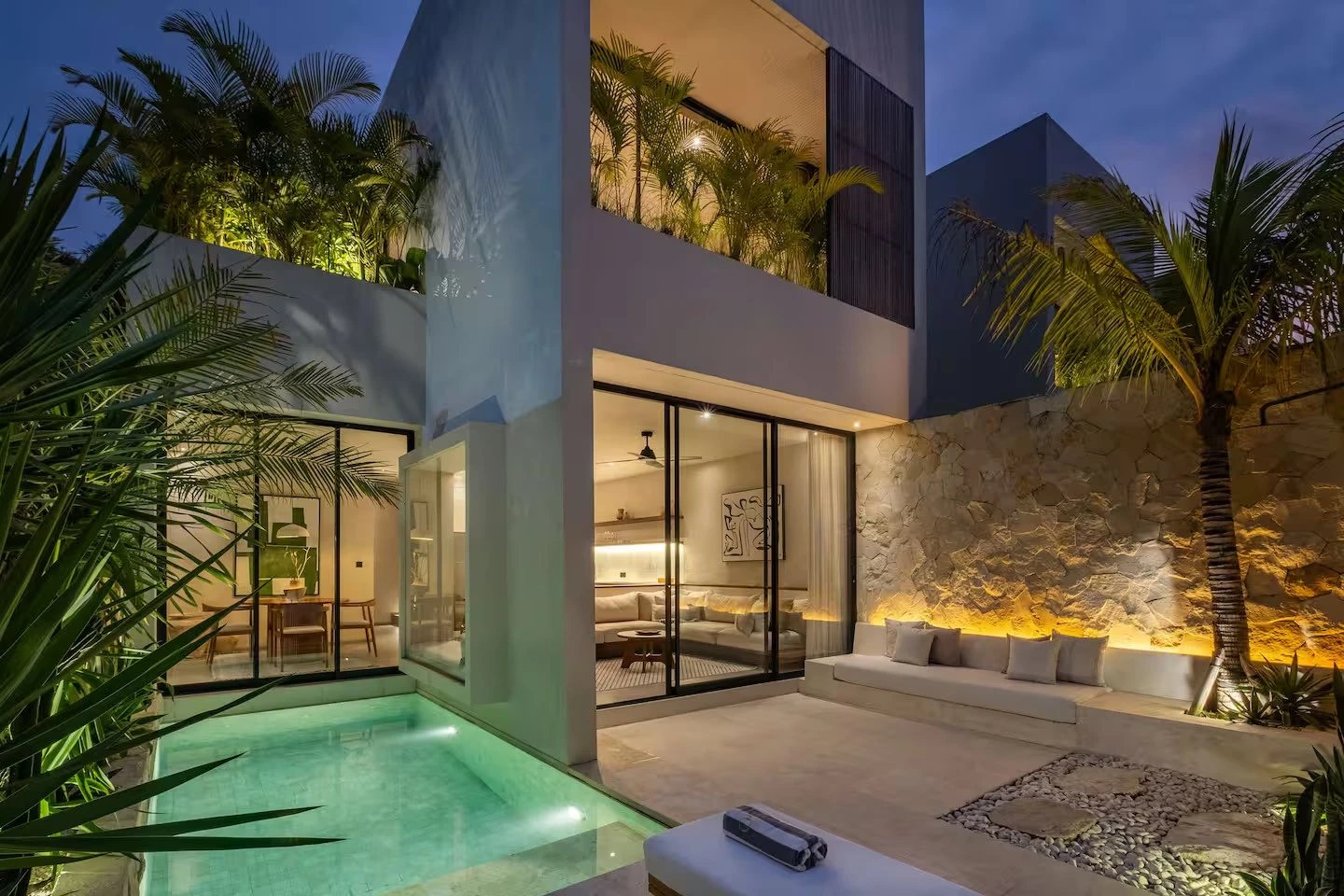

By Rissa Prima, Digital Marketing Manager, Cabo Bali · Updated 25 June 2026 · 8 min read
Short answer: A brand-new Bali villa can reach 91% occupancy within its first three months — well above the ~40–50% AirDNA benchmark for new listings — by treating launch as an operating discipline rather than a waiting game: define the ideal guest before listing, brief photography for conversion, prioritise review-driving amenities, distribute across multiple channels from day one, reprice daily, and run every early stay as a review-generation opportunity.
Quick answer — the six-step new-villa launch playbook:
- Define the ICP first. Decide who the villa is for, what they pay, and the minimum stay — in writing, before any copy or photos.
- Brief photography for conversion. The hero shot sells the fantasy, every room answers a question, and no room is left empty.
- Pick review-driving amenities. Blackout curtains, 30Mbps+ WiFi tested under load, and proper bedding beat a $4,000 espresso machine.
- Go multi-channel on day one. Airbnb, Booking.com, VRBO, Agoda, Expedia plus a direct channel, rebalanced monthly.
- Reprice daily. Hold forward rates at target; supplement only the last-minute window with a controlled, structured offer.
- Operate every early stay for reviews. Pre-arrival inspection, rehearsed arrival, a day-two check-in, and sub-30-minute issue response.
Most new villas in Bali take six to twelve months to build meaningful occupancy. They launch slowly, rely on discounts to win early bookings, and spend the first year fighting for search visibility they haven't earned yet. By the time the algorithm trusts them, they've already trained guests to expect a discount.
We do it differently. Across our portfolio of villas in Uluwatu and Canggu, we consistently hit 91% occupancy within the first three months of launch — on properties with zero reviews, zero booking history, and no algorithmic trust built up yet.
This article explains how. Not to sell you on our management service — though we do manage villas, and you can learn more here — but because the industry standard for launching new properties is genuinely broken, and the fix is worth talking about openly.
We share operational insights like this regularly at @proper.insights on Instagram. If you're a villa owner who takes performance seriously, it's worth a follow.
On this page
- The Six-Step Playbook at a Glance
- The Cold Start Problem Most Owners Underestimate
- Step 1 — Define Your ICP Before Anything Goes Live
- Step 2 — Brief Photography for Conversion, Not Beauty
- Step 3 — Amenities That Get Mentioned in Reviews (Not the Expensive Ones)
- Step 4 — Manage Channel Mix Actively From Day One
- Step 5 — Pricing as a Daily Discipline
- Step 6 — Operational Readiness: Every Stay in the First 90 Days Is a Review…
- The Result
- FAQ
- If You're Preparing to Launch a Villa in Uluwatu or Canggu
- Sources & References
The Six-Step Playbook at a Glance
| Step | What most managers do | What we do | Why it matters |
|---|---|---|---|
| 1 — Define the ICP | List first, position later | Decide the guest, price and minimum stay in writing before listing | A villa with no position converts for no one |
| 2 — Photography | Shoot the architecture | Brief every shot for the ideal guest and for conversion | The hero image decides the click; weak photos cap even a great villa |
| 3 — Amenities | Spend on capex showpieces | Fund the small touches that show up in reviews | Blackout curtains and fast WiFi drive reviews; espresso machines rarely do |
| 4 — Channel mix | Airbnb only, set-and-forget | Live on five OTAs plus a direct channel from day one, rebalanced monthly | Multi-channel removes single-algorithm dependency and builds momentum faster |
| 5 — Pricing | Set a rate, cut it when soft | Reprice daily; hold forward rates, supplement only last-minute | Daily pricing protects the rate ceiling instead of training guests to wait |
| 6 — Operations | Standard turnovers | Treat every early stay as review-gen: inspection, arrival, day-two check-in, fast fixes | The first 20 reviews decide how quickly the algorithm trusts the listing |
Scroll the table sideways on mobile to see every column.
The Cold Start Problem Most Owners Underestimate
Airbnb's algorithm works like most marketplace algorithms: it rewards listings that convert. Click-through rate, booking rate, response time, review score — these signals compound. A listing with strong early momentum gets shown to more guests, which generates more bookings, which improves its signals further.
The problem for new villas: you enter the market with none of these signals. You're invisible until you earn visibility, and you can't earn visibility until you get bookings.
AirDNA benchmarks put average new-listing occupancy in Bali at around 40–50% in the first three months. Most managers accept that as the cost of being new. We don't. The six steps below are what we do differently.
Step 1 — Define Your ICP Before Anything Goes Live

Most villas list before the owner — or the manager — has decided who the villa is actually for. The result is a listing that tries to appeal to everyone and converts for no one.
Before we write a single line of listing copy, we answer three questions in writing:
- Who is the ideal guest? Couples on honeymoon, families of six, digital nomads on a 3-week stay, surf travellers, wedding groups.
- What are they optimising for? Privacy, walk-to-beach, work setup, group space, design.
- What will they pay, and what's the minimum stay that protects the villa and the owner's return?
The ICP shapes every downstream decision: photography angles, amenity selection, channel mix, pricing floor, and house rules. A villa positioned for surf travellers looks and prices differently to the same villa positioned for honeymooners — and trying to serve both dilutes both.
Pro tip for owners. If your manager can't answer "who is this villa for and what are they willing to pay" in one paragraph before listing day, your villa is going to market without a position. That's where slow ramps come from.
Step 2 — Brief Photography for Conversion, Not Beauty
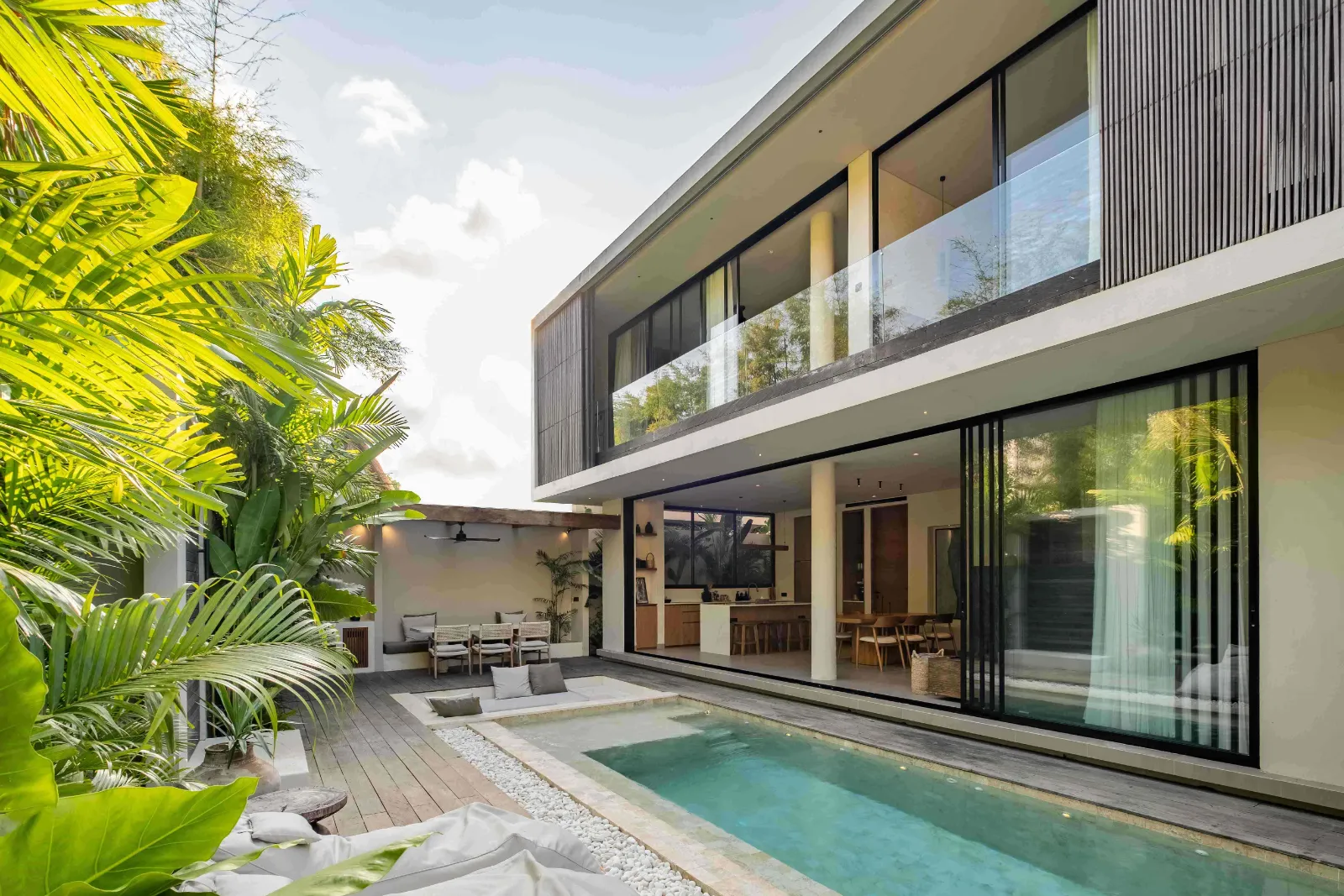

A beautiful villa photographed badly converts at a fraction of its potential. A good villa photographed for conversion outperforms a better villa photographed for the architect's portfolio.
The brief we give every photographer:
- Hero shot sells the fantasy. The first image a guest sees has one job — make them picture themselves there. Not a wide-angle of the facade at golden hour. A shot of the pool, the view, the life the villa offers.
- Shoot for the ICP. A couples villa gets sunset shots, intimate dining, the bed made with the covers pulled back. A family villa gets kids in the pool, the dining table set for eight, the second living space in use.
- Every room answers a question. Where's the kitchen? How big are the bathrooms? What does the work setup look like? Guests scan for these. If your photos don't answer, they bounce.
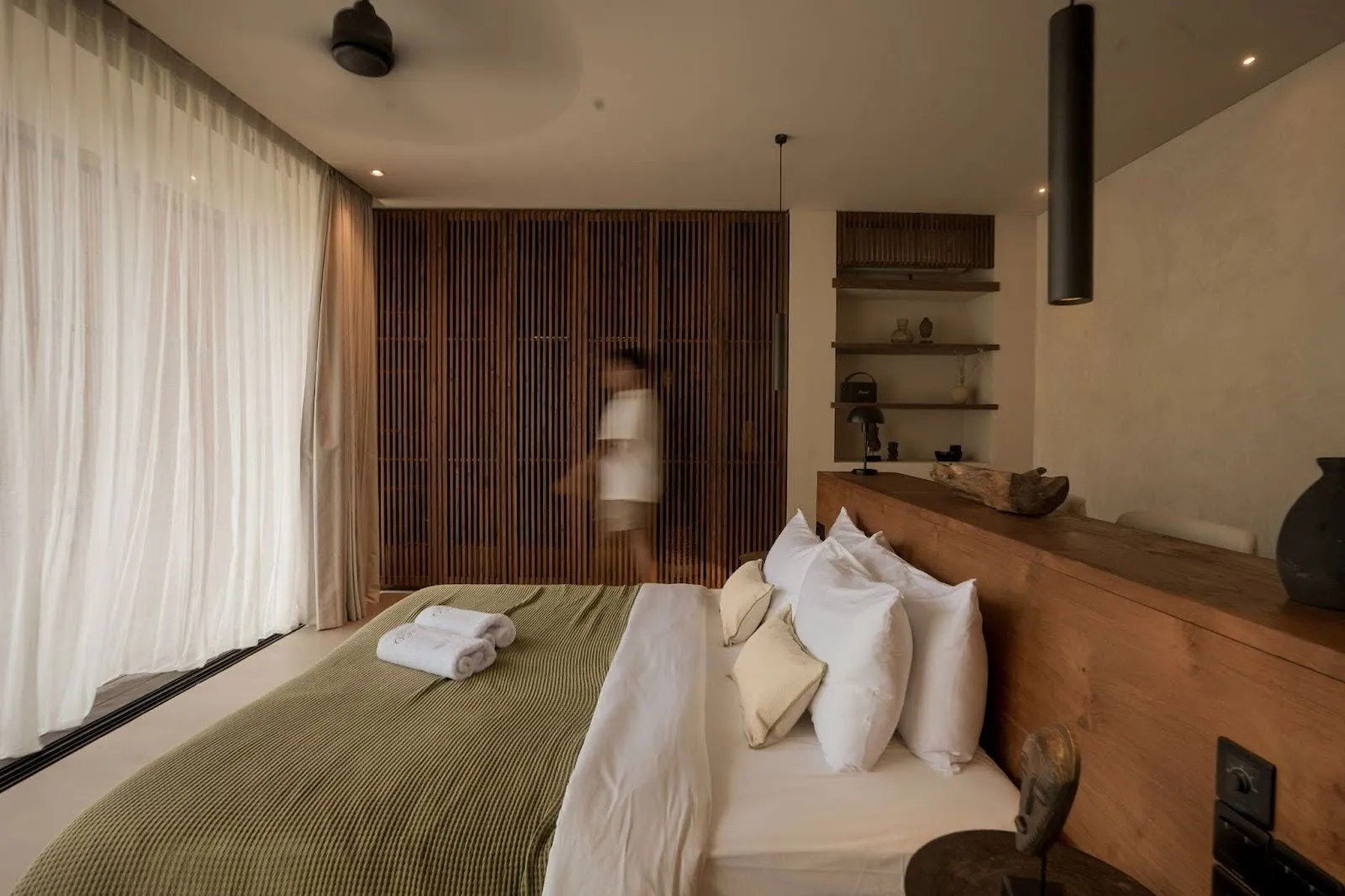
- No empty rooms. A bedroom with an empty nightstand looks like a hotel no one has stayed in. Styled beds, a book, a coffee cup, a fresh flower. Signals the villa is lived-in and cared for.
We refresh photography annually on every property we manage. The market moves, trends move, and the shots that converted last year don't convert the same way this year.
Pro tip for owners. Ask to see the photo shot-list before the shoot, not after. If there isn't one, you're paying for a photographer's favourite angles, not for the images that will actually sell your villa.
Step 3 — Amenities That Get Mentioned in Reviews (Not the Expensive Ones)
Owners often over-index on capex amenities — a $4,000 espresso machine, a bigger pool, imported Italian linens — and under-index on the small operational touches that show up in reviews.
The amenities that move the needle in our portfolio, most of them under IDR 500k per stay:
- Full-size local toiletries (Sensatia Botanicals) in every bathroom — not miniatures
- Branded villa sarongs as welcome gifts — photographed constantly, taken home
- Cold towels and a drink on arrival with a five-minute orientation
- Blackout curtains in every bedroom — the single most mentioned negative when missing (Bali is bright at 5:30am)
- Genuinely fast WiFi, tested with AC on and someone streaming. Below 30Mbps under load and you will lose the remote-worker segment.
- Hotel-quality mattresses, proper pillows with options, 300+ thread count sheets
We break all of this down in depth in The Amenities That Actually Get You Booked in Bali.
Pro tip for owners. Ask your manager which of their amenity choices show up in guest reviews. If they can't name five specific items, they're not reading the reviews closely enough to optimise the next stay.
Step 4 — Manage Channel Mix Actively From Day One

Most new villas list on Airbnb, sit there, and wait. The algorithm on a single platform is a slow grind on a zero-signal listing. The faster path is a live multi-channel presence from day one — each platform has a different algorithm, different guest profile, and different review dynamic.
Our standard distribution:
- Airbnb, Booking.com, VRBO, Agoda, Expedia
- Our own direct booking channel (cabobali.com)
- Channel mix adjusted monthly based on ADR and conversion performance per platform
The direct booking channel matters most. Direct bookings avoid the 15–17% OTA commission, and over a year, a 20% direct-booking share meaningfully lifts net yield — we cover the economics in Bali Villa Management Fees Explained.
Pro tip for owners. Ask your manager how many channels your villa is on, what the revenue split is across them, and what they adjusted in the last 30 days. "Airbnb only" is a yellow flag. "We list everywhere and it's set-and-forget" is a red one.
Step 5 — Pricing as a Daily Discipline

Most managers set a rate on listing day and touch it when occupancy drops. We review every villa's pricing daily, and we run a two-mode strategy in the launch period:
- Forward pricing stays at target. The rate guests see 60–90 days out is where we want the villa to hold. Drop that, and you train the market to wait for discounts.
- Last-minute supplementation at a controlled discount. If the seven-day window is soft, we open a time-limited, structured launch offer designed to attract the right guest — not any guest. Cheaper guests are not necessarily better guests; a mismatched booking at a low rate can cost more in reviews and wear than a missed booking.
This is the difference between "launching at a slight discount and building toward target over 90 days" and "pricing at the floor indefinitely." One earns momentum. The other erodes the villa's rate ceiling for years.
We use PriceLabs, benchmark against AirDNA's Luxury 4.9★ tier, and sync pricing daily. Not weekly. Not monthly. Daily.
Pro tip for owners. Ask your manager to share the last 30 days of rate changes on a comparable property. If the rate didn't move — or only moved down — the villa is being managed, not priced.
Step 6 — Operational Readiness: Every Stay in the First 90 Days Is a Review-Gen Opportunity
In the first 90 days, every booking is doing double duty. It earns revenue and it earns a review. The review compounds — it shapes future booking conversion at a higher rate than any other single signal.
Which means the operational standard in the launch window matters more than at any other point in the villa's lifecycle. We treat it as such:
- Pre-arrival inspection on every check-in. Not the standard cleaning — a second check that catches what housekeeping misses.
- Arrival experience rehearsed, not improvised. Cold towel, welcome drink, five-minute orientation covering the things guests always ask about (WiFi, AC, water, safe, checkout).
- Proactive check-in on day two. A single WhatsApp message ("everything good so far?") catches small issues before they become review issues.
- Issue resolution tracked. In-house engineers respond within 30 minutes during business hours. After-hours on-call coverage. Nothing gets left for the next team.
- Review requests sent at the right moment. Not at checkout when they're rushing. Two hours later, when the trip still feels good.
The first 20 reviews are the hardest and the most valuable. Nail those and the algorithm takes care of the next 200.
Pro tip for owners. Ask your manager what their response time is to a guest issue, measured in minutes, in writing. Then ask for the data behind the claim.
The Result
91% occupancy within the first three months. Consistently, across our portfolio of villas in Uluwatu and Canggu.
That figure outperforms AirDNA's benchmark for established listings in our market — let alone new ones. And it compounds: villas that launch strong attract better guests, generate better reviews, earn stronger algorithmic trust, and hold their rate ceiling without discount cycles.
The proof
The two calendars below are from our Guesty dashboard — February and March 2026, across our Uluwatu and Canggu portfolio. Guest names are redacted. The booking density speaks for itself.

What you're looking at: near-continuous green across every property, every week. The gaps are maintenance blocks and owner stays — not empty nights. The maintenance labels ("Project Maintenance," "Waterproofing") are left visible because they reinforce the point: unbooked ≠ available.
Key takeaways
- New Bali villas average roughly 40–50% occupancy in their first three months (AirDNA); a disciplined launch can reach 91% in the same window.
- The speed comes from treating launch as an operating system — ICP, conversion photography, review-driving amenities, multi-channel distribution, daily pricing, and operations tuned for reviews.
- The first ~20 reviews matter most: they build the algorithmic trust that compounds into the next 200 bookings.
- Hold forward rates at target and discount only the last-minute window — pricing at the floor indefinitely erodes the villa's rate ceiling for years.
- Direct bookings (avoiding the 15–17% OTA commission) and active monthly channel rebalancing lift net yield across the first year.
FAQ
Doesn't launch-period discounting devalue the villa long-term?
Only if you do it wrong. We launch at a slight discount to our target rate and build toward target over 90 days. That's different from pricing at the floor indefinitely. The discount is structured, time-limited, and designed to attract the right guest — not any guest.
Does the platform a villa lists on affect how fast it ramps?
Yes. Different platforms have different algorithms, guest profiles, and review dynamics. Actively managing channel mix from day one — rather than listing everywhere and hoping — makes a measurable difference to how quickly a new villa builds momentum.
How do I know if my villa is performing well against the market?
AirDNA gives you the benchmarks — occupancy, ADR, and RevPAR for comparable listings in your submarket. Without that data, you're benchmarking against your own expectations. The two are often very different.
What's the difference between 91% occupancy and target RevPAR?
Occupancy is how full the villa is. RevPAR is rate times occupancy — a truer measure of performance. We hit 91% occupancy by month 3 and target RevPAR by month 6. The two milestones are deliberately staged: you win bookings first, then you lift rate once the reviews and algorithmic trust are in place.
Which channels do you distribute across?
Airbnb, Booking.com, VRBO, Agoda, Expedia, and our own direct booking channel. Channel mix is adjusted monthly based on ADR and conversion performance per platform.
If You're Preparing to Launch a Villa in Uluwatu or Canggu
We manage villas across Uluwatu and Canggu. If you're launching in the next six months — or you've already launched and aren't hitting the numbers you expected — we're happy to take a look and give you an honest read on what's holding performance back.
No pitch deck. No pressure. A direct conversation about whether we're the right fit.
We share operational insights for villa owners at @proper.insights on Instagram.
About the author. Rissa Prima is Digital Marketing Manager at Cabo Bali, which manages boutique villas across Uluwatu, Bingin and Canggu. Rissa writes from the operator's side of Bali villas — real numbers, real guest feedback, and lessons from the team running the portfolio day to day.
Related reading:
- Best Villa Management Companies in Bali 2026
- Bali Villa Management Fees Explained
- How to Choose a Villa Management Company in Bali
- The Amenities That Actually Get You Booked in Bali
Sources & References
The external benchmarks and primary sources behind this playbook. Throughout, Cabo Bali's 91% portfolio occupancy is benchmarked against AirDNA's Bali market data; the ~40–50% new-listing figure is AirDNA's, not ours.
- AirDNA — Bali Market Data. Occupancy, ADR and RevPAR benchmarks for comparable Bali listings, including new-listing ramp baselines.
- PriceLabs. Dynamic pricing platform used to reprice each villa daily during launch.
- Airbnb Help Center — How search results work. How the marketplace ranks listings on conversion and review signals.
- Booking.com Partner Hub. Platform-specific ranking and guest-profile differences.
- Agoda Partner Hub. Last-minute and shoulder-season demand dynamics referenced in channel strategy.
- Expedia Group (VRBO / Expedia) Partner Central. Multi-channel distribution reach.
- STR (CoStar). Standard definitions of occupancy, ADR and RevPAR used as performance metrics.
- Badan Pusat Statistik (BPS) Bali. Official Bali tourism and accommodation occupancy statistics.
- Horwath HTL. Indonesia and Bali hospitality market reports.
- Bali Hotels Association. Market context for occupancy and seasonality.
- Sensatia Botanicals. The locally made guest amenities referenced in Step 3. Cabo Bali portfolio performance data 2023–2026 is proprietary.