Updated 16 June 2026 · 9 min read · By Keanu Fischell, Co-Founder, Cabo Bali
On this page
- The short answer
- What is tropical brutalism?
- Why it works in Bali
- A brutalist design tour of Bali
- North: The Tiing, Tejakula
- Central: Ubud's rice-field concrete
- Canggu: The Slow
- South: Muda and Kona on the Bukit
- The real reason to book one
- Is a brutalist villa right for your stay?
- Frequently asked questions
- Key takeaways
- Stay in one
- Related reading
The short answer
Tropical brutalism is Bali's signature contemporary architecture: raw concrete forms softened by the climate — open-air corridors, deep shade, indoor-outdoor flow, and surfaces left to weather in the sun and rain. You can trace it across the island, from The Tiing on the north coast, through Ubud's rice fields and Canggu's The Slow, down to the Bukit Peninsula — where the sister villas Muda and Kona wrap the same bold concrete shell around two completely different interiors. We stayed in and wrote up this one — see the Muda House review.
Quick answer
- What it is: raw-concrete architecture adapted for the tropics — sculptural, shaded, indoor-outdoor
- North Bali icon: The Tiing, Tejakula — bamboo-formed concrete by architect Nic Brunsdon
- Canggu landmark: The Slow — George Gorrow's tropical-brutalist boutique hotel
- Bukit stays: Kona (raw and minimal) and Muda (warm, retro-modern) — same concrete building, opposite moods
- Best for: design-minded travellers and couples; best suited to adults or older teens, not young children
What is tropical brutalism?
Tropical brutalism takes brutalism's raw concrete and exposed structure and adapts it to a hot, humid climate. Where mid-century brutalism was heavy and urban, the tropical version is porous and sculptural: open-air corridors, deep overhangs for shade, gardens spilling over stark lines, and cool concrete interiors that feel like minimalist temples. Crucially, weathering is treated as a feature, not a flaw — the concrete is expected to stain, soften, and age into the landscape over time.
Why it works in Bali
Bali has become one of the world's capitals of tropical brutalism, for three reasons. The climate rewards the shade and cross-ventilation that concrete and open volumes deliver. Local materials and a deep bench of skilled concrete and bamboo craftsmen make it buildable and affordable. And the contrast between hard grey concrete and lush green jungle is simply photogenic — which, in the age of Instagram and design-led travel, matters. The result is a wave of concrete villas across the island, from boutique resorts in the north to private villas on the Bukit.
A brutalist design tour of Bali
If you wanted to trace tropical brutalism across the island, you'd start in the remote north and end on the Bukit. Here are the standouts, north to south:
| Property | Where | Concrete style | Interior | Best for |
|---|---|---|---|---|
| The Tiing | Tejakula (North Bali) | Bamboo-formed concrete | Pared-back, monastic | A design pilgrimage |
| Rice-field brutalist villas | Ubud | Raw concrete shell | Concrete + glass, jungle views | Jungle-meets-concrete contrast |
| The Slow | Canggu | Raw + polished concrete | Warm, textured, design-led | A surf-town design base |
| Kona Villas | Nyang Nyang (Uluwatu) | Raw, minimal | Stark, contemplative | Austere calm |
| Muda Villas | Nyang Nyang (Uluwatu) | Same concrete shell | Warm, 70s retro-modern | Character + texture |
North: The Tiing, Tejakula
On Bali's quiet north coast, The Tiing is the island's most celebrated brutalist building. It's a 14-room retreat designed by architect Nic Brunsdon with local studio Manguning. Its signature move is using bamboo as the formwork for cast concrete, leaving a ridged, organic texture across the walls; the rooms are shaped like funnels that frame jungle on one side and the ocean on the other. It's a pilgrimage rather than a base — remote, on the opposite side of the island from the surf and nightlife — but worth a night or two if architecture is your reason to travel.
Central: Ubud's rice-field concrete
Ubud's signature is bamboo and jungle, but a brutalist outlier has appeared among the rice fields. Tucked into the terraces around Ubud you'll now find Japanese-influenced brutalist villas — raw concrete shells, polished concrete floors, and large glazed openings that frame the green. They're the exception in an area defined by timber and bamboo eco-architecture, which is exactly what makes the contrast so striking: cool, hard concrete dropped into one of the lushest landscapes on the island.
Canggu: The Slow
In Canggu, The Slow is the area's tropical-brutalist landmark. A 12-suite boutique hotel a short walk from the Batu Bolong surf break, it was created by Ksubi co-founder George Gorrow with local architect Rieky Sunur of GFAB Architects. It mixes raw and polished concrete with local stone and native wood — brutalism softened into something warm and liveable — and set a template that much of Canggu's concrete-villa wave has followed since.
South: Muda and Kona on the Bukit
On the Bukit, in the secluded Nyang Nyang corner of Uluwatu, two villas share the same brutalist concrete shell and split into opposite personalities.
Kona Villas is the purist's choice: raw, minimal, and contemplative. Bold concrete lines, natural textures, open volumes, a private pool, and a sculptural staircase — austere calm with nothing on the walls. It's the one to book if you want a space that feels like a quiet, stripped-back temple.
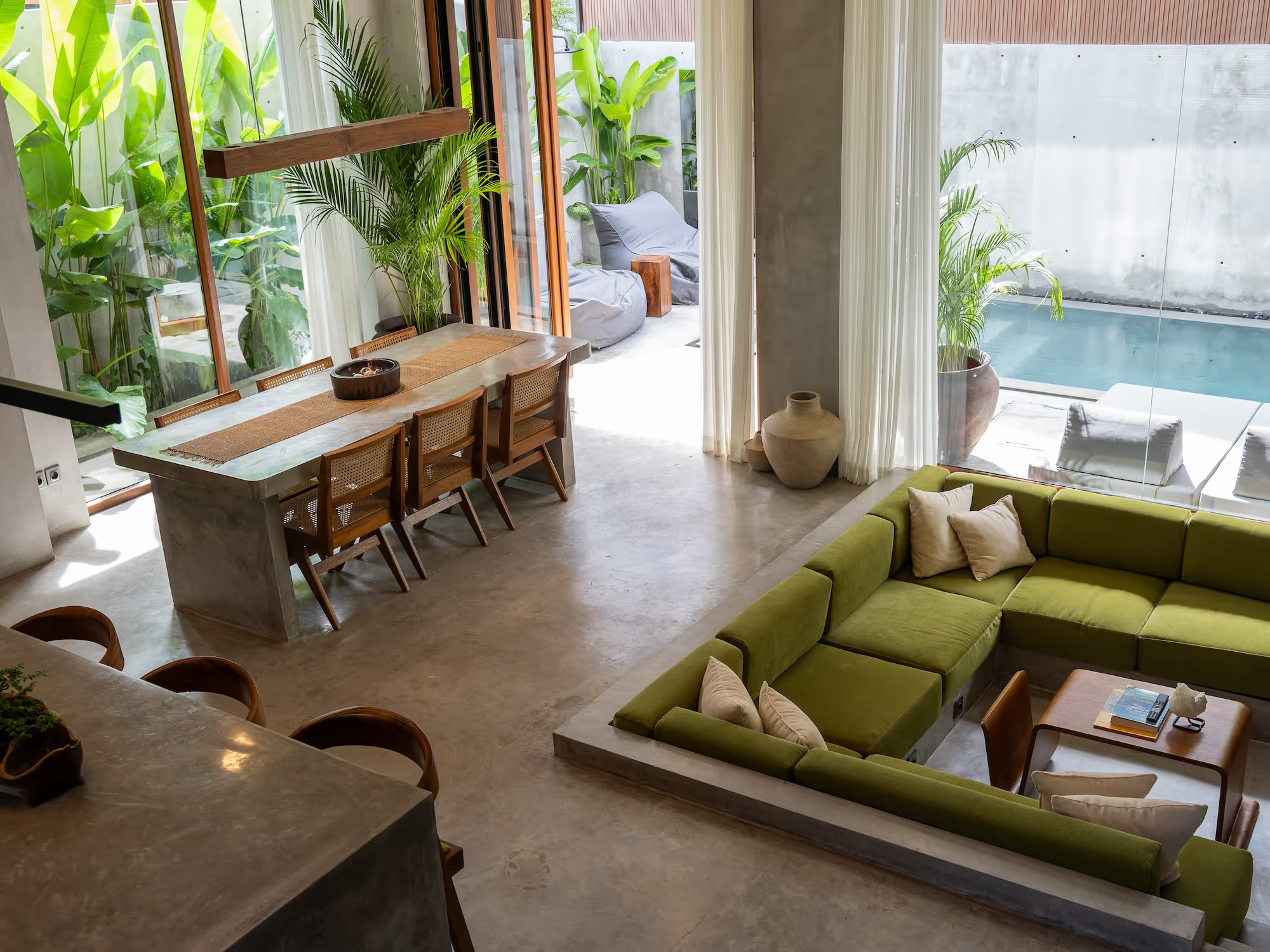
Muda Villas is its warmer, moodier sibling: the same concrete bones wrapped around a 70s-inspired interior of velvet and leather, vintage chrome lighting, burnt-orange textiles, a sunken banquette, and a green-tiled kitchen bar. Guests describe walking in and feeling like they've stepped onto a film set — the concrete exterior gives nothing away about the warmth inside.
Same building, different world inside. Choose Kona for stark, temple-like calm; choose Muda for character and texture.
Both are two-bedroom, two-storey villas with private pools, minutes from Nyang Nyang Beach and Uluwatu's surf breaks and cafés. One note for families: the sculptural staircases and raw concrete edges make them best suited to adults or older teens rather than young children.
The operator's angle: with so many copy-and-paste Mediterranean villas on the island, a home in darker, cooler tones genuinely stands out — and it photographs beautifully. Our two brutalist villas, Muda and Kona, have already been used for a run of content-creator and brand shoots, which is the kind of free exposure most villas never get.
The real reason to book one
The strongest argument for a brutalist villa is not the architecture. It is the scarcity.
There are very few of these on the island. The trend is growing, but it still runs directly against Bali’s default build — the modern Mediterranean white villa, of which there are now thousands, most of them near-identical. A dark, heavy, concrete house is the opposite of that, and it reads instantly as a decision somebody made rather than a template somebody bought.
That matters more than it used to. The guests who care about the alternative side of Bali — the design-led, creative crowd — want a stay that produces something worth posting, and everything photographed in a white villa now looks like everything else photographed in a white villa. Standing out is the whole game in a market this full of copycats, and the darker aesthetic does it for you without you having to try.
Is a brutalist villa right for your stay?
Choose a brutalist villa if you value design, atmosphere, and photography over a conventional tropical-resort look. The upside is a stay that feels like an editorial spread — sculptural, private, and unlike anything else you'll book in Bali. The trade-off is convenience: brutalist villas like Muda and Kona sit in quieter, more secluded spots, so you give up walkability to cafés and the soft, family-friendly layout of a typical villa. For design-minded couples, creative travellers, and small groups, that's a trade worth making. We wrote this one up in full — see the Kona Villas review.
Frequently asked questions
What is tropical brutalism?
Tropical brutalism is raw-concrete brutalist architecture adapted to a hot, humid climate. It keeps brutalism's exposed concrete and bold geometry but adds open-air corridors, deep shade, indoor-outdoor flow, and a tolerance for weathering, so the buildings feel cool and sculptural rather than heavy.
Where can I stay in a brutalist villa in Bali?
The most celebrated brutalist stay is The Tiing in Tejakula on the north coast, and The Slow in Canggu is the island's best-known tropical-brutalist hotel. On the Bukit in the south, Cabo Bali's Kona Villas and Muda Villas in Nyang Nyang, Uluwatu, offer private brutalist villas you can book directly.
What's the difference between Muda and Kona?
They share the same brutalist concrete building but have opposite interiors. Kona is raw and minimal — stripped-back concrete with a contemplative mood. Muda is warm and collected — 70s retro-modern furniture, rich textiles, and a green-tiled bar. Choose Kona for austere calm and Muda for character and texture.
Are brutalist villas good for families with young children?
Generally no. Villas like Muda and Kona have sculptural staircases and raw concrete edges, so they're best suited to adults or older teens. For young families, a villa with a softer, more child-friendly layout is a better fit.
Where is the best brutalist architecture in Bali?
North Bali has the icon — The Tiing in Tejakula. Canggu has The Slow, and Ubud has a handful of concrete villas among the rice fields. But the Bukit Peninsula in the south has the best concentration of private brutalist villas, including Kona and Muda in Nyang Nyang.
Key takeaways
- Tropical brutalism is raw concrete adapted for the tropics — sculptural, shaded, and indoor-outdoor.
- You can trace it across Bali: The Tiing (north), Ubud's rice fields, The Slow (Canggu), and the Bukit (south).
- On the Bukit, Kona and Muda share one concrete shell but offer opposite moods — stark calm versus warm, retro character.
- Brutalist villas reward design lovers and couples; they're best for adults, not young children.
Stay in one
If a brutalist villa is your idea of the perfect Bali stay, Kona and Muda are bookable direct — no OTA fees, and a real local team behind your stay. Explore Kona Villas for stripped-back calm, or Muda Villas for warm, retro-modern character, and see the full collection at all villas.
About the author. Keanu Fischell is co-founder of Cabo Bali, which manages 20+ boutique villas across Uluwatu, Bingin and Canggu. He writes from the operator's side of Bali villas — real numbers, real guest feedback, and lessons from running the portfolio day to day.
Related reading
- → The best villas in Uluwatu and Bingin
- → How villa design decisions drive rental performance
- → Where to stay in Bali
- → The 14 best beaches in Uluwatu