Updated 21 June 2026 · 6 min read · By Rissa Prima, Digital Marketing Manager, Cabo Bali
On this page
- Villa Design Decisions That Kill Rental Performance in Bali
- The short answer
- The design audit at a glance
- Key takeaways
- Frequently asked questions
- Where to next?
Villa Design Decisions That Kill Rental Performance in Bali
The Cabo Bali 10-Point Design Audit
Everything we check before agreeing to manage a new property — and what we wish developers had thought about 18 months earlier.
The short answer
The villa design decisions that quietly kill rental performance in Bali are nearly all made 12–18 months before the first guest ever books — in the floor plan, the bedroom mix, the pool, the materials and the operational details developers treat as afterthoughts. Most cost almost nothing to fix on paper and a fortune to fix after handover. Below is the exact design audit we run before agreeing to manage a property. Our portfolio runs at 91% occupancy against a Bali market average nearer 55–65%, and most of that gap lives in these details rather than in luck or location.
Quick answer
- Design for the lead shot: if you can't picture the hero photo from the floor plan, the layout isn't finished.
- Build flexibility: one twin-convertible room opens the villa to families and groups, not just couples.
- Vary your units: after roughly eight identical villas, your own properties start competing on price alone.
- Respect function: luggage storage, staff areas, power capacity and waste handling are design decisions, not operational afterthoughts.
- Get the expensive things right early: pool depth and lighting, terrazzo placement, hotel-grade bathrooms and usable outdoor space quietly win or lose bookings.
Most Bali villa developers optimise for the sale — not for what happens after.
The renders look incredible. The buyer signs.
Then the villa hits Airbnb and underperforms — because decisions made during the design phase quietly killed its rental potential.
We manage villas across Bali and see the same mistakes over and over.
The frustrating part? Nearly all of them cost nothing to fix at the design stage.
After handover, they cost a fortune.
Average villa occupancy in Bali sits around 55–65% according to AirDNA market data.
Our portfolio runs at 91%.
The difference isn't luck.
It isn't location.
It's the details covered in this audit — and, after handover, in how the villa is run day to day. That side is our Bali villa management service.
This is our 10-point design audit — the exact things we assess before taking on a new property.
We're publishing it because if more developers built with these in mind, everyone would make more money.
The design audit at a glance
Before the point-by-point walkthrough, here is the whole audit in one view — the common mistake, what high-performing villas do instead, and why it shows up in bookings.
← Scroll to see all columns →
| Design area | Common mistake | What high performers do | Why it matters for bookings |
|---|---|---|---|
| Lead / hero shot | No obvious hero view designed into the layout | Frame a pool-to-living sightline or a statement feature | One scroll-stopping photo drives listing click-through |
| Bedroom mix | Three identical king rooms, couples only | Add one twin-convertible room for families and groups | Wider booking pool, fewer enquiries turned away |
| Unit count | Eight-plus identical units on the same platforms | Vary layouts and configurations across the project | Protects nightly rate from internal price wars |
| Operational design | Luggage, staff, power and waste left as afterthoughts | Build in storage, staff areas, capacity and access | Lets a villa deliver hotel-style service guests pay for |
| Pool | Single deep tank, dark interior, no lighting | Graduated depth, light interior, shade, evening lighting | Cheap upgrades with an outsized impact on bookings |
| Materials / terrazzo | Terrazzo in transition zones, where it cracks | Terrazzo in stable interiors; stone or concrete for transitions | Fewer maintenance issues and bad-condition reviews |
| Bathrooms | Low shower heads, poor light, no bidet or storage | Hotel-grade fittings, lighting, bidet spray, storage | Stronger reviews, especially with key guest segments |
| Outdoor space | Unshaded, unfurnished, no privacy | Private, shaded, furnished and lit outdoor rooms | More usable, photographed space means more bookings |
1. Build With Your Lead Shot in Mind
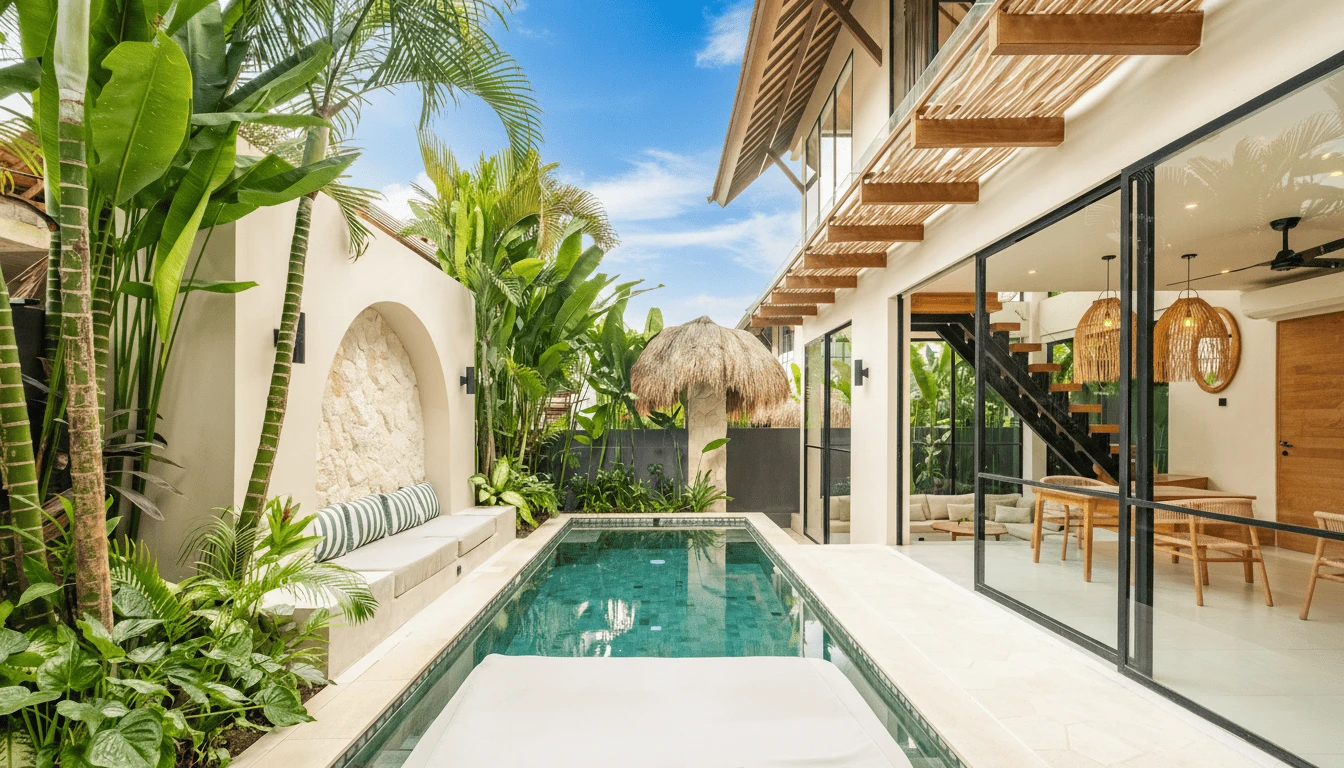
Every listing lives or dies by one photo.
Before finalising the layout, ask yourself:
What stops someone mid-scroll?
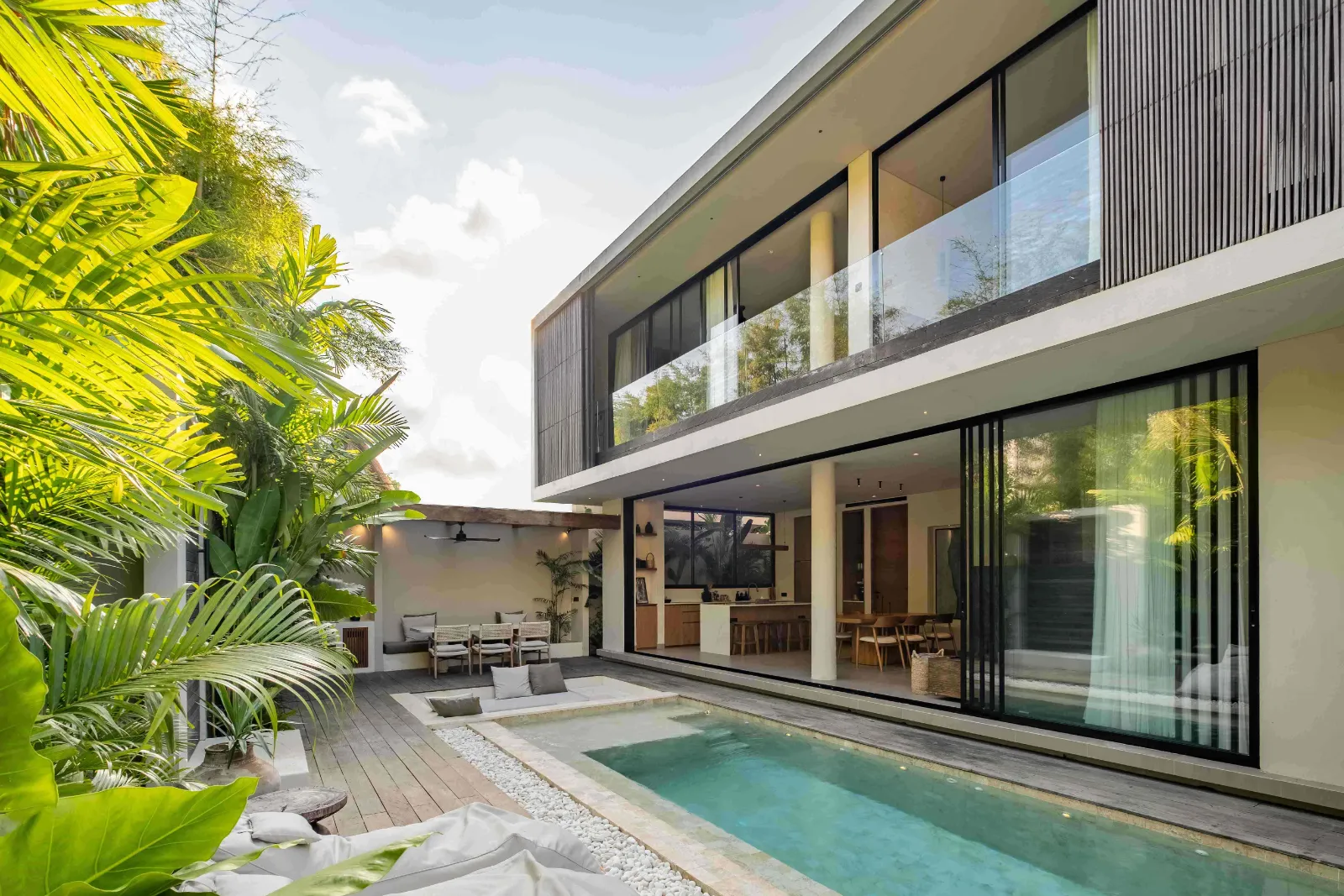
The pool-to-living sightline.
A dramatic entry.
A statement bathtub.
If you can't visualise the hero shot from the floor plan, the floor plan needs work.
2. Bedroom Configurations That Limit Pricing
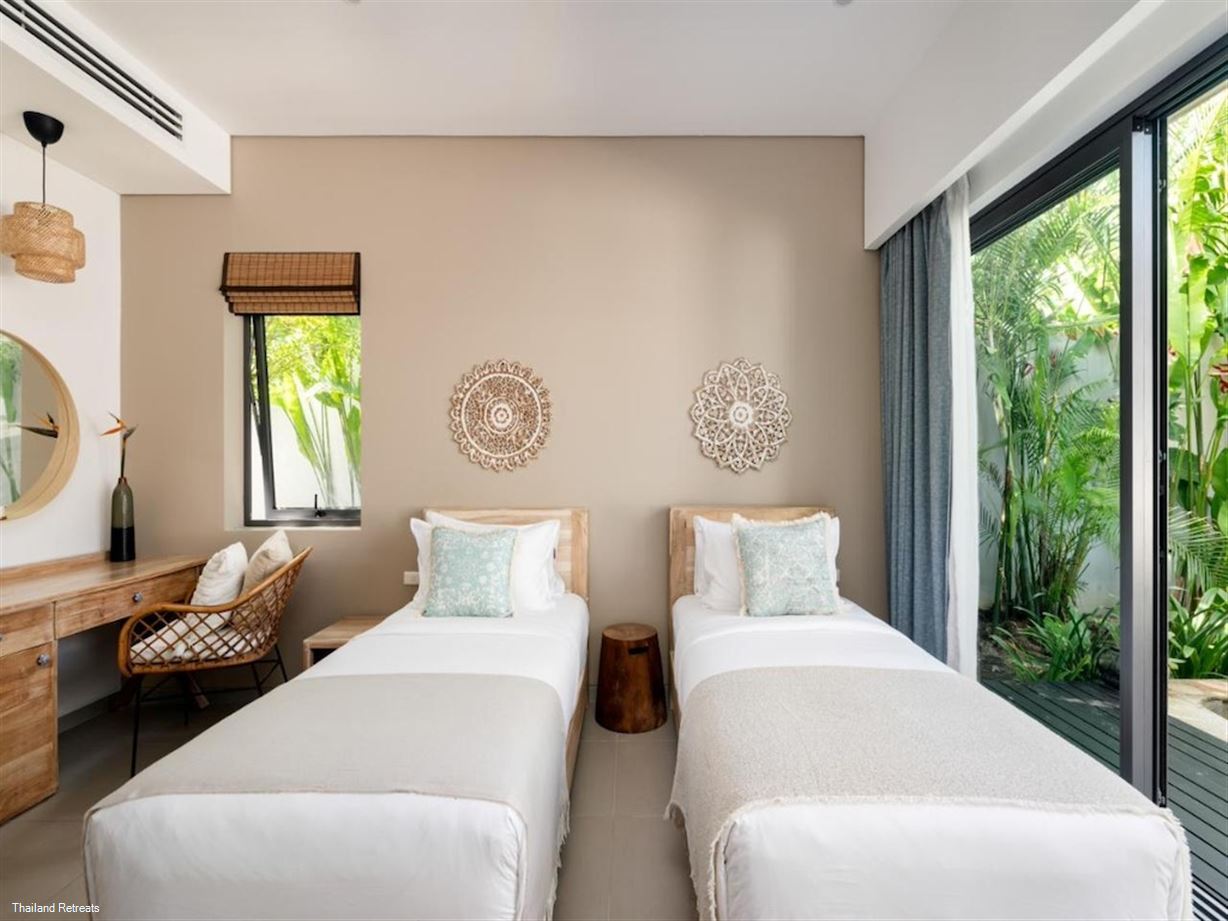
Three bedrooms with three king beds feels premium.
In practice, it limits you to couples only.
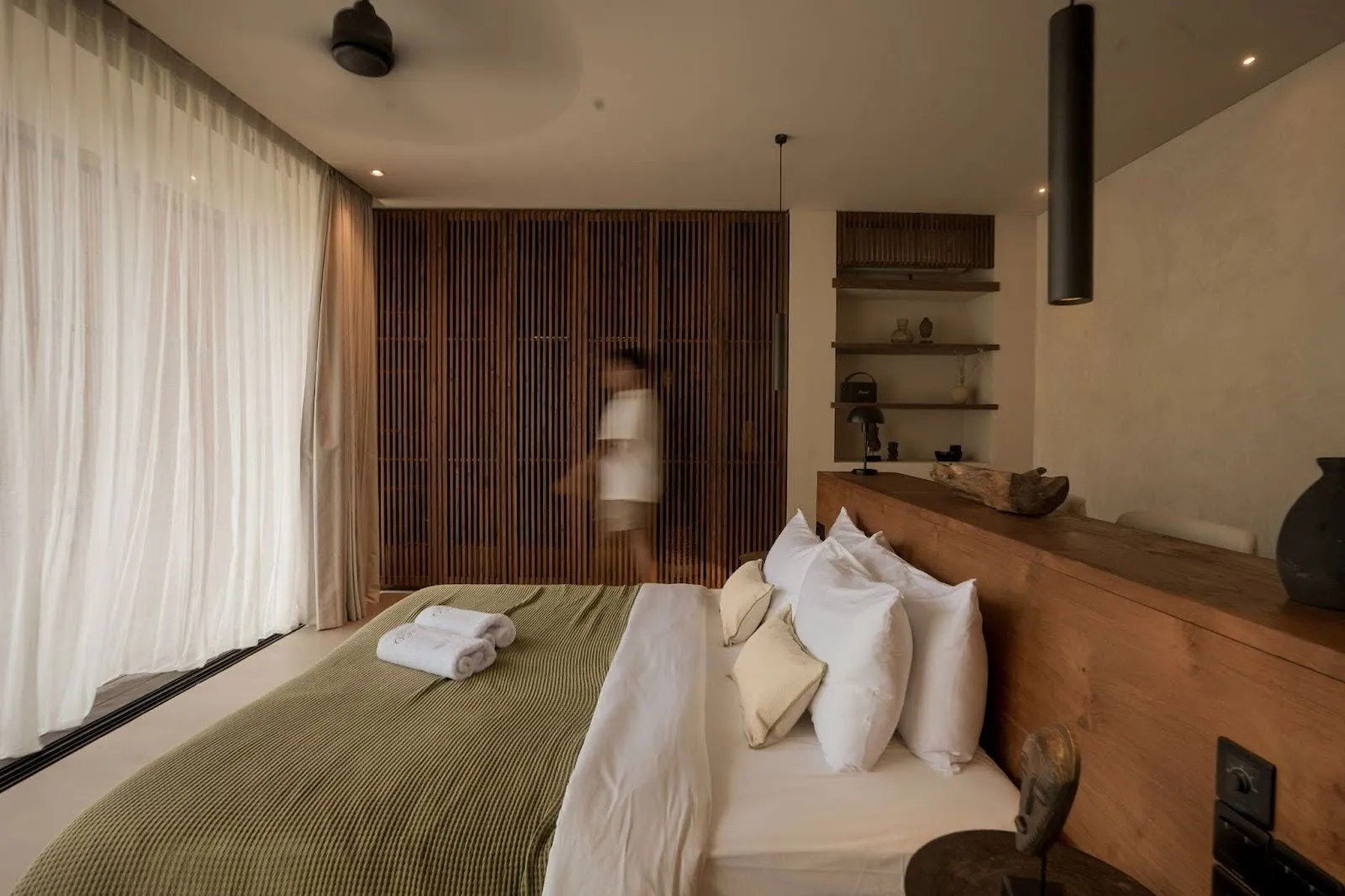
One twin-convertible room opens the villa to families and mixed groups.
Villas with flexible bedroom configurations can typically outperform rigid layouts by around 15-25% in occupancy — simply because they can accept bookings others turn away.
3. How Many Identical Units Are You Building?
After roughly eight identical units, they start competing with each other on the OTAs.
Same photos.
Same layout.
Same amenities.
The only differentiator left is price.
Vary configurations early.
Small differences prevent your own villas from racing each other to the bottom.
4. Consider Function: How Will This Villa Actually Operate?
Guests often choose hotels over villas because of reception, luggage storage, and on-site support.
Even basic solutions improve performance:
- Secure luggage storage
- External pump room access
- Staff areas
- Proper storage
- Sufficient electrical capacity
- Sensible waste management
These are design decisions, not operational afterthoughts.

5. Pool Design: Get the Depth Right
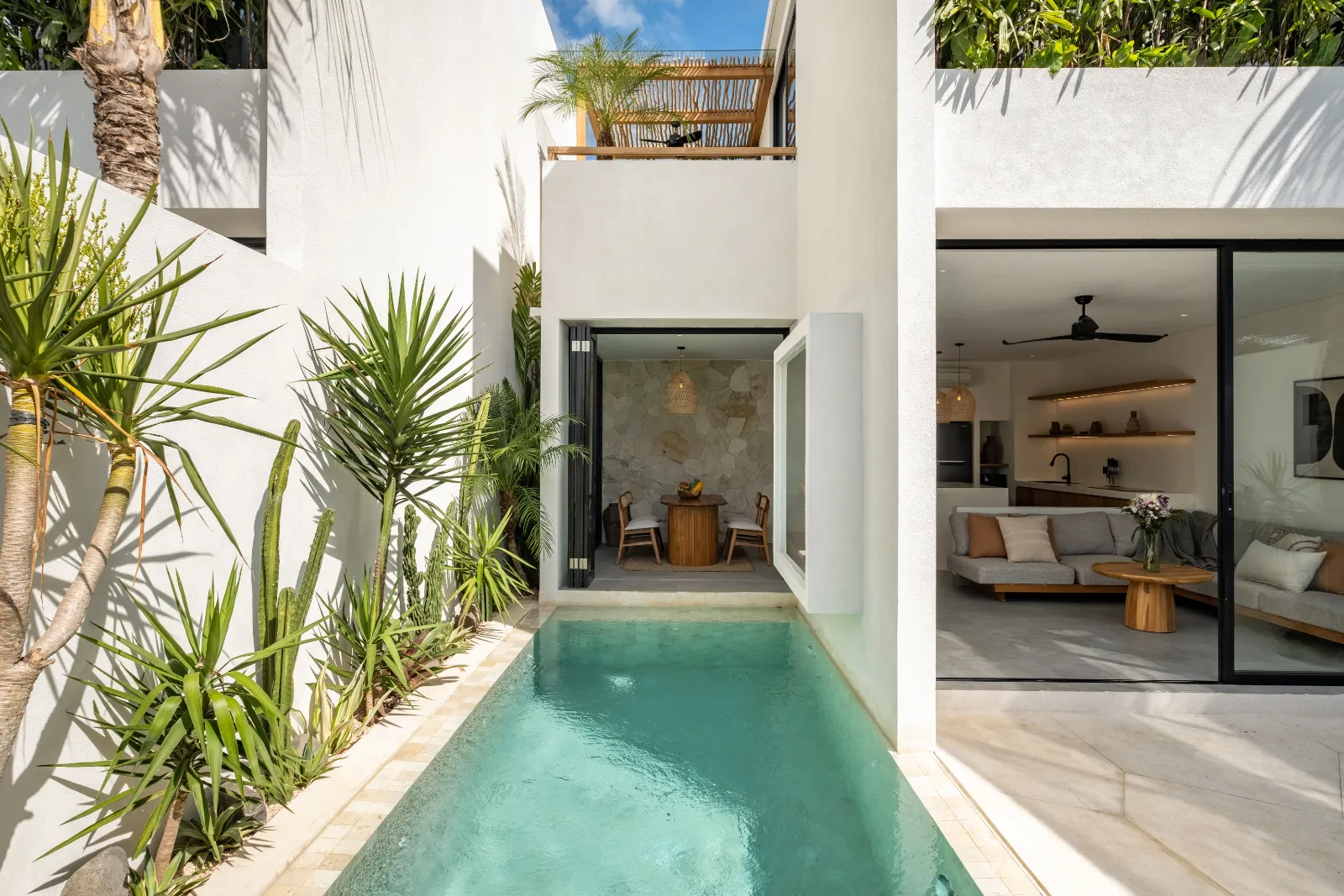
The pool is usually the centrepiece.
Get it wrong — and it's your most expensive mistake.
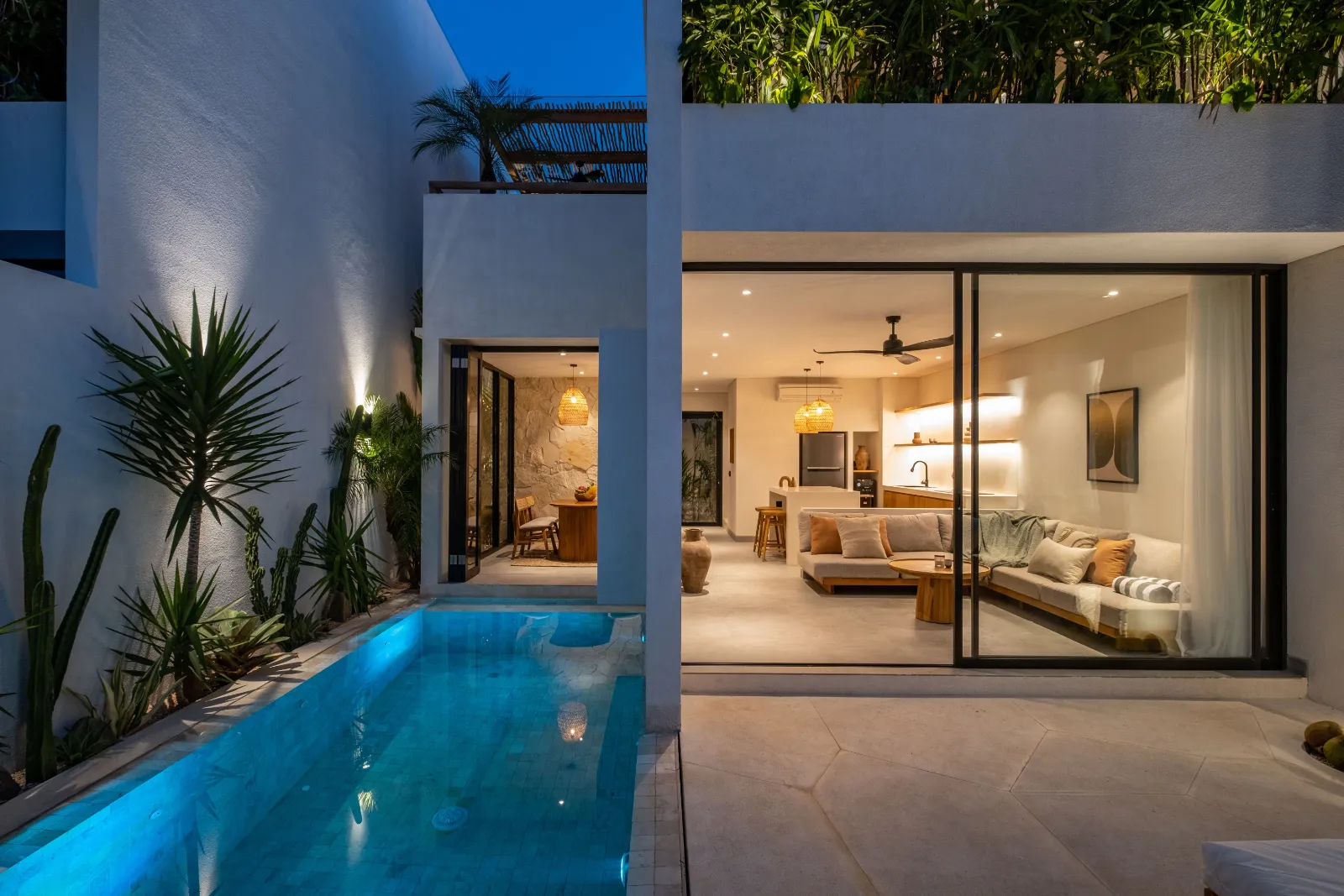
Best-performing pools have:
- Graduated depth
- Light-coloured interiors
- Shade
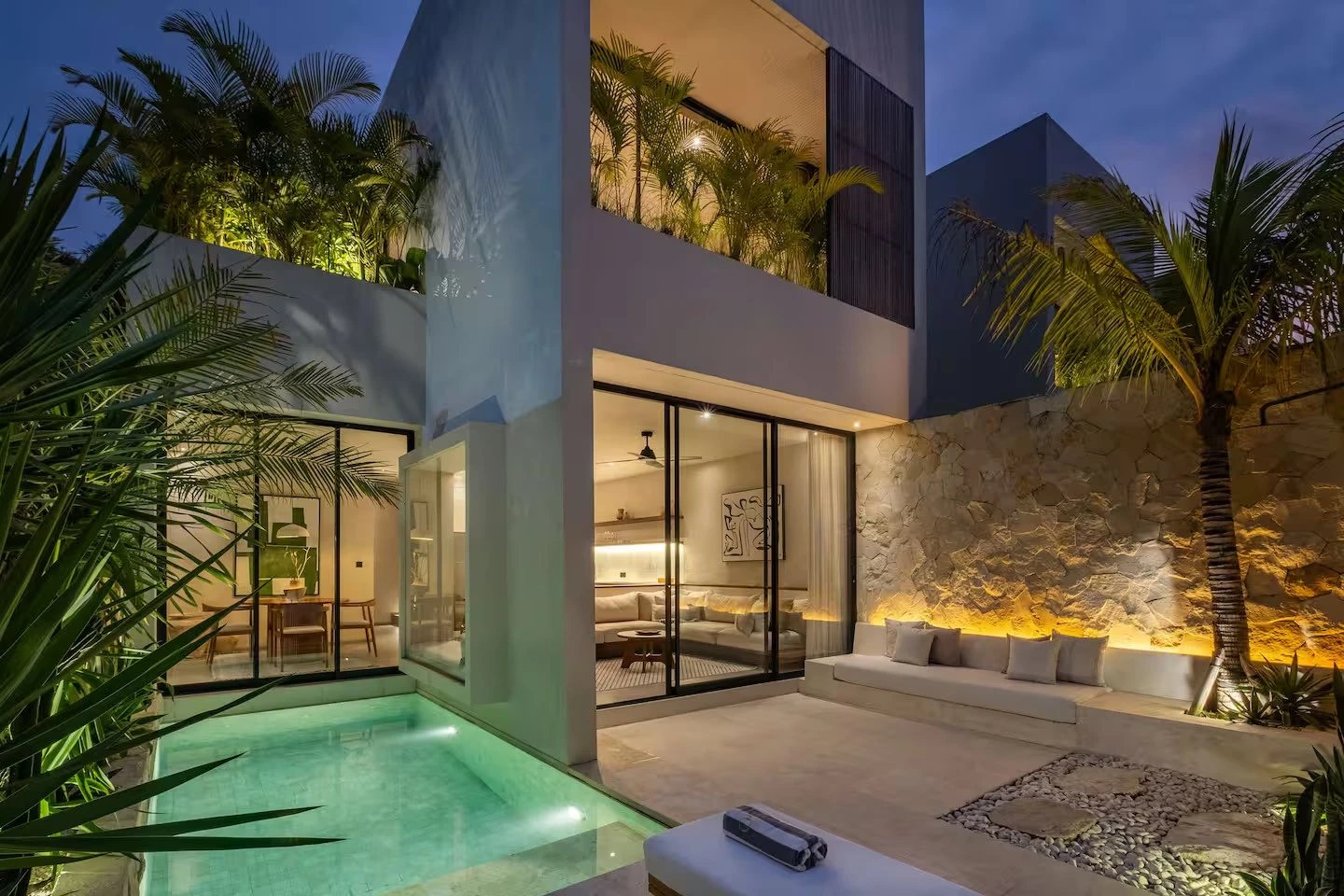
- Lighting for evenings
Pool lighting is one of the cheapest upgrades with the biggest impact on bookings.
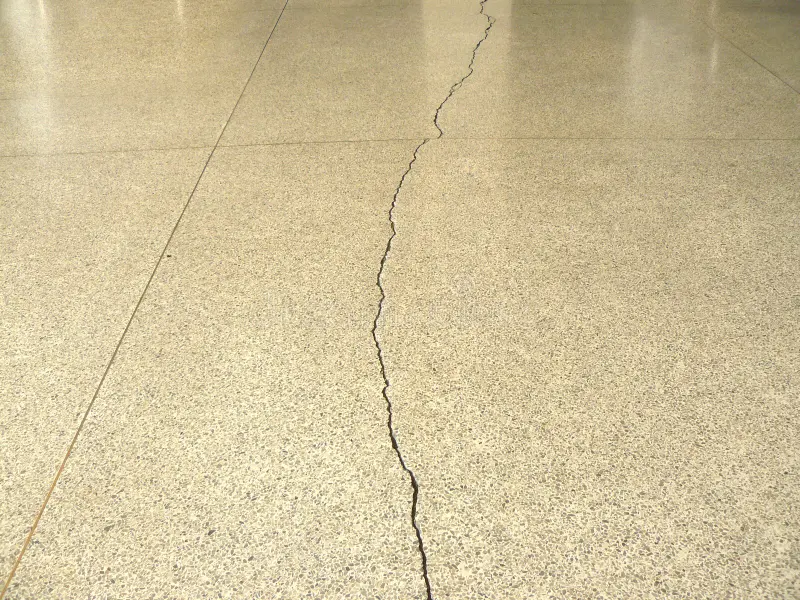
6. Terrazzo: Looks Great, Cracks Fast
Terrazzo looks incredible in renders.
In reality, it cracks in transition zones due to constant temperature swings between air-conditioned interiors and Bali heat.
Use terrazzo only in temperature-stable interior spaces.
For transitions, stone or polished concrete performs far better.
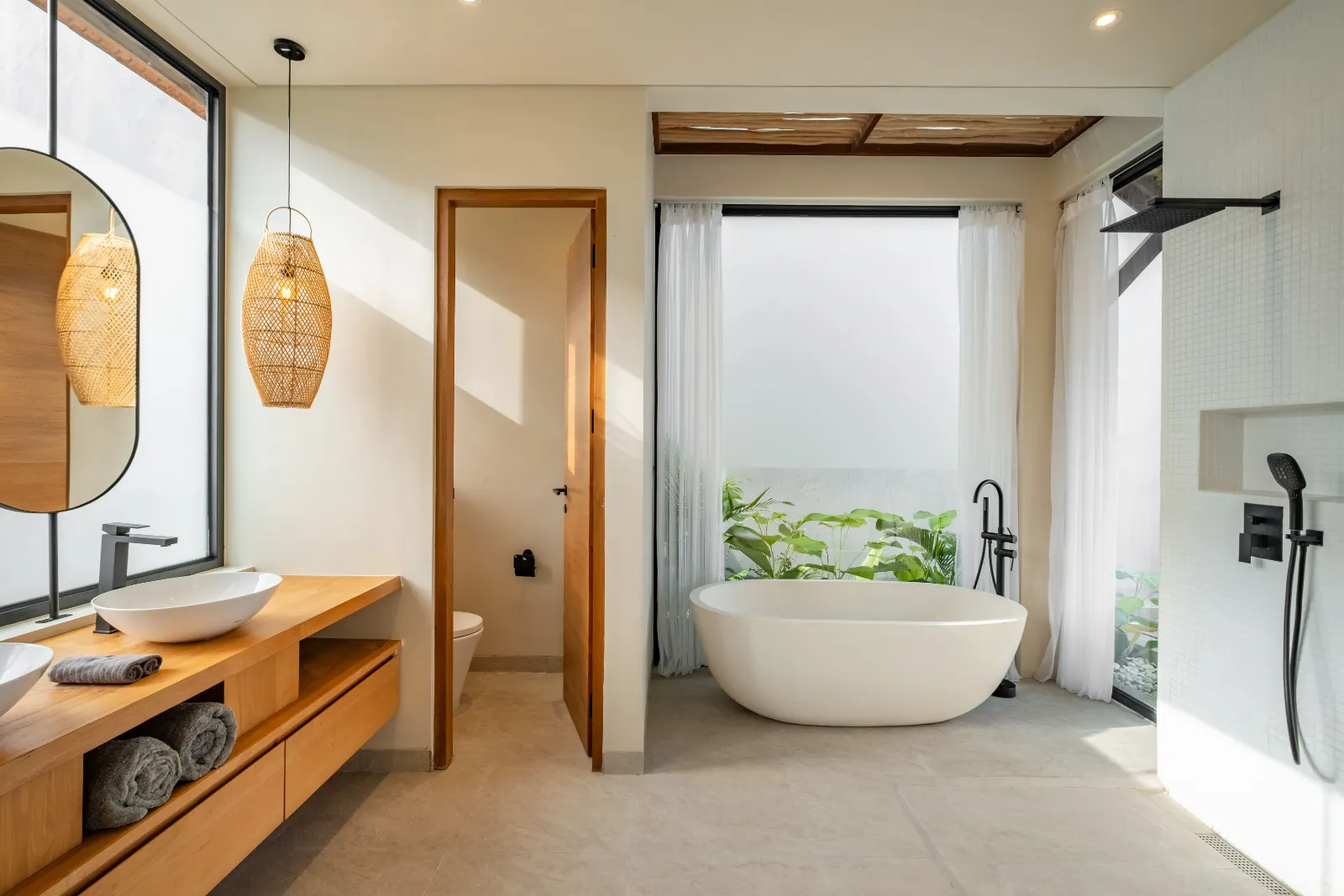
7. Bathrooms That Miss the Mark
Guests paying premium rates expect hotel-grade bathrooms.
Common misses:
- Shower heads installed too low
- Poor lighting
- No bidet spray
- No storage
These details matter — especially for Southeast Asian and Middle Eastern guests.
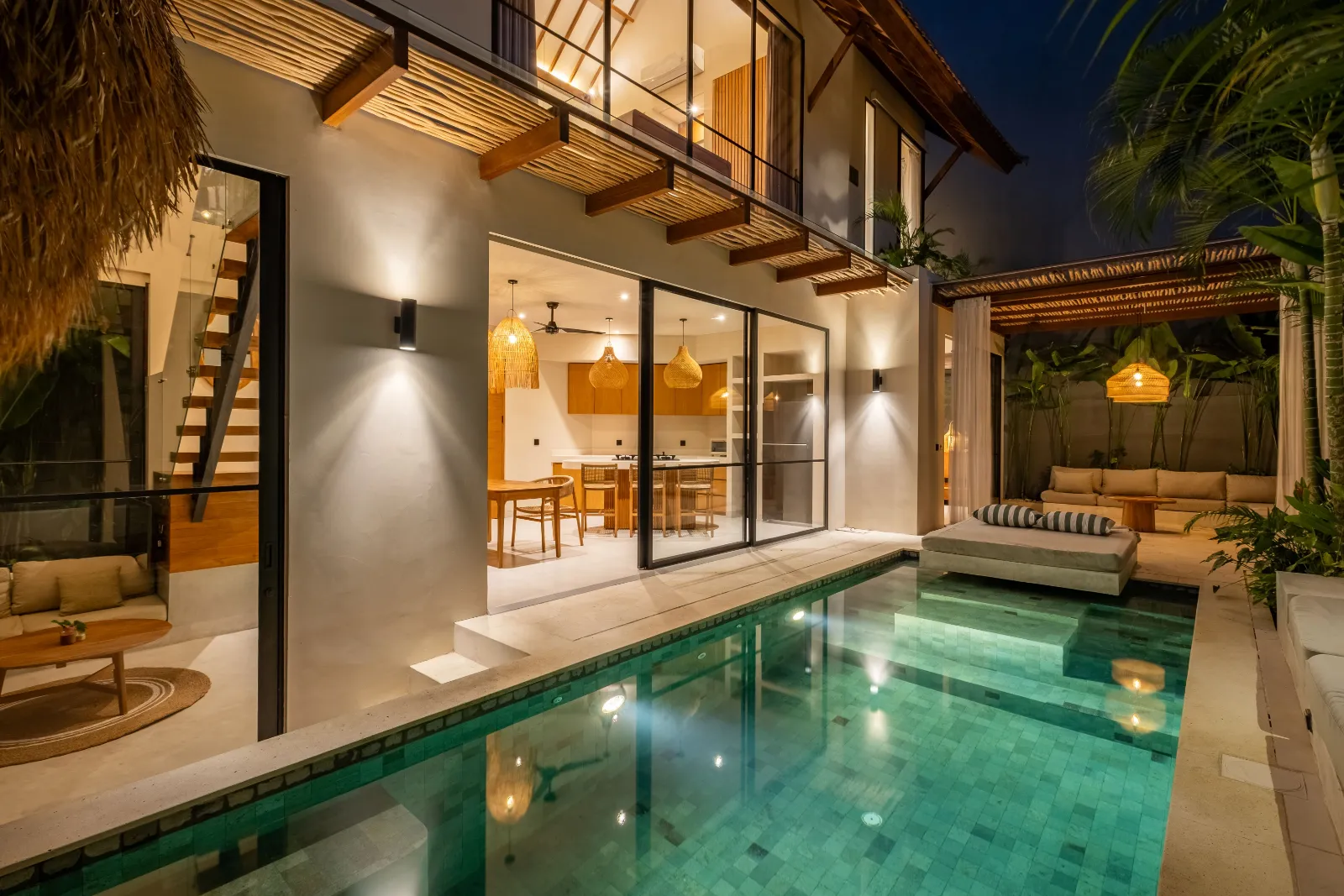
8. Outdoor Spaces: Your Biggest Asset
Guests come to Bali to live outside.
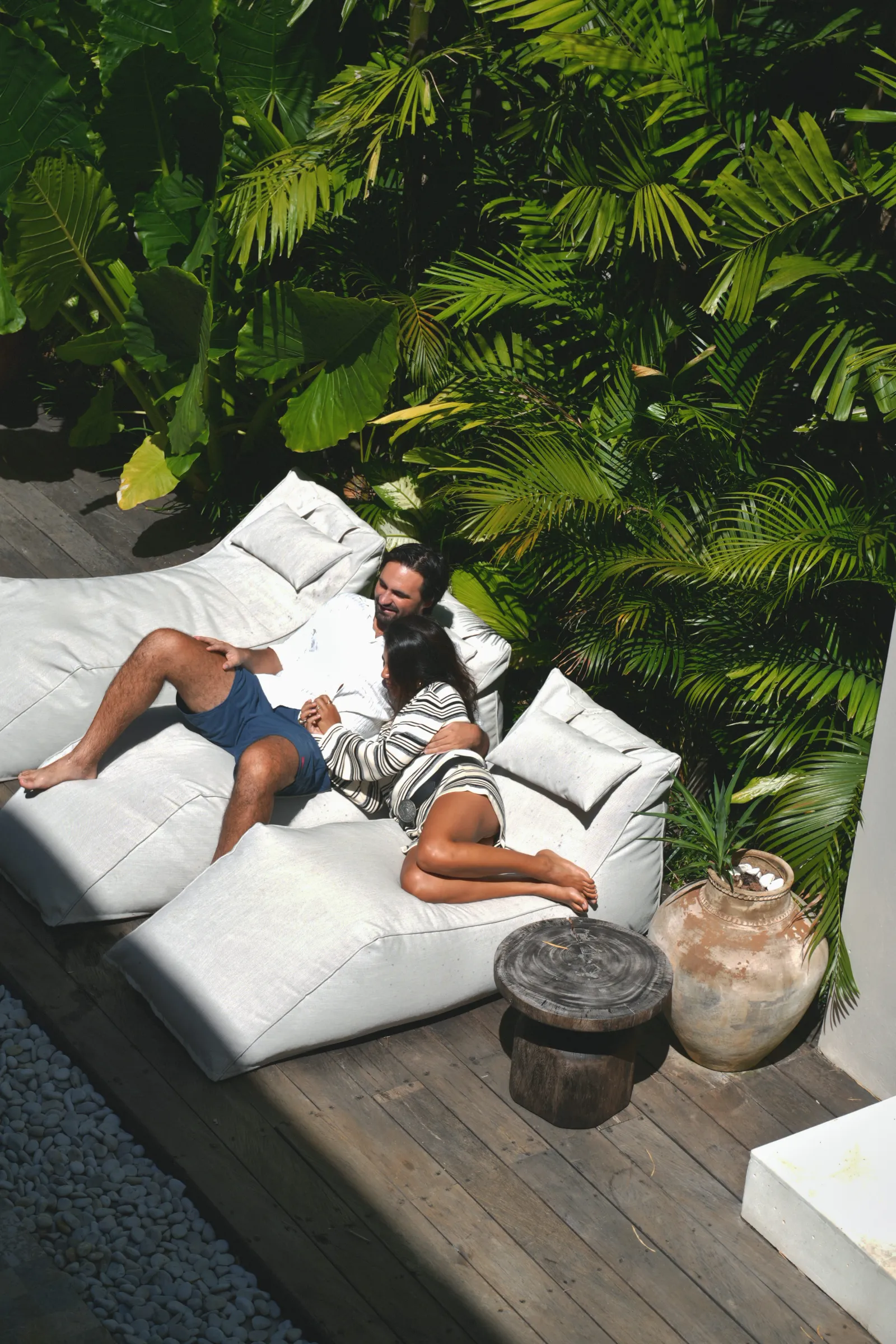
If outdoor areas lack privacy, shade, lighting, or quality furniture, they go unused — and unphotographed.
Score Your Villa Design
8–10 points covered: Built for performance
5–7 points covered: Solid, but gaps will cost bookings
Under 5 points covered: High risk of underperformance
Working With a Management Partner Early
The cheapest time to fix design mistakes is before construction.
A management partner pressure-testing plans early costs nothing — and prevents years of underperformance.
We pressure-test design on projects like Luro Villas in Bingin, and the payoff shows up later in occupancy and reviews.

Key takeaways
- The biggest threats to a Bali villa's rental performance are designed in long before opening — in layout, bedroom mix, pool, materials and operational planning.
- Flexible bedroom configurations (a twin-convertible room) widen the booking pool well beyond couples and lift occupancy.
- After roughly eight identical units, villas in the same project compete on price; varying configurations early protects the nightly rate.
- Luggage storage, staff areas, electrical capacity and waste handling are design decisions that let a villa deliver hotel-style service.
- Pool depth and lighting, correct terrazzo placement, hotel-grade bathrooms and usable outdoor space are cheap to get right early and costly to fix later.
- The cheapest time to fix design mistakes is before construction; our managed portfolio runs at 91% occupancy against a 55–65% market average, and these details are most of the difference.
Frequently asked questions
What villa design decisions most hurt rental performance in Bali?
The ones made at the design stage: an unflattering floor plan with no hero shot, rigid bedroom layouts that only suit couples, too many identical units, no operational space for luggage, staff, power and waste, poorly designed pools, terrazzo in cracking-prone transition zones, low-spec bathrooms and unusable outdoor areas. Almost all of them cost little to fix on paper and a great deal to fix after handover.
Why do flexible bedroom configurations earn more?
A villa with three king beds only suits couples. A single twin-convertible room lets the same villa accept families and mixed groups, so it can take bookings a rigid layout has to turn away. In our experience that flexibility can lift occupancy by roughly 15-25%.
How deep should a Bali villa pool be, and what makes a pool perform?
The best-performing pools use graduated depth rather than one deep tank, a light-coloured interior, some shade, and lighting for the evening. Pool lighting in particular is one of the cheapest upgrades with the biggest impact on bookings, because it makes the villa photograph well after dark.
Is terrazzo a good choice for a Bali villa?
Terrazzo looks superb in renders but tends to crack in transition zones, where constant swings between air-conditioned interiors and Bali heat stress the material. Use it in temperature-stable interior spaces only; for indoor-outdoor transitions, stone or polished concrete generally performs far better.
How many identical villas can you build before they compete with each other?
As a rule of thumb, after about eight identical units the villas begin cannibalising each other on the booking platforms: same photos, same layout, same amenities, and the only remaining differentiator is price. Varying configurations early prevents your own properties from racing each other to the bottom.
When should you involve a management company in a villa project?
As early as possible, ideally while the plans are still on paper. The cheapest time to fix a design mistake is before construction, and a management partner pressure-testing the layout, bedroom mix and operational design early usually costs nothing while preventing years of underperformance.
Where to next?
- → Inside the Luro Villas case study in Bingin
- → How we hit 91% occupancy on a new villa
- → 7 signs your Bali villa is underperforming
- → What a 2-bed villa in Bingin actually earns
Sources: AirDNA Bali market data 2024–2025, STR Global benchmarks, Cabo Bali portfolio performance data 2023–2025.
About the author. Rissa Prima is Digital Marketing Manager at Cabo Bali, which manages boutique villas across Uluwatu, Bingin and Canggu. Rissa writes from the operator's side of Bali villas — real numbers, real guest feedback, and lessons from the team running the portfolio day to day.