By Rissa Prima, Digital Marketing Manager, Cabo Bali

On this page
- Quick answer
- The Tradeoff Most People Get Wrong
- The Biggest Decision: Canggu vs Uluwatu
- South Bali — The Beach and Lifestyle Zone
- Bali Areas at a Glance
- Central Bali — Culture, Nature, and the Interior
- North Bali — Off the Beaten Path
- The Islands — Nusa Lembongan and Nusa Penida
- East Bali
- West Bali
- Best Area by Trip Type
- Villas vs Hotels in Bali
- Where We Recommend Staying
- The Bottom Line
- Key takeaways
- If you have been to Bali before
- Frequently Asked Questions
- Where to Next
Quick answer
If you only have 30 seconds, here’s how to think about Bali:
Canggu → social, busy, cafes, nightlife, digital nomads
Uluwatu → scenic, slower, beaches, sunsets, surf
Bingin → walkable, relaxed, boutique villas, couples
Seminyak → shopping, dining, nightlife, polished
Ubud → jungle, culture, wellness, inland
Sidemen → rice terraces, Mount Agung, total escape
Nusa Penida → dramatic cliffs, day-trip island
Sanur → calm, family-friendly, east coast Once you have picked an area, our 2026 Bali trip cost breakdown puts real numbers against each night.
If you want energy and things to do → Canggu or Seminyak.
If you want views and a slower pace → Uluwatu.
If you want balance and walkability → Bingin.
If you want nature and culture → Ubud or Sidemen.
If you want remote adventure → Munduk, Amed, or Nusa Penida. Torn between the cliffs and the strip? We put them head to head in Uluwatu vs Seminyak.
That covers 90% of decisions. The rest of this guide covers all 16 areas in detail — with honest tradeoffs, so you actually choose the right one.
The Tradeoff Most People Get Wrong
Most travellers try to find somewhere that is quiet, walkable, scenic, and social. In Bali, you usually only get two or three of these.
Canggu → walkable + social (but not quiet)
Uluwatu → scenic + quiet (but not walkable)
Bingin → walkable + quiet (but less social)
Seminyak → social + walkable (but not scenic)
Ubud → scenic + cultural (but no beach)
Sidemen → quiet + scenic (but remote)
Understanding this tradeoff is the key to choosing correctly. Every area in Bali involves giving something up — and the people who have the best trips are the ones who decide what matters most before they book.
The Biggest Decision: Canggu vs Uluwatu
The single biggest decision most visitors face is whether to base themselves in the Canggu area (southwest coast) or the Uluwatu area (southern peninsula, also called the Bukit).
Canggu is where you go to be around people. Uluwatu is where you go to get away from them.
Choose Canggu if you want cafes on every corner, gyms, nightlife, coworking spaces, and a busy social scene. Choose Uluwatu if you want dramatic coastline, world-class surf, cliff-top dining, and a slower, quieter rhythm. They are completely different experiences of Bali, and trying to split your time evenly between both usually means you settle into neither.
Our recommendation: pick one as your base and day-trip the other. If you are a couple looking for a romantic escape, lean toward Uluwatu or Bingin. If you are a first-timer who wants to feel the energy of modern Bali, lean toward Canggu.
South Bali — The Beach and Lifestyle Zone
Canggu and Pererenan
Canggu is Bali’s most talked-about area — and the most divisive. Some people love the energy, the cafe culture, and the constant stimulation. Others find it overwhelming, overdeveloped, and noisy. Both are right.
Central Canggu (Batu Bolong, Berawa) is dense with traffic, scooters, restaurants, bars, and tourists. Pererenan, the quieter northern end, has emerged as the more livable version of Canggu — calmer streets, better cafes, and less chaos. TimeOut Magazine voted it Asia’s coolest neighbourhood in 2024, and the hype is earned.
Best for: digital nomads, first-time visitors, solo travellers, groups of friends, people who want options and social energy.
Not ideal for: people seeking quiet, scenic beauty, or beach quality. Canggu’s beaches are dark sand and not great for swimming.
Vibe: busy, social, flat terrain, walkable to cafes and restaurants. Think Tulum meets Southeast Asia.
Stay here if: you want to live Bali, not escape it.
If you want Canggu without the chaos, stay in Pererenan. Vela Villas is our pick — a modern 2-bedroom pool villa on a quiet lane, five minutes walk from Pererenan’s best cafes.
The beach clubs, not the sand, are the real draw on this stretch of coast. We ranked them in our guide to the best beach clubs in Canggu.
Seminyak
Seminyak was Bali’s original tourist hub for upscale travellers, and it still delivers on dining, shopping, and nightlife. The beach is better than Canggu’s, the restaurants are more polished, and the nightlife is more established. But it also feels more commercial and less authentically Bali than newer areas.
Best for: couples who want fine dining and beach clubs, travellers who enjoy shopping, people who want a polished holiday experience.
Not ideal for: surfers, budget travellers, people looking for nature or quiet.
Vibe: upscale, commercial, walkable, more resort-oriented than Canggu.
Stay here if: nightlife and dining are priorities, and you want a more curated, less backpackery version of south Bali.
Uluwatu and the Bukit Peninsula
Uluwatu is the dramatic southern tip of Bali — rugged limestone cliffs, world-class surf breaks, and some of the most spectacular sunsets on the island. The area includes Pecatu, Padang Padang, Suluban, and Nyang Nyang, each with its own character.
Unlike Canggu, Uluwatu is spread out. You need a scooter or driver to get around, and there is no single walkable centre. What you gain is space, scenery, and a slower pace that feels completely different from south Bali’s busier areas.
Best for: couples, honeymooners, surfers, people who want views and seclusion, beach club enthusiasts (Savaya, Sundays, Pamilla).
Not ideal for: people who want walkability, nightlife, or to be in the middle of a social scene.
Vibe: scenic, spacious, cliff-top, nature-first. Feels like a different island from Canggu.
Stay here if: the view matters more than convenience.
For couples wanting ocean views and privacy, Marevita Villas sits on the Pecatu cliffs with panoramic sunsets. For design-focused travellers, Kona Villas near Nyang Nyang offers brutalist architecture unlike anything else in Bali.
Bingin
Bingin sits inside the Uluwatu area but feels very different. The best way to describe it is “Uluwatu with walkability.”
Unlike the rest of the Bukit Peninsula, Bingin has a genuine village centre — cafes, restaurants, gyms, and boutique shops you can walk to. It is quieter than Canggu but less remote than Uluwatu’s cliff areas. For couples and small groups who want a relaxed base with easy access to surf and food, it hits a rare sweet spot.
In early 2026, the beachfront and cliff-side structures at Bingin Beach were demolished as part of government enforcement of coastal planning laws. The beach itself is currently closed due to asbestos remediation, but Bingin central is completely unaffected and actually thriving — with new cafes, restaurants, and gyms opening regularly.
Best for: couples, surfers, slow travellers, people who want the Bukit Peninsula lifestyle with walkability.
Not ideal for: people who want nightlife, large resorts, or are nervous about hilly terrain and village roads.
Vibe: boutique, village-like, relaxed, walkable. The most “livable” part of Uluwatu.
Stay here if: you want balance — quiet enough to relax, walkable enough to explore.
Luro Villas is our flagship in Bingin — modern design, private pools, walkable to everything. Casa Del Beso is for travellers who want handcrafted art and personality. Little Asia is the most affordable option — a traditional teak garden villa next door to Bingin’s best cafe.
Nusa Dua
Nusa Dua is Bali’s purpose-built resort enclave on the southeastern coast. It is manicured, controlled, and predictable — which is either exactly what you want or exactly what you are trying to avoid.
The beaches here are among the best in south Bali: white sand, calm water, and well-maintained. The trade-off is that Nusa Dua feels like it could be anywhere — it lacks the character and cultural texture that makes other parts of Bali interesting.
Best for: families with young children, travellers who want resort infrastructure, all-inclusive holiday seekers.
Not ideal for: people looking for authentic Bali, independent travellers, surfers, budget travellers.
Vibe: resort, international, safe, sanitised.
Stay here if: you want guaranteed comfort and calm water, and you do not need the trip to feel distinctly Balinese.
Jimbaran
Jimbaran sits between the airport and the Bukit Peninsula, known for its sweeping bay, seafood warungs on the beach, and a mix of five-star resorts and local fishing village atmosphere. The beach is one of Bali’s widest and most swimmable, and the sunset seafood dinners on the sand are a genuine experience.
Best for: families, couples who want beach and dining, travellers who want proximity to the airport (15 minutes).
Not ideal for: surfers, nightlife seekers, people who want to be in the middle of things.
Vibe: relaxed, beachfront, a mix of local and resort. Less curated than Nusa Dua, less hectic than Seminyak.
Stay here if: you want a wide sandy beach, fresh seafood, and easy access to both the Bukit Peninsula and south Bali.
Sanur
Sanur is Bali’s original tourist beach and remains the island’s calmest coastal town. The east-facing beach gets morning sun (unique in south Bali), the water is shallow and protected by a reef, and the beachfront promenade is perfect for walking and cycling.
Best for: families with small children, older travellers, people who want a relaxed pace, anyone catching the fast boat to Nusa Lembongan or Nusa Penida.
Not ideal for: surfers, nightlife seekers, people who want trendy cafes or a young social scene.
Vibe: quiet, mature, local, beachfront. Think the opposite of Canggu.
Stay here if: you want a calm beach holiday where you can walk everywhere.
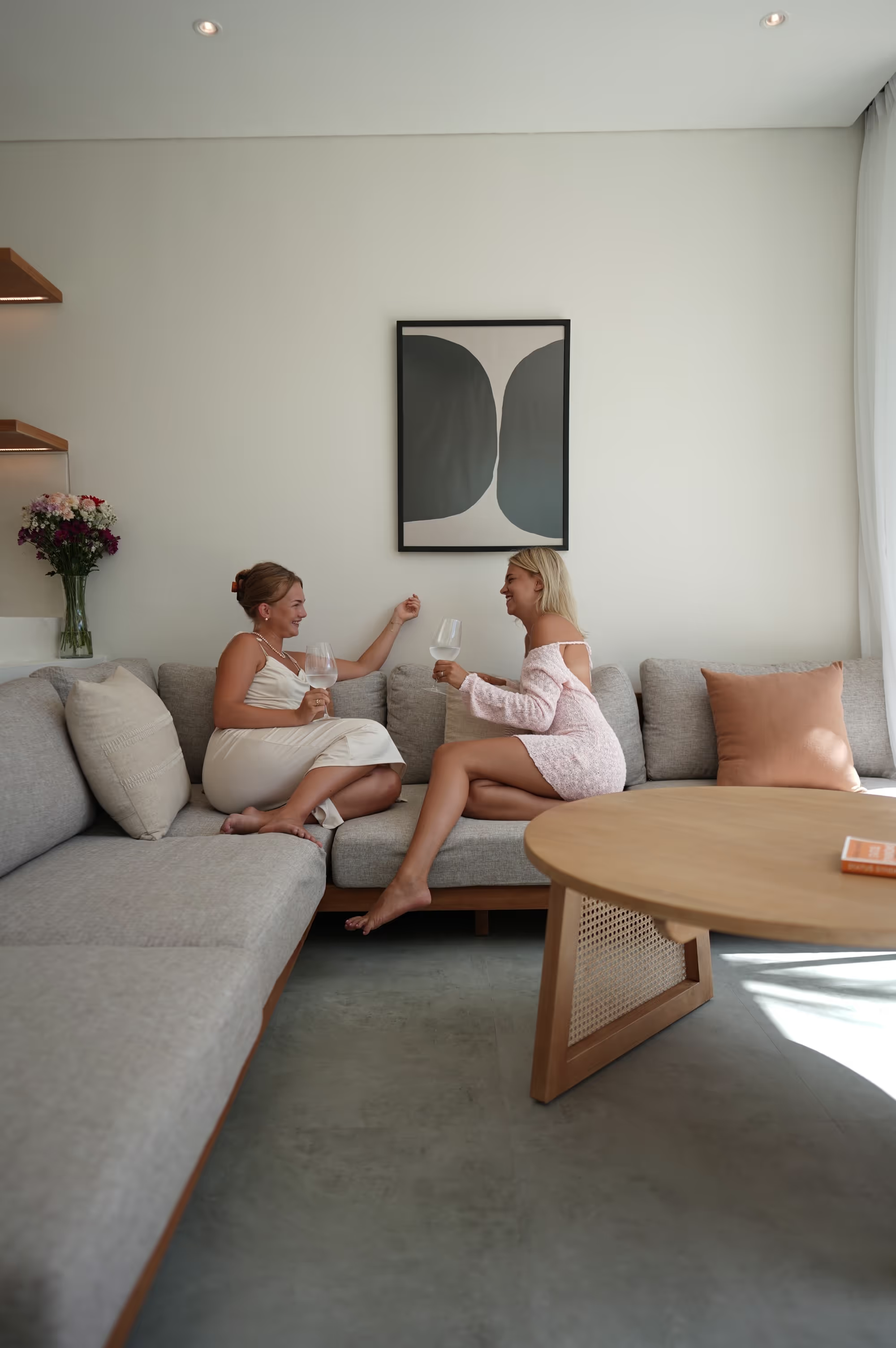
Bali Areas at a Glance
The whole island, summarised. Use this to shortlist two or three areas, then read their sections below for the detail.
| Area | Vibe | Best for | Walkable? | Beach | Pace |
|---|---|---|---|---|---|
| Canggu | Social, busy, cafes & nightlife | Nomads, first-timers, groups | Yes | Dark sand, weak swimming | Fast |
| Uluwatu | Scenic cliffs, surf, sunsets | Couples, surfers, view-seekers | No | Cliff coves | Slow |
| Bingin | Boutique, village, walkable | Couples, surfers, slow travel | Yes | Cove (access being restored) | Relaxed |
| Seminyak | Upscale dining & shopping | Beach clubs, polished holidays | Yes | Decent | Lively |
| Ubud | Jungle, culture, wellness | Foodies, wellness, couples | Partly | None (inland) | Mixed |
| Sidemen | Rice terraces, total escape | Disconnection, photographers | No | None (inland) | Very slow |
| Sanur | Calm, mature, family | Families, older travellers | Yes | Calm, reef-protected | Slow |
| Nusa Penida | Wild cliffs, dramatic | Adventure, divers, photographers | No | Dramatic, rough access | Adventurous |
Central Bali — Culture, Nature, and the Interior
Ubud
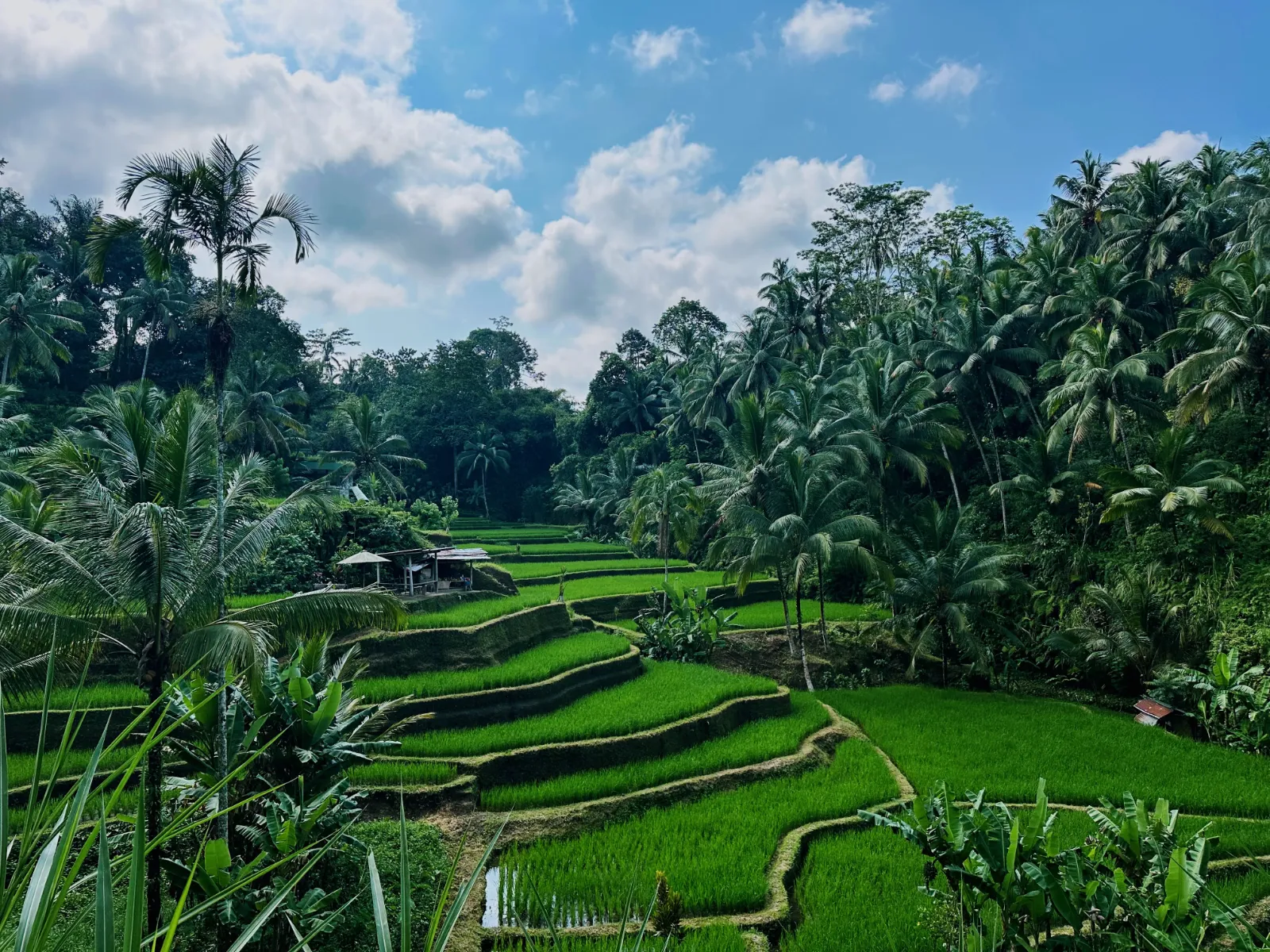
Ubud is the cultural and spiritual heart of Bali — rice terraces, temples, yoga studios, art galleries, and some of the best restaurants on the island. It is inland (no beach), which surprises some first-time visitors, but what it lacks in coastline it makes up for in atmosphere, greenery, and cultural depth.
Central Ubud is walkable but busy — tourist shops, traffic, and crowds can feel overwhelming during peak season. The magic of Ubud is in the outskirts: Tegallalang rice terraces, the Campuhan Ridge Walk, and the quieter villages along the Ayung River valley where world-class resorts sit hidden in the jungle.
Best for: culture lovers, wellness seekers, foodies, couples wanting a jungle retreat, anyone interested in Balinese art and spirituality.
Not ideal for: surfers, beach lovers, people who want nightlife or social energy.
Vibe: spiritual, green, artsy, sometimes crowded in the centre but magical on the outskirts.
Stay here if: you want Bali to feel like a cultural experience, not a beach holiday. Most visitors benefit from 3–4 days in Ubud as part of a longer trip.
Sidemen
Sidemen is what Ubud was 20 years ago — rice terraces, Mount Agung views, traditional village life, and almost no tourists. Located in East Bali about 90 minutes from Ubud, it is one of the most beautiful and undervisited areas on the island.
There are no beach clubs, no nightlife, and very limited dining options. That is the point. Sidemen is for people who want to disconnect and experience the Bali that existed before the tourism boom — farming villages, sacred water temples, bamboo eco-villas overlooking terraced valleys.
Best for: couples seeking total escape, wellness retreats, nature lovers, photographers, people who have been to Bali before and want something different.
Not ideal for: first-time visitors (too remote for a sole base), beach lovers, families with young children who need activities.
Vibe: rural, peaceful, breathtaking scenery, very limited infrastructure. Think Bali’s countryside, not its coast.
Stay here if: you want 2–4 days of complete disconnection as part of a longer Bali itinerary. Pair it with Ubud or the coast.
Kintamani
Kintamani is Bali’s volcanic highland — home to Mount Batur and its crater lake. At 1,500 metres elevation, it is noticeably cooler than the coast, and the landscape shifts from tropical green to rugged volcanic terrain. The sunrise trek up Mount Batur is one of Bali’s most popular activities.
Most visitors experience Kintamani as a day trip from Ubud, but staying overnight means you can do the sunrise trek without a 2am departure and experience the area when the tour buses have gone.
Best for: hikers, volcano enthusiasts, people who want a night in Bali’s highlands, photography.
Not ideal for: beach lovers, anyone wanting luxury accommodation, people who don’t enjoy cooler temperatures.
Vibe: highland, volcanic, adventurous, cooler climate.
Stay here if: you want to trek Mount Batur at sunrise without the brutal early morning drive from the coast. One night is usually enough.
North Bali — Off the Beaten Path
Munduk
Munduk is Bali’s misty mountain village — clove plantations, hidden waterfalls, and cool highland air. Sitting at around 800 metres in the central mountains, it feels like a completely different island from the south coast. The pace is glacially slow, the landscapes are lush, and you will likely have most of the waterfalls and trails to yourself.
Best for: nature lovers, hikers, couples wanting a mountain escape, anyone who loves waterfalls.
Not ideal for: beach lovers, people who need restaurants and nightlife, anyone who dislikes winding mountain roads.
Vibe: highland, misty, plantations, waterfalls, very quiet. Think Bali’s hill station.
Stay here if: you want 2–3 nights in the mountains as a contrast to the coast. Combines well with Lovina or a drive to the north coast.
Lovina
Lovina is Bali’s north coast — black sand beaches, calm seas, dolphin watching at sunrise, and an extremely local feel. Tourism here never developed the way it did in the south, which means genuine tranquility but also limited infrastructure, fewer dining options, and long drives to get there (3+ hours from the airport).
Best for: travellers wanting to escape tourism entirely, dolphin watching, snorkelling, people who want the quiet side of Bali’s coast.
Not ideal for: surfers (no waves), people who want cafes or social energy, anyone on a short trip.
Vibe: very quiet, very local, very un-touristy. The opposite of everything in south Bali.
Stay here if: you want to experience Bali’s coast without any tourists around you. Usually visited as part of a north Bali loop with Munduk.
The Islands — Nusa Lembongan and Nusa Penida

Nusa Lembongan
Nusa Lembongan is a small island 30 minutes by fast boat from Sanur. It has turquoise water, excellent snorkelling, a handful of beach bars, and a laid-back island vibe that south Bali lost years ago. The island is small enough to explore by scooter in a day, and it feels like a miniature tropical escape within Bali itself.
Best for: couples, snorkellers, travellers wanting a few days of island time, people who want crystal-clear water.
Not ideal for: surfers (limited breaks), families with very young children (boat transfer), people who need dining variety and nightlife.
Vibe: island, chilled, small, turquoise water. Think a quieter version of the Gili Islands.
Stay here if: you want 2–3 days of island time as a break from the mainland.
Nusa Penida
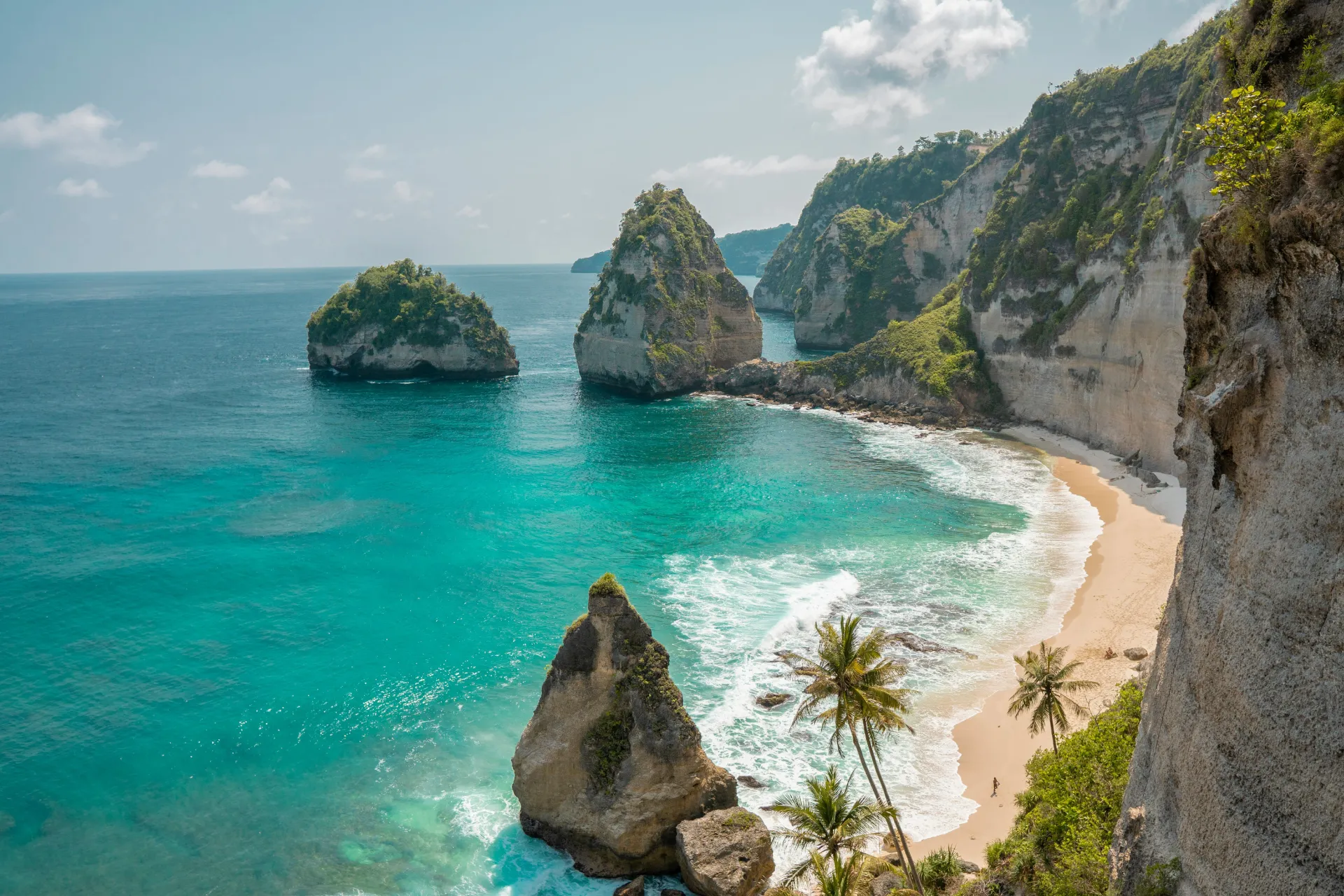
Nusa Penida is Nusa Lembongan’s bigger, wilder neighbour — dramatic sea cliffs, Kelingking Beach (the famous T-Rex coastline), and some of the most spectacular scenery in all of Indonesia. The island is significantly less developed than the mainland, with rough roads, limited accommodation, and infrastructure that is still catching up to visitor demand.
Best for: adventurous travellers, photographers, snorkellers and divers (manta rays), people who want dramatic scenery.
Not ideal for: anyone who wants comfort, families with young children, people prone to motion sickness.
Vibe: wild, dramatic, underdeveloped, adventure-first. The most visually spectacular part of the Bali region.
Stay here if: you want to see some of Indonesia’s most dramatic landscapes. One or two nights is enough for most people.
East Bali

Amed
Amed is a string of fishing villages along Bali’s northeast coast — known for black sand beaches, exceptional snorkelling and diving (including the famous USS Liberty shipwreck at Tulamben nearby), and a pace of life that makes even Ubud seem hectic. The area is genuinely remote, about 2.5–3 hours from the airport.
Best for: divers and snorkellers, slow travellers, people wanting total quiet and local Bali, budget travellers.
Not ideal for: surfers, nightlife seekers, people on short trips, anyone who needs cafes and convenience.
Vibe: fishing village, underwater world, very quiet, very local.
Stay here if: diving or snorkelling is a priority, or you want 3+ days in a place where you genuinely switch off.
West Bali
Balian
Balian is a small surf village on Bali’s west coast, about 90 minutes from Canggu. It has one main surf break, a handful of warungs and guesthouses, and essentially nothing else — which is exactly its appeal. Balian is what Canggu was 15 years ago, before the cafes and construction arrived.
Best for: surfers wanting uncrowded waves, travellers seeking extreme simplicity, people escaping the south coast entirely.
Not ideal for: non-surfers, families, anyone wanting restaurants or nightlife.
Vibe: surf village, raw, basic, empty lineup. Think Bali’s last frontier for surf.
Stay here if: you surf and you want empty waves without the crowds.
What we actually watch guests do: most move away from Kuta and Seminyak, and drift either to the newer, less-developed pockets of Canggu and Seseh, or south to Uluwatu — quieter, more design-led, and where the island's momentum is now.
Best Area by Trip Type
If you are still unsure, choose based on what your trip is actually about:
Couples and honeymoons → Bingin or Uluwatu for the coast, Sidemen or Ubud for the interior. Avoid Canggu unless you both thrive on social energy.
First-time Bali visitors → Canggu or Bingin as a base, with a 2–3 day trip to Ubud.
Surf trips → Uluwatu or Bingin for the Bukit breaks, Canggu for variety, Balian for solitude.
Digital nomads → Pererenan (Canggu) for long stays, Ubud for a change of pace.
Families with kids → Sanur or Nusa Dua for calm water and flat terrain, Ubud for culture.
Wellness and retreat → Ubud or Sidemen.
Divers → Amed or Nusa Penida.
Adventure seekers → Nusa Penida, Munduk, or Kintamani.
Returning visitors wanting something new → Sidemen, Munduk, Amed, or Balian.
Villas vs Hotels in Bali
In Bali, private villas are often a better option than hotels — especially for couples and small groups.
Choose a villa if you want privacy, your own pool, more space, and a personal experience. Choose a hotel if you want full service, restaurants on-site, and a shorter stay where convenience matters most. If you are torn between a villa and a resort, read villa vs hotel in Bali.
Most couples and small groups who try a private villa in Bali do not go back to hotels. The value, privacy, and space are difficult to match — particularly when you book direct and work with a team that actually knows the area.
Where We Recommend Staying
We manage villas across three of Bali’s best areas. Each one is suited to a different type of trip:
In Bingin → Luro Villas (modern, walkable, private pool, couples), Casa Del Beso (art villa, personality, plunge pool), Little Asia (traditional Balinese, garden, most affordable)
In Uluwatu → Marevita Villas (ocean views, cliffside, honeymoons), Kona Villas (brutalist design, architectural, Nyang Nyang)
In Canggu → Vela Villas (Pererenan, modern, walkable, digital nomads)
All six are available to book directly through our website — no OTA fees, better rates, and a team that can personalise your stay. See all villas →
The Bottom Line
There is no single best area in Bali. There is only the best area for you, based on what you actually want from your trip.
Choose Canggu for energy and social life. Choose Uluwatu for views and a slower pace. Choose Bingin for balance and boutique villas. Choose Ubud for culture and jungle. Choose Sidemen if you want to feel like you have the island to yourself.
Then choose a villa based on what you prioritise: location, design, or privacy. That is what determines whether your trip feels right or not.
Key takeaways
- There is no single best area in Bali — only the best area for your trip. Decide what matters most (quiet, walkable, scenic, or social) before you book, because most areas only deliver two or three of those at once.
- The biggest choice is Canggu (social, walkable, busy) versus Uluwatu (scenic, slower, spread out). Pick one as your base and day-trip the other.
- Bingin is the sweet spot for couples who want quiet plus walkability; Sanur and Nusa Dua suit families; Ubud and Sidemen are for culture and nature.
- Spread-out areas like Uluwatu need a scooter or driver; Bingin, Canggu, Seminyak and Sanur are more walkable.
- For most couples and small groups, a private villa beats a hotel on space, privacy and value — especially when you book direct.
If you have been to Bali before
Everything above assumes a first or second trip. If you have already done the south, the more useful question is where people who live here go for a weekend — and the answer is consistently Munduk, Sidemen, Candidasa and Nusa Lembongan.
None of them are secrets exactly, but they are still the closest thing left to old Bali: quieter, greener, slower, and without the traffic that now defines the Canggu-to-Uluwatu corridor. Munduk for mountains and waterfalls, Sidemen for rice terraces under Agung, Candidasa for the calm east coast, Lembongan for the crossing and the water.
There is a practical reason on top of the scenery. Uluwatu and Canggu are both under heavy construction right now, and that means a layer of background noise almost everywhere — a saw somewhere, a truck, a villa going up next door. Those four places do not have it, and an hour or two of driving is genuinely enough for your head to settle. That is why people who live in Canggu or Uluwatu keep going back: even as a resident it works as a proper escape, and you get to see a different Bali.
Worth saying plainly, because people ask us: if we were building a boutique hotel or villa in Bali in 2026, those four are the areas we would be looking at.
Frequently Asked Questions
Where should I stay in Bali for the first time?
For a first trip, base yourself in Canggu or Bingin and take a 2–3 day side trip to Ubud. Canggu gives you cafes, nightlife and an easy social scene; Bingin is quieter and walkable with great surf and food nearby; Ubud adds the cultural and jungle side of Bali.
Is it better to stay in Canggu or Uluwatu?
Choose Canggu if you want cafes, gyms, coworking and nightlife within walking distance. Choose Uluwatu if you want dramatic cliffs, world-class surf and a slower, quieter pace. They are very different experiences, so most people are happier picking one as a base and day-tripping the other. We compare the two in detail here.
Where should couples stay in Bali?
Couples and honeymooners usually do best in Bingin or Uluwatu on the coast, or Sidemen and Ubud for the interior. These areas lean scenic, private and relaxed rather than busy and social — the opposite of central Canggu.
Which area is best for families in Bali?
Families with young children tend to prefer Sanur or Nusa Dua for their calm, swimmable water and flat, easy terrain, with a few days in Ubud for culture. These areas trade nightlife and trendiness for safety and convenience.
Where is the best area to stay for surfing in Bali?
For surf, base yourself around Uluwatu or Bingin to reach the Bukit Peninsula breaks, Canggu if you want variety and an easy social scene, or Balian on the west coast if you want uncrowded waves and near-empty line-ups.
Do I need a scooter to get around Bali?
In spread-out areas like Uluwatu you will need a scooter or a driver, since there is no single walkable centre. Walkable areas like Bingin, central Canggu, Seminyak and Sanur are easier on foot, though a scooter still gives you the most freedom. Here is our guide to renting one safely.
Where to Next
Planning the details? These guides go deeper on the choices above:
→ Uluwatu vs Canggu: which side of Bali is right for you
→ The best beaches in Uluwatu
→ The best beaches in Canggu
→ 48 hours in Uluwatu: a couple's guide
→ 48 hours in Canggu: a couple's guide
→ Renting a scooter in Bali, the safe way
About the author. Rissa Prima is Digital Marketing Manager at Cabo Bali, which manages boutique villas across Uluwatu, Bingin and Canggu. Rissa writes from the operator's side of Bali villas — real numbers, real guest feedback, and lessons from the team running the portfolio day to day.