Updated 21 June 2026 · 9 min read · By Rissa Prima, Digital Marketing Manager, Cabo Bali
On this page
- The short answer
- The shift in attention nobody is pricing in
- Operator one: Clem at Elemnt (Uluwatu)
- Operator two: Rosanna Irwin at Samsú (Ireland)
- Operator three: Leanne and Mike at Miyo (Pererenan)
- What all three operators share
- The three operators at a glance
- Why this matters more for developers than for finished operators
- What to do tomorrow if you’re developing
- The bigger thesis
- Key takeaways
- Frequently asked questions
- Where to next?
The short answer
The most effective way to market a villa, boutique hotel or wellness retreat in Bali in 2026 is to "build in public" — document the land, the design decisions, the setbacks and the daily grind of construction so strangers can watch you build and decide they trust you before the doors open. Renders and brochures no longer decide who commits; trust does, and trust is built in the open. Below are six behaviours shared by three operators — a gym, a cabin business and a frozen-yogurt shop — who are selling out before they launch, and exactly how a property developer should copy them.
Quick answer
- The shift: polished, agency-produced content gets scrolled past; phone-shot, behind-the-scenes, founder-on-camera content is what now builds trust and bookings.
- The six behaviours: founder on camera, a narrow position, the build is the content, the audience gets a vote, failure is shown not hidden, and criticism is addressed in public.
- Why developers especially: you are asking strangers to commit to something that does not exist yet — pre-sales, off-plan deposits and early press come from people who watched you build, not from a render.
- Start now: the silent 12–18 months between land purchase and soft opening is the single biggest marketing opportunity you will have.
- Be patient: build-in-public produces little for 9–12 months, then compounds for years — most developers quit right before the curve.
Cabo Bali is run by its co-founders, Keanu and Ogie. We manage and develop villas in Uluwatu, Bingin, and Pererenan, and a few years back, before we started Cabo, Ogie was deep in building Luro Villas in Bingin — a project that, looking back now, was the closest thing either of them has done to the playbook below. He documented the land, the build, the design decisions, the long stretch of construction, and by the time Luro Villas opened, there was already a small audience that knew the story. It worked. Three of those original Luro Villas are still some of the highest-performing properties in our portfolio.
We're telling you that up front because we want to be honest about where we sit on this topic. We're not currently running this playbook at Cabo Bali. Most of our villas were built before we owned them, or we came in to manage them after the build was finished. The window to document the build had closed. We're going to start running it on every new development from now on — but we're not the example. We're the people watching, learning, and writing this down so other villa owners and developers don't make the same mistake we did.
So this piece is for you — if you're developing villas in Bali, building a boutique hotel, fitting out a wellness retreat, or doing anything else where the asset is a building and the experience inside it. The way these businesses get marketed in 2026 has very little in common with how they got marketed in 2018, and the gap is widening every quarter.
The stakes are real. Boutique property development is a cash-intensive business. Most developers don't fund the whole build out of pocket — they sell early units off-plan, take pre-launch deposits, or rely on early bookings to fund the next phase. Marketing isn't a downstream activity that gets switched on after the building opens. It's the thing that determines whether the building gets finished.
So the question every developer should be asking themselves is the one most marketing strategies don't answer honestly:
Why would a stranger commit to your villa, your hotel, your retreat — before they've ever stood inside it?
That's the question. Not "how do I rank on Google." Not "how do I beat Booking.com's commission." Those are downstream operator problems that come later, after the building is built and the first guests have arrived.
The developer's actual marketing problem is harder. You're trying to convince strangers to commit to something that doesn't exist yet, in a market crowded with other developers trying to do the same, with renders and brochures and a feeling about whether you'll actually deliver.
Here's the thing that took us too long to figure out, and that we see most developers in Bali still missing: renders and brochures stopped being the deciding factor about three years ago. The deciding factor is now whether the buyer trusts you. And trust, in 2026, is built one place — in the open.
This piece is about three operators we've been watching, in three completely different categories, who have figured this out before the rest of us. None of them are villa developers. All of them have something to teach anyone developing property hospitality in Bali or anywhere else.
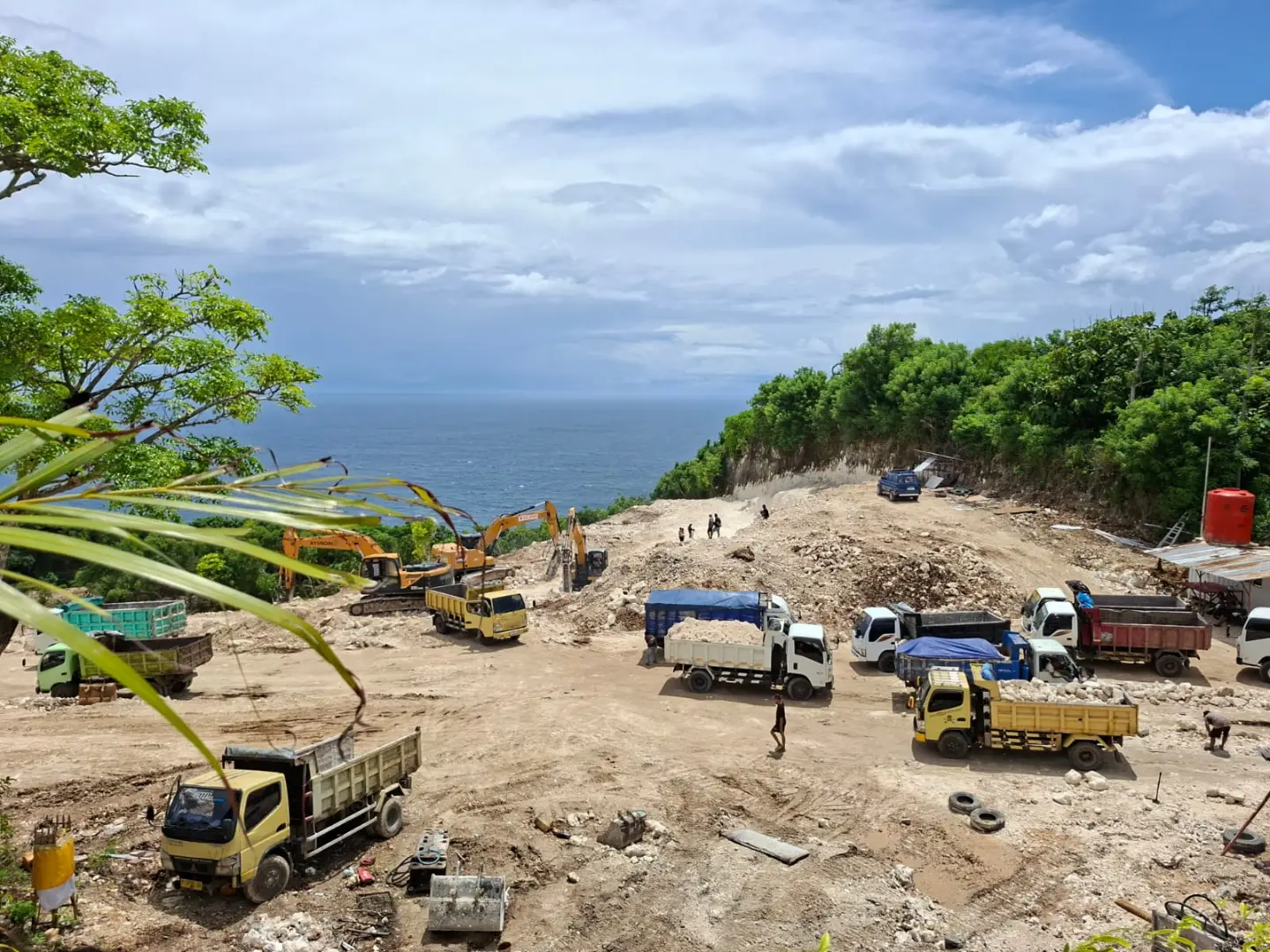
The shift in attention nobody is pricing in
There's a quiet revolution happening in how people consume content, and most marketing budgets are still allocated as if it isn't.
The polished, professionally-shot, agency-produced content that defined hospitality marketing for the last decade is dying. Not because it's badly made — it's beautifully made. It's dying because audiences have learned to scroll past it. It looks like an ad. People have an immune response to ads.
What's working instead is the opposite of polish. Phone-shot. Unscripted. Real. Behind-the-scenes. Founders talking directly to the camera about decisions they're trying to make. Failures. Setbacks. Dumb mistakes. The 47th meeting with the contractor about why the foundation is two weeks late.
Audiences are starved for this. People are exhausted by perfectly-staged interiors and drone shots over infinity pools. Show them a developer arguing with a tile supplier and they'll watch for three minutes and remember it for a month.
The reason this works isn't mysterious. It's psychological:
- Real beats polished, every time. Authenticity has become the rarest signal in a market drowning in produced content.
- People love seeing how things are made. This is older than social media — this is the same instinct that made factory tours, kitchen-table cooking shows, and Top Gear popular.
- Public decisions create commitment. When buyers watch you decide between terrazzo and tile, vote in your comments, and see their preferred option installed two months later — they're now psychologically invested in your project. They told themselves a story about being part of building it.
- Public failure builds rooting interest. When a developer hides setbacks, buyers assume there are setbacks and worry. When a developer shows setbacks honestly, buyers see competence in handling them. The transparency is the conviction.
Three operators have built businesses around this insight. Two are about to launch. One is three years in. All three are selling out before they need to.
Operator one: Clem at Elemnt (Uluwatu)
Let's start with the freshest example because it shows the playbook most clearly.
To be upfront: nobody at Cabo knows Clem personally. We came across what he's doing because we work nearby and pay attention to people building well in this part of Bali.
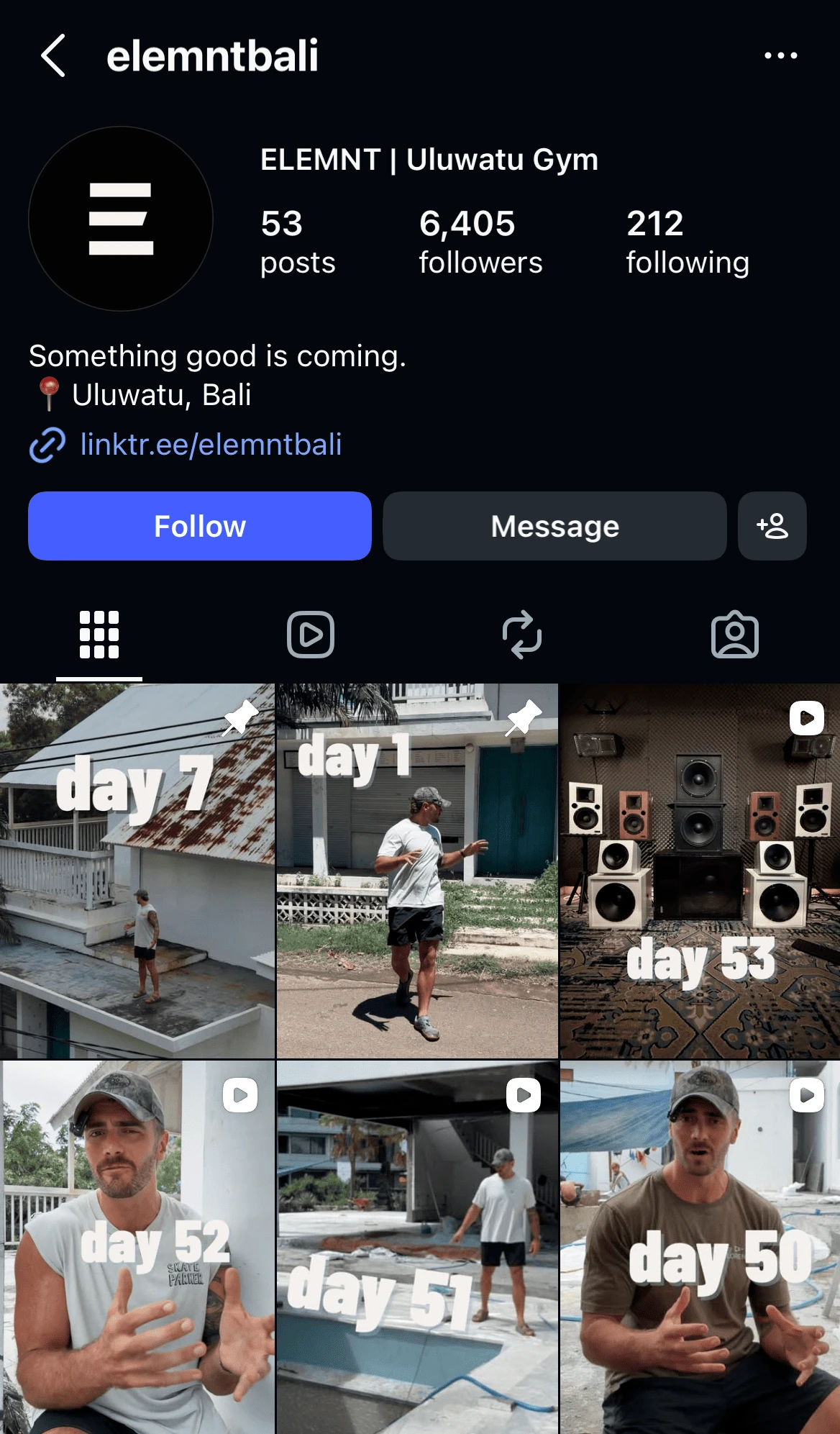
He's building a gym called Elemnt in Uluwatu. The category positioning, taken from his website: "World-Class Functional Fitness & Recovery." Uluwatu does not need another gym. The Bingin and Pecatu strip already has Bambu, Raw, 360 Move, Bali Training Centre, Ulu Active, Habitat Health Club, Muscle Beach Club, and several others. The default playbook for a new entrant in a saturated market like this is to build quietly, open the doors, then fight uphill for early members through Google ads and walk-ins.
Clem is doing the opposite. He's documenting the build daily.
By day 30, he's posted updates on every meaningful decision in the build — coffee provider, equipment selection, layout choices, contractor conversations, and the small operational details that most founders would consider too boring to share. He's asking his audience to vote on flooring choices in the comments — tile or terrazzo, you decide. He's asking for advice. He's running design polls.
What's clever about this isn't that he's posting often, although he is. It's the structure of what he's posting. He's not promoting the gym — there's no gym yet. He's narrating the process of building one, in public, with the audience as collaborators rather than spectators.
The result by the time the doors open will not be "we have launched, please come check us out." It will be "the gym you helped build is finally open." Several thousand people will feel a degree of ownership over Elemnt before they've ever walked in. That's not marketing. That's a pre-built customer base.
For a developer reading this — whether you're building villas, a boutique hotel, or a wellness retreat — every word in the previous paragraph applies to you. Replace "gym" with "your project." Replace "members" with "buyers, guests, investors." The mechanism is identical.
Operator two: Rosanna Irwin at Samsú (Ireland)
The second operator is three years further down the same road, and her business is structurally the closest to villa development of the three.
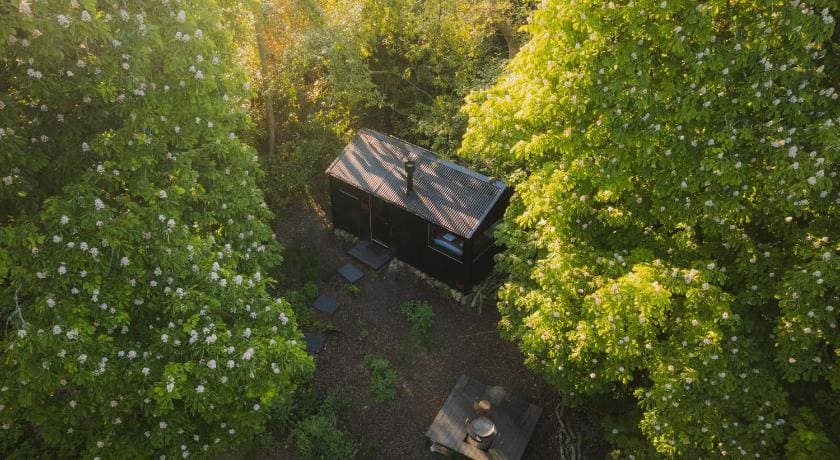
Rosanna Irwin runs Samsú — a small portfolio of digital detox cabins in the Irish countryside. Guests lock their phones in a box for the duration of their stay. No wifi. No notifications. Three cabins so far, all booked out months in advance, with a fourth in development.
This is real estate hospitality. She develops, builds, and operates physical assets on rural land and sells nights in them. The model is structurally what villa developers and boutique hotel owners do, scaled down. The difference is how she's grown it.
For three years, Rosanna has been the face of every piece of content Samsú produces. The burnout origin story — she burned out in 2023, took a boat to a small Danish island called Samsø, and came back convinced there was a market for cabins built around being offline — has been told and retold across every platform, with her on camera, talking directly. The build of each cabin has been documented from the land purchase forward. Setbacks, planning permissions, the unglamorous middle stretch of construction, the first guest, the second guest, the small details of how the cabins are operated — all of it, in her voice, on her face, on Instagram and TikTok.
This has produced two things that should matter to anyone developing property:
First, an audience that converts. When a new cabin is announced, it doesn't need a marketing campaign. The audience that has been watching her build the previous three is already there. Bookings load up immediately. The same mechanism applies whether you're filling a finished villa, taking deposits on an off-plan unit, or pre-selling stays at a retreat that opens next quarter.
Second, unpaid press coverage. BBC, Irish Times, Irish Independent, Irish Examiner — all have written about Samsú in the last 18 months. None of those features were paid for. Journalists wrote about Rosanna because she had built a public character. Press coverage drove more audience. More audience drove more bookings. More bookings funded the next cabin. Compounding.
What property developers should study isn't Samsú's business model. It's the marketing mechanism underneath it. Every public minute of building cabin one helped fill cabin three. That's the engine. It's the same engine you'd want running before a villa development opens, before a boutique hotel takes its first booking, before a retreat releases its first cohort.
Operator three: Leanne and Mike at Miyo (Pererenan)
The third example is the smallest in scale and the most recent, and that's exactly why it matters. It proves the playbook works at any size — and adds a sixth behaviour the first two operators don't show as clearly.
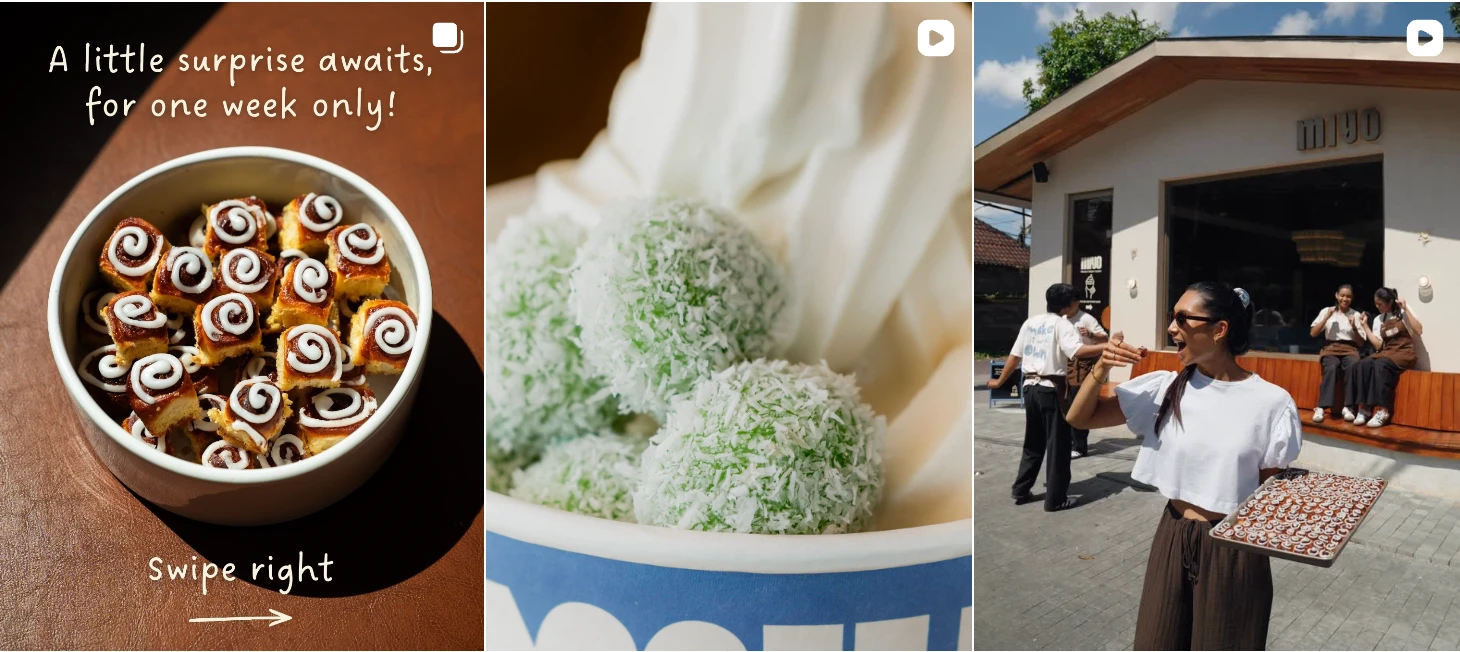
Miyo is a self-serve premium frozen yogurt shop on Jl. Pantai Pererenan. Siblings Leanne and Mike, originally from the UK, opened it earlier this year. The location is brutally competitive — Etore Gelato, Zali, Shelter, and several other established dessert spots are within walking distance. The default outcome for a new entrant in a category like this is to disappear.
They didn't disappear. They have over 11,000 Instagram followers in under 100 posts. They've been reviewed by lifestyle press unprompted. The shop has steady queues. They built this in months, not years, with a 30-square-metre product, in a category most people would consider impossible to differentiate.
The first part of the playbook is what you'd expect by now: they documented the build. "MIYO in the making" was the framing — pre-launch content showing the fit-out, the positioning decisions, the moments of doubt, the sibling dynamic, the small choices that turned a frozen yogurt shop into a brand people felt invested in before they had ever tasted the product.
But the part that makes Miyo a different kind of case study is what happened after they opened.
Bali is a tough, opinionated market. Once Miyo launched, real customer feedback started coming in — and not all of it was glowing. Some people complained about the pricing model (you pay by weight, which is unusual in Bali and feels expensive if you don't know how the system works). Some people had opinions on the texture of the yogurt itself.
Most operators handle this kind of feedback the same way: privately, defensively, or by ignoring it and hoping it goes away. Leanne and Mike did the opposite. They addressed every piece of it publicly, on camera. They explained the price-per-weight model — why they chose it, how to use it, what it actually costs in practice. They explained the texture (it's authentic frozen yogurt, not soft-serve, and that's deliberate). They didn't argue with critics. They didn't get defensive. They didn't pretend the feedback wasn't there. They just answered, in their own voice, with their own faces, in public.
The result is genuinely impressive: customers who arrived sceptical left convinced. Critics who came in expecting a fight found two founders who'd already thought through every objection and could explain their reasoning. Trust, again, but built differently — built on the willingness to engage with the awkward parts of running a business in front of an audience.
The Miyo case is the proof point that should land hardest for property developers. If two siblings can build an audience large enough to fill a frozen yogurt shop in a saturated market by documenting the build of a 30sqm space and then publicly addressing every customer concern — what happens when a villa developer, a boutique hotel operator, or a retreat builder does the same with an entire compound?
The mechanism is the same. The financial leverage is many multiples larger.
What all three operators share
Strip away the differences between the three businesses and the same six behaviours sit underneath all of them.
1. The founder is on camera, on purpose. Not a brand voice written by an agency. The actual person, talking directly, in their own register, with their own face. People connect to people, not to logos.
2. They have a clear, narrow position. Locked phones. World-class functional fitness and recovery. Self-serve premium frozen yogurt. These aren’t tag-lines. They’re positions specific enough to attract the right audience and repel the wrong one. Generic “luxury villa” positioning does neither.
3. The build is the content. Decisions, materials, setbacks, suppliers, the unglamorous weekly grind. The audience watches the thing get made. By the time it’s made, they feel like collaborators.
4. The audience gets a vote. Polls in comments. Asking for advice. Feedback on flooring, equipment, layouts. This is not just engagement-bait. It’s a deliberate strategy to convert spectators into participants — and participants into customers.
5. Failure is shown, not hidden. The contractor delay. The decision they later regretted. The expensive mistake they recovered from. Polished accounts skip these. The accounts that compound include them. Public failure handled well builds more trust than public success ever can.
6. They address the elephant in the room. When criticism lands, they don’t hide from it. Pricing complaints, product complaints, design choices people disagree with — they engage with each one publicly and explain their reasoning. This is the move Leanne and Mike at Miyo do best, and it’s the one most operators run from. It’s also the one that converts sceptics into evangelists faster than any other behaviour on this list.
Six behaviours. That’s the whole playbook.
The three operators at a glance
Three different categories, three different stages, the same engine underneath. Here is how they compare — and the one move from each that a property developer should copy.
| Operator | Category | Location | Stage | The move to copy |
|---|---|---|---|---|
| Clem · Elemnt | Functional-fitness gym | Uluwatu, Bali | Pre-launch, documenting daily | Let the audience vote on real build decisions (flooring, equipment) |
| Rosanna Irwin · Samsú | Digital-detox cabins | Rural Ireland | 3 cabins live, 4th in build | Be the on-camera face for years; building cabin one fills cabin three |
| Leanne & Mike · Miyo | Self-serve frozen yogurt | Pererenan, Bali | Open, ~11K followers | Address every criticism publicly, in your own voice |
Why this matters more for developers than for finished operators
If you’re operating a finished villa, hotel, or retreat and trying to drive bookings, this playbook will help you. Direct-booking rates go up. Aggregator dependency goes down. Customer acquisition cost goes down over time. Worth doing.
If you’re a developer — building it now, not yet open, no track record yet — the playbook is closer to essential than optional. You’re being asked to convince strangers to commit to something that doesn’t exist yet. Pre-bookings, off-plan deposits, early investor interest, even the press coverage that drives the first wave of buyers — none of these come from people who saw a render. They come from people who watched you work.
The deeper question buyers are really asking is the same across every category: do I trust this developer to actually deliver?
You can’t answer that question with a render. You can’t answer it with a brochure. You can’t answer it with a paid ad. You can only answer it by letting the buyer watch you build it.
Every public decision you document is a credibility deposit. Every problem you handle transparently is a “they’re competent and honest” data point. Every time the audience sees your face explain why the bathroom layout changed, they’re slowly being converted from stranger to advocate. By the time you open or release units, you don’t have a cold market to sell to. You have a warm audience that’s already decided they want in.
Good marketing for property developers in 2026 isn’t a cost centre. It’s the thing that makes the rest of the business possible. The audience you build during construction is the audience that fills the building when it opens. It’s also the audience that drives the unprompted press coverage. It’s the audience that tells the next buyer or guest about you, before the next buyer has even searched.
The mechanism is simple. Build in public. Show the real version. Let the audience in. The compounding takes care of itself.
What to do tomorrow if you’re developing
In order, the highest-leverage steps:
1. Decide who’s going on camera. It’s almost always the founder or developer themselves. If you’re not willing to be the face, the playbook is closed to you, and you’ll need to rely on the older, more expensive playbook (paid ads, agents, glossy collateral, agency-produced content nobody watches). That’s a real choice, but make it knowingly. If you’re developing in Bali but live elsewhere, this is the single biggest thing to solve — either move to be on the ground for the build, or partner with someone who will be the visible face.
2. Pick one platform and commit for 12 months. For villa development in Bali, Instagram and TikTok are where buyers are. LinkedIn if you’re targeting institutional or international investor buyers specifically. Don’t dilute across five platforms. Go deep on one.
3. Start documenting now, even if you feel unready. The land walk-through. The architect’s first sketches. The IMB permit conversations. The contractor’s first quote. The day the materials arrive from Java. The week the wood didn’t arrive from Java. The pour. The roof. The first tile sample. Almost every Bali villa developer goes silent for the 12-18 months between land purchase and soft opening. That silent period is the single largest marketing opportunity you will ever have. Treat it that way.
4. Build a clear position you can repeat in one sentence. Two-bed villas underperform; we only build one-bed. Bingin is for couples; we don’t take group bookings. We buy small infill plots; we don’t deforest. No swimming pools larger than 25 sqm; we’d rather build the bedroom bigger. A position that some people walk away from is what builds an audience of the right people. Vague “luxury Bali villa” positioning attracts no one — there are already three thousand of those.
5. Show the failures, edited but not hidden. The supplier in Java who let you down. The design decision you reversed after seeing the framing. The week construction stalled because of a banjar issue. The cost overrun on the marble. Don’t perform misery — but don’t pretend everything is going perfectly either. Real beats curated, and the audience can tell the difference.
6. Ask the audience for input on real decisions. Tile vs terrazzo. Pool size. Indoor or outdoor kitchen. Whether the bedroom should face the rice paddy or the pool. The Clem playbook. Every comment is a small commitment to your project.
7. Address criticism head-on, in your own voice. When the first review comes in saying the villa is overpriced, the layout is awkward, or the location is “too quiet” — don’t ignore it and don’t get defensive. Make a video. Explain your reasoning. The Leanne and Mike playbook. If your reasoning is good, sceptics become believers. If your reasoning is bad, you’ve just learned something important about your product.
8. Wait at least 9 months before judging it. Build-in-public is the inverse of paid ads. Paid ads work day one and stop working when you stop paying. Build-in-public produces almost nothing visible for the first 9 to 12 months and then compounds for years. Most developers quit at month seven, right before the curve.
The bigger thesis
The next decade of small property hospitality in Bali — villas, boutique hotels, retreats, cabins, gyms, F&B with real estate behind them — will be dominated by founders who built audiences first.
Paid acquisition will keep getting more expensive. Generic “luxury villa Bali” positioning will keep getting commoditised against itself. And buyers — both off-plan investors and end guests — will keep gravitating toward whichever operators they trust most.
Trust, in 2026, is not built by polish. It’s built by transparency. By showing the build. By letting people in. By addressing the awkward parts in public.
Rosanna built Samsú into a media-recognised, sold-out brand by being herself in public for three years. Clem is going to open Elemnt to a community that’s already built. Leanne and Mike turned a frozen yogurt shop into a brand with eleven thousand followers in months — and then doubled down by addressing every customer concern publicly. None of them are marketing geniuses. They’re just doing the things the rest of us were too cautious to do.
To be honest: we’re not running this playbook at Cabo Bali yet. Most of our properties were built before we owned or managed them, and the window to document the build had closed by the time we got involved. But Ogie’s experience with Luro Villas showed the founders, years ago, that this approach works — and watching Rosanna, Clem, Leanne and Mike has convinced us we should be running it on every new development we touch from now on. We’re a few moves behind. We’re catching up in public.
If you’re developing villas, a boutique hotel, or a wellness retreat in Bali, you have two options. You can keep producing the same renders and brochures every other developer is producing — fight for the same audience in the same crowded market with the same tools — and hope your project moves faster than theirs. Or you can do the harder, more exposing thing: open up your process, put yourself on camera, and let the audience watch you build.
The first option is comfortable. The second is what’s actually working.
If your villa is already built and you’ve missed the window to document the build itself, the playbook isn’t dead — it just shifts. You can still document the operations, the seasons, the guest stories, the decisions you make day-to-day, and the awkward bits of running a property in Bali. The principle is the same: be visible, be honest, be specific, and let people see how the place actually works. That’s something we can help with directly — actively marketing villas is part of every Cabo Bali villa management agreement, and it’s a piece of the work we keep getting better at as we learn more from operators like the three above. Get in touch if you want to talk about it.
Either way, the playbook is the playbook. The earlier you start, the more it compounds.
Key takeaways
- In 2026, trust — not renders or brochures — decides who commits to an unbuilt villa, hotel or retreat, and trust is built in the open.
- Three operators in different categories (Elemnt, Samsú, Miyo) are selling out before launch using the same six behaviours.
- The six behaviours: founder on camera, a narrow position, the build is the content, the audience gets a vote, failure is shown not hidden, and criticism is addressed publicly.
- Build-in-public matters most for developers: pre-sales, off-plan deposits and early press come from people who watched you build.
- Start documenting at land purchase, commit to one platform for 12 months, and expect compounding only after 9–12 months.
- If your villa is already built, document the operations, seasons and guest stories instead — the principle (be visible, honest and specific) is the same.
Frequently asked questions
What is “build in public” marketing for property developers?
It means documenting your project as you create it — the land, the design decisions, the materials, the setbacks and the daily construction grind — and sharing it openly so a potential buyer or guest can watch you build. By the time you open, the audience that followed the build is a warm, pre-committed customer base rather than a cold market.
Why does building in public work better than renders and brochures?
Audiences have learned to scroll past polished, agency-produced content because it looks like an ad. Phone-shot, behind-the-scenes, founder-on-camera content reads as authentic, and authenticity is the rarest signal in a crowded market. In 2026 the deciding factor is whether the buyer trusts you, and trust is built by showing the real version, not a render.
When should a villa developer start documenting the build?
As early as possible — ideally from the land walk-through and the first sketches. The silent 12–18 months between land purchase and soft opening is the single largest marketing opportunity most developers ever have, and almost all of them waste it by going quiet.
My villa is already built — is it too late to use this playbook?
No. The playbook shifts rather than dies. You document the operations, the seasons, the guest stories and the day-to-day decisions of running a property instead of the build. The principle is the same: be visible, be honest, be specific, and let people see how the place actually works. Actively marketing villas this way is part of every Cabo Bali management agreement.
Which platform should Bali villa developers focus on?
Pick one and commit for 12 months rather than diluting across five. For villa development in Bali, Instagram and TikTok are where buyers are; LinkedIn makes sense if you are targeting institutional or international investor buyers specifically.
How long before build-in-public marketing pays off?
It is the inverse of paid ads. Paid ads work on day one and stop the moment you stop paying; build-in-public produces almost nothing visible for the first 9 to 12 months and then compounds for years. Most developers quit around month seven, right before the curve turns up.
Where to next?
- → Inside the Luro Villas case study in Bingin
- → Why your agent’s website matters more than you think
- → How we hit 91% occupancy on a new villa
- → Setting up a Google Business Profile for your villa
Cabo Bali is run by co-founders Keanu and Ogie. Cabo Bali is a villa management and development company in Bali, with properties in Uluwatu, Bingin, and Pererenan — including several Cabo Villas, which Ogie developed using an early version of the playbook described above. Nobody at Cabo Bali personally knows Clem at Elemnt; the observations are from watching Elemnt build publicly. Rosanna Irwin runs Samsú in Ireland and is a public figure in the property hospitality space. Leanne and Mike run Miyo in Pererenan. None of the operators mentioned sponsored this piece.