
By Rissa Prima, Digital Marketing Manager, Cabo Bali
Every week someone sends us a listing. “Would Cabo manage this?” “What do you think of this villa?” “Good buy or not?” About half the time the answer is no — not because the villa is bad (often it’s beautiful) but because on close inspection the numbers don’t work, the location has a structural problem, or the design will hurt bookings in ways the buyer won’t see until six months in. Whatever you buy, avoid the nominee route — we explain why that structure is rarely enforceable and best avoided.
This is what we’ve learned running a 20+ villa portfolio across Uluwatu, Bingin, Canggu and Nyang Nyang — 91% average occupancy, 4.84/5 guest rating, and multiple villas holding Airbnb’s Top 10% badge. Below is the 10-point audit we run before agreeing to manage a villa. If you’re buying in Bali in 2026, run the same checklist before you sign anything.
On this page
- Quick answer
- 1. Submarket, not “area”
- 2. Zoning and green-belt status
- 3. Title type — Hak Pakai, PT PMA/HGB, or leasehold
- 4. Lease years remaining vs. payback period
- 5. Layout and bed count for the location
- 6. The pool-to-view relationship
- 7. Daylight, ventilation, and ceiling height
- 8. Proximity to existing or planned construction
- 9. Water, power, and internet
- 10. The exit
- What This Means If You’re Buying Right Now
- Frequently asked questions
- Key takeaways
- What Cabo Bali Actually Manages
- If You Want a Second Opinion
Quick answer
- Run the same 10-point audit Cabo uses before agreeing to manage a villa — before you sign anything as a buyer.
- Before viewing, screen the specific submarket (not just the "area"), the zoning and green-belt status, and the title structure.
- At the viewing, check the pool-to-view sightlines, daylight and ceiling height, and adjacent plots for future construction.
- Before offering, run realistic payback math against remaining lease years and confirm the bed count fits the submarket and the infrastructure (water, power, internet).
- Before signing, independently pull zoning and title with your own notary — don't rely on the seller's.
1. Submarket, not “area”
“Uluwatu” isn’t a market — it’s five. Pecatu, Ungasan, Bingin, Padang Padang and Nyang Nyang each behave differently. ADR in Bingin tracks at $350–500 per night for a 2BR; similar specs in Ungasan tourist-zone backstreets struggle at $250. “Canggu” has the same problem — Berawa, Pererenan, Nelayan and Echo Beach have diverged sharply in the last 18 months.
What we check: walking-distance-to-beach, noise profile (construction, bars, mosque proximity), road access, and backwash from nearby developments. A villa 400m from Bingin Beach will outperform one 1.2km away by double-digit percentages on ADR — even if they look near-identical on paper.
2. Zoning and green-belt status
Indonesia restricts what can be built where. KKOP (airport flight-path), sempadan (coastal and river setbacks), and the distinction between tourism (yellow), settlement (pink) and agricultural (green) zones determine whether your villa can legally operate as a rental at all.
What we check: current zoning via the Bali Tata Ruang map, any pending re-zoning proposals, setback compliance, and critically — whether neighbouring plots are green zone. A villa legally built today can lose its rental permit when enforcement changes, and green-zone neighbours mean your view corridor and noise buffer are unstable.
Don’t take the seller’s word on zoning. Get it pulled independently.
3. Title type — Hak Pakai, PT PMA/HGB, or leasehold
Indonesian law doesn’t allow foreigners to hold Hak Milik (freehold). Three structures are viable:
- Hak Pakai (Right to Use): 30-year initial term, extendable for a theoretical maximum of 80 years. Direct foreign ownership.
- PT PMA + Hak Guna Bangunan: A foreign-owned Indonesian company holds HGB (Right to Build). 30 years + 20-year extension + 30-year renewal. Most flexible for rental business operations.
- Leasehold: Typically 25–30 years with negotiated extension rights. Cheapest entry. The most common structure in Uluwatu and Canggu.
What we check: remaining lease years (anything under 20 is a red flag for resale), extension rights written into the original deed (not verbal), and whether the underlying freehold holder is one person or an estate with multiple heirs. “Uncle owns it” means nothing when uncle passes and his children disagree.
4. Lease years remaining vs. payback period
If a villa needs 8 years to pay back its purchase price and 11 years of lease remain, you’re buying a 3-year window. That’s a losing structure.
What we check: payback modelled at realistic occupancy (75–85%, not 95%), realistic ADR (AirDNA and competitor pricing — not seller projections), realistic operating costs (15–20% of revenue including utilities, pool, staff), and realistic management fees. Then we compare that payback window to remaining lease years. If lease-years don’t exceed payback by at least 2x, we walk. Where a villa is listed changes who ever sees it — we learned that first-hand in why your agent’s website matters.
5. Layout and bed count for the location
A 4-bedroom villa in Pererenan targeting couples will underperform a 2-bedroom villa on the same lane. A 1-bedroom in Bingin aimed at surfers can out-earn a 3-bedroom next door.
What we check: the dominant traveller profile for the submarket (honeymooners, surfers, digital nomads, families, groups), and whether the villa’s bed count and layout fit it. Our Luro Villas 1BR units in Bingin hit 96% occupancy because they’re sized for the 2-adult surf trip market; a 4BR on the same lane would cannibalise its own rate.
Rules of thumb from our portfolio:
- Bingin / Padang: 1–2BR wins
- Uluwatu cliffside: 2–3BR wins
- Pererenan / Nelayan Canggu: 2BR wins
- Nyang Nyang: 2–3BR for design travellers
- Berawa: 3–4BR for groups and families
6. The pool-to-view relationship
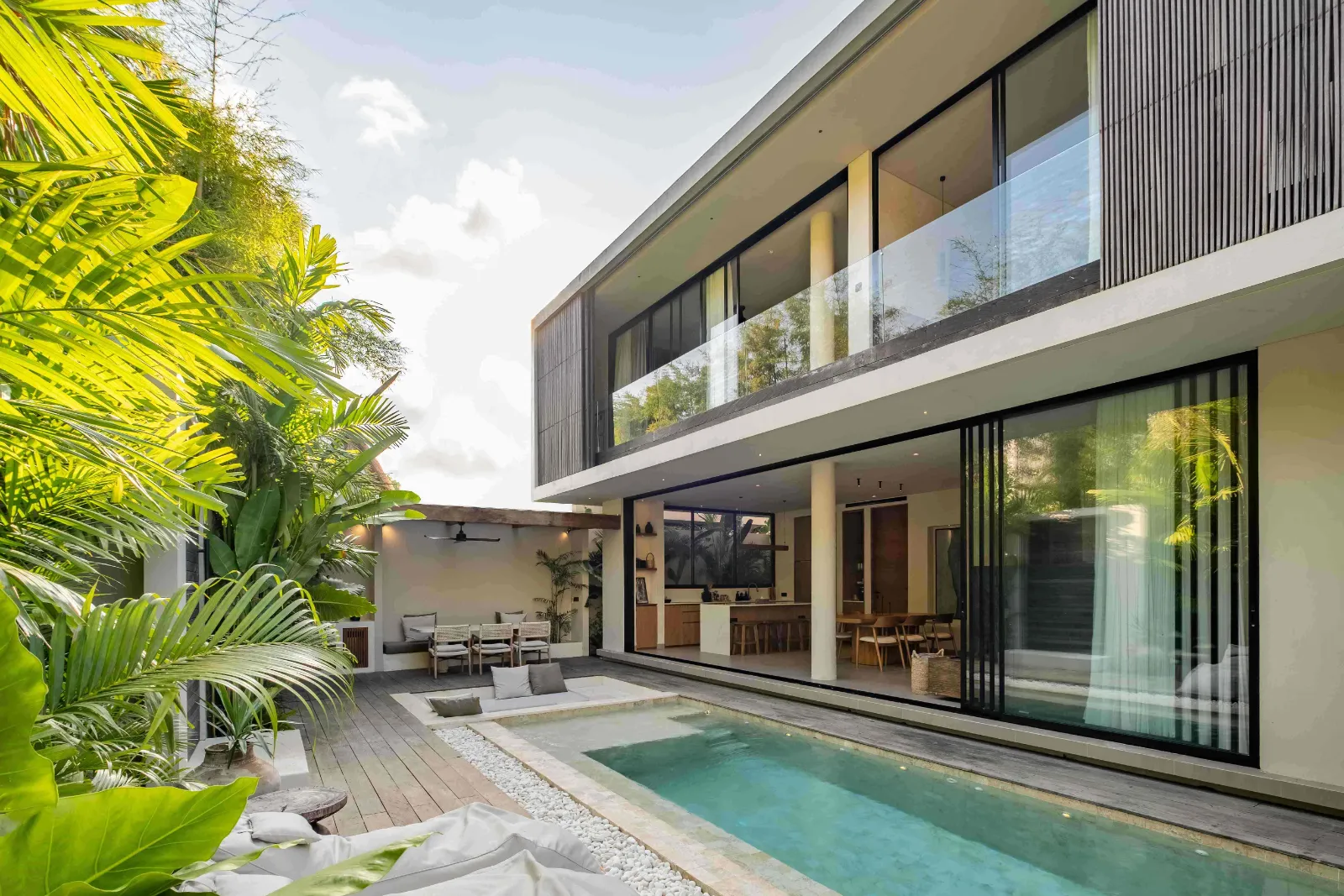
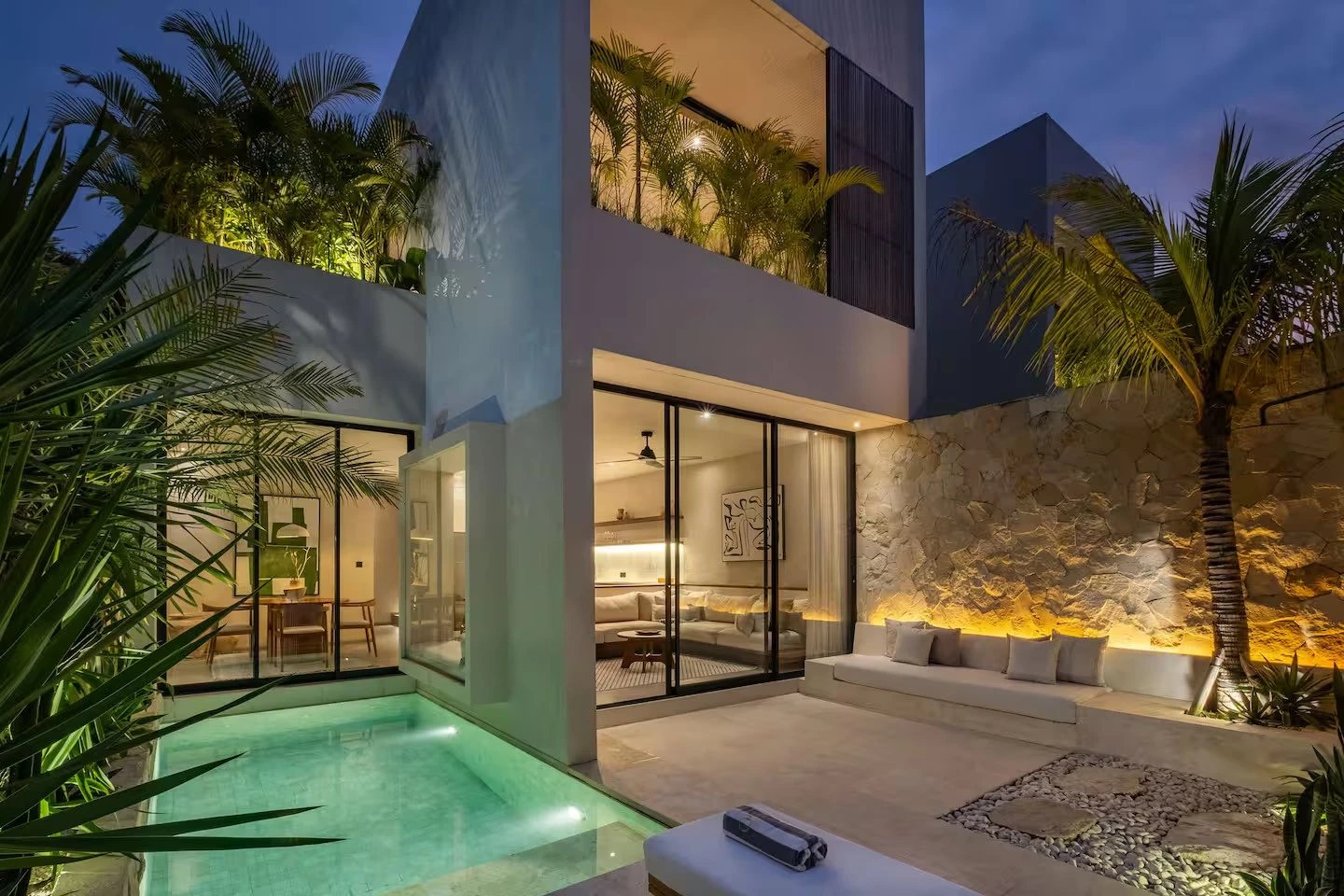
The single most important design variable in a Bali villa is whether you can see the pool (and beyond it, the view) from the main living space without moving. Villas where the pool is tucked behind a wall, at the side, or on a separate level chronically underperform.
What we check: sightlines from the kitchen, from the primary bedroom, and from the living sofa. If any of those three don’t include the pool and the view, the villa is going to struggle to earn a 4.9+ rating no matter how well we manage it.
7. Daylight, ventilation, and ceiling height
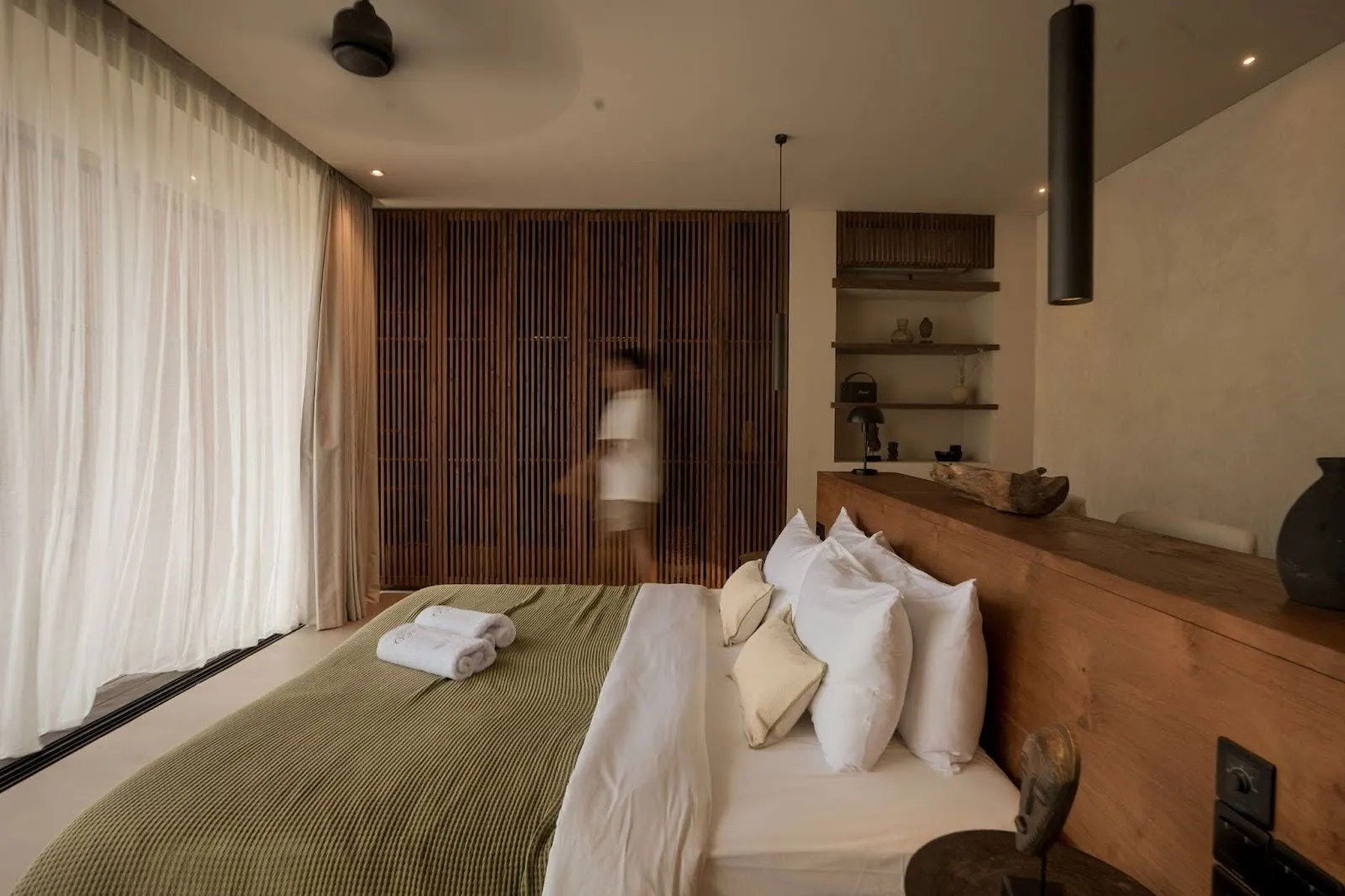
Airbnb’s algorithm rewards natural light. Guests book based on it. A villa with small windows, low ceilings and north-facing main rooms will photograph badly, feel claustrophobic on arrival, and bleed reviews over time.
What we check: ceiling height (3.2m minimum in main living, 2.8m in bedrooms), window-to-wall ratio, ventilation cross-flow. You can’t fix this after buying. A villa with 2.6m ceilings has a permanent ceiling on its nightly rate.
8. Proximity to existing or planned construction
A quiet villa today can be a construction site next year. The land next door being “just a rice field” is not a durable statement.
What we check: adjacent plots for recent land transfers, visible sempadan markers, and — where possible — asking nearby villa managers directly whether anything is in the pipeline. Our Luro Villas in Bingin hit 96% occupancy through active construction next door, because we built the operational playbook for it. Most owners can’t. Assume any visible land will be built on within 3 years.
9. Water, power, and internet
Bali’s infrastructure is stronger than people assume, but not uniform. Some Bukit cliffside plots run off water tankers. Some Canggu lanes still rely on single-phase 2,200W connections that can’t run a full AC and kitchen load simultaneously. Fibre internet is now standard on main roads but drops to 4G on smaller lanes.
What we check: water source (PDAM municipal vs. tanker vs. borehole + permit), current electrical capacity in watts, fibre availability by provider (IndiHome, MyRepublic, Biznet). Upgrade costs can run $3–10k — budget them before purchase.
10. The exit
Eventually you’ll want to sell — or your lease will come up for renewal. A villa that was “a good buy” on entry can be a terrible one on exit if the market has moved, your lease-years have wound down, or the submarket has shifted.
What we check: comparable recent sales in the same submarket (not asking prices — closed prices), the spread between like-for-like freehold and leasehold comps, and the trajectory of the submarket (growing, stable, declining). Canggu proper has softened noticeably in 2025–2026. Bingin and Nyang Nyang have grown. Pererenan is mid-cycle.
What This Means If You’re Buying Right Now
If you’re actively looking at villas in Bali, here’s how to use this checklist:
Before viewing: screen the listing for submarket (point 1), zoning (point 2), and title structure (point 3). This alone eliminates 40% of bad listings before you book a flight.
At the viewing: check sightlines (point 6), light and ceiling height (point 7), and adjacent plots (point 8). Walk the villa at two different times of day if you can.
Before offering: run the payback math (point 4), validate the bed count for the submarket (point 5), and confirm the infrastructure (point 9).
Before signing: independently pull zoning and title. Don’t rely on the seller’s notary. Use a separate notary who represents you.
Frequently asked questions
Why does the submarket matter more than the "area"? "Uluwatu" is really five markets; ADR in Bingin can run $350–500 for a 2BR while similar specs in Ungasan backstreets struggle at $250, and a villa 400m from Bingin Beach outperforms one 1.2km away.
Can foreigners own a Bali villa freehold? No — Indonesian law bars foreigners from Hak Milik; the viable structures are Hak Pakai, a PT PMA holding Hak Guna Bangunan, or leasehold.
How do you judge whether the lease length works? Model payback at realistic occupancy (75–85%), ADR and costs, then compare to remaining lease years; if lease years don't exceed payback by at least 2x, it's a losing structure.
What is the single most important design variable? Whether you can see the pool and the view from the main living space without moving; villas where the pool is hidden behind a wall or on another level chronically underperform.
Why check ceiling height and daylight? Airbnb's algorithm and guests both reward natural light, so low ceilings and small windows photograph badly and cap the nightly rate — and you can't fix it after buying.
Should you trust the seller on zoning and title? No — pull zoning and title independently and use a separate notary who represents you.
Key takeaways
- Run the same 10-point audit a management company uses before agreeing to take a villa on.
- Location breaks down to the submarket level; walking distance to the beach and noise profile move ADR materially.
- Zoning, title structure, and remaining lease years versus payback period decide whether a villa can operate and pay back.
- Match bed count and layout to the submarket's dominant traveller profile.
- Design fundamentals — pool-to-view sightlines, daylight, ceiling height — set a permanent ceiling on rating and rate.
- Confirm infrastructure and plan the exit, and verify zoning and title independently before signing.
What Cabo Bali Actually Manages
For context on what a villa that passes this checklist looks like, here’s our current portfolio:
- Marevita Villas, Uluwatu — 6 cliffside 2BR villas with ocean views from the pool.
- Luro Villas, Bingin — 1 and 2BR units, 96% occupancy through construction next door.
- Casa Del Beso, Bingin — 2BR art villa, handcrafted throughout.
- Little Asia, Bingin — 2BR pet-friendly, character-led.
- Vela Villas, Pererenan — 2BR family and nomad-friendly.
- Kona Villas, Nyang Nyang — 2BR brutalist architecture.
Each one hit 91%+ occupancy within 3 months of launch. That doesn’t happen because the management is magic — it happens because the villa passed the checklist before we took it on.
If You Want a Second Opinion
We occasionally review villas for buyers who’ve already found one they like. If you’ve got a listing you’re considering and want a management company’s honest read on whether it would actually perform, send it to us.
WhatsApp the team at +62 812 3968 3171 with the listing link, or visit the villa management page to learn more about how we work with owners.
About the author. Rissa Prima is Digital Marketing Manager at Cabo Bali, which manages boutique villas across Uluwatu, Bingin and Canggu. Rissa writes from the operator's side of Bali villas — real numbers, real guest feedback, and lessons from the team running the portfolio day to day.