How Much Does a Trip to Bali Cost in 2026? (The Complete Budget Guide)
A week in Bali can cost USD 600 or USD 6,000. The island doesn't set the price — you do, in about four or five decisions you make before you ever land. We run villas here, so we watch guests arrive with a number in their head and leave having spent something completely different — almost always because of where the money went, not how much of it there was. Planning to stay longer than a holiday? The moving to Bali checklist covers visas, housing and the real monthly numbers.
On this page
- The short answer
- What most cost guides get wrong
- Quick answer
- What does a whole 7-day Bali trip cost in 2026?
- How much are flights to Bali in 2026?
- How much does accommodation cost in Bali?
- How much does food cost in Bali?
- How much does getting around Bali cost — scooter vs driver?
- How much do activities and day trips cost?
- What is the Bali tourist tax in 2026?
- So what will it actually cost you?
- FAQ
- Key takeaways
The short answer
A 7-day trip to Bali in 2026 costs roughly USD 500–850 per person on a backpacker budget, USD 1,100–2,000 mid-range, and USD 3,000+ for luxury — all excluding international flights. Add flights (USD 400–700 from Australia, USD 900–1,600 from the US or Europe) and a one-off IDR 150,000 (~USD 9) tourist levy that every foreign visitor pays once per trip. The single biggest lever is where you sleep, followed by how you get around. Everything else is noise by comparison. Late flight after checkout? Our Bali luggage storage guide covers where to leave bags.
What most cost guides get wrong
The "Bali is so cheap" headline is half-true and half a trap. Yes, you can eat for two dollars and rent a scooter for five. But the Bali that fills most people's camera roll — the Bukit clifftops, Canggu, a pool you don't share with strangers — is not a USD 35-a-day island, and pretending it is sets you up to either blow your budget or feel like you missed the trip everyone else had. One line most budgets miss is the levy every foreign visitor pays on arrival — see Bali’s tourist tax for 2026.
The other thing the per-day-per-person tables miss: groups break the maths. Most of these guides quote a solo backpacker daily rate and stop there. But the typical Bali trip isn't one person in a dorm — it's four to six friends or a couple of families who want a villa. The moment you split a USD 200-a-night pool villa six ways, your "expensive" accommodation line drops to ~USD 33 a head, often below what a private hotel room would cost you alone. The spend we actually see from villa guests sits in a band the solo-traveller tables never describe. So read the per-person numbers below, then do the group division yourself — it changes the answer.
Quick answer
- Daily budget: ~USD 35–55 (backpacker) · ~USD 80–150 (mid-range) · USD 300+ (luxury). (kala.surf, bali.com, 2026 — verify at time of booking.)
- Flights: USD 400–700 from Australia; USD 900–1,600 from the US/Europe, round trip.
- Tourist tax: IDR 150,000 per foreigner, once per trip, paid via the official Love Bali platform.
- Scooter: IDR 80,000–150,000/day (~USD 5–10). Private driver: IDR 600,000–800,000/day (~USD 40–55).
- Food: local warung meals from ~USD 2; mid-range café meals USD 5–12; nice dinner USD 15–30.
- Booking direct (no OTA service fees) is the cheapest way to lock a villa — more on that below.
All figures are 2026 ranges from public sources and fluctuate with season and the rupiah exchange rate. Treat them as planning estimates and verify live prices before you book.
What does a whole 7-day Bali trip cost in 2026?
Here is the same trip split into the three tiers most people actually fall into. Figures are per person for a 7-day stay (couples halve the bed cost; a villa split four-to-six ways cuts it far harder than the table shows), in 2026 ranges. Verify before booking.
| Expense (7-day trip, per person) | Budget | Mid-range | Luxury |
|---|---|---|---|
| Accommodation | $55–140 (dorm / guesthouse) | $280–700 (private room / shared villa) | $1,400+ (private pool villa) |
| Food & drink | $70–105 (warungs) | $140–250 (mixed) | $350+ (fine dining) |
| Transport | $35–70 (scooter) | $120–250 (scooter + drivers) | $350+ (daily driver) |
| Activities | $30–60 | $100–200 | $400+ |
| Tourist tax (one-off) | ~$9 | ~$9 | ~$9 |
| 7-day subtotal | ~$200–385 | ~$650–1,400 | ~$2,500+ |
| + International flights | $400–1,600 | $400–1,600 | $400–1,600 |
How much are flights to Bali in 2026?
Flights are usually the largest single line item, and they have nothing to do with how you travel once you arrive. Round-trip fares to Denpasar (DPS) in 2026 run roughly USD 400–700 from Australia, and USD 900–1,600 from the US or Europe, depending on season, airline and how early you book (kala.surf, 2026). Shoulder-season departures and midweek flights are reliably cheaper.
Because flights swing so wildly by origin, this guide quotes every other number excluding airfare — so you can drop your own flight cost on top. For when those fares are cheapest, see our guide on the best time to visit Bali (linked below).
One honest warning about the first hour on the ground: the official airport taxi counter at Denpasar is where a lot of trips start leaking money. The fixed-fare desk will happily charge you several times what the same ride costs on a ride-hailing app or through a transfer you've arranged in advance — and you're tired, it's hot, and you'll say yes. This is the single most avoidable overpay of the whole trip. Sort your arrival transfer before you fly. What we tell guests who ask: have someone meet you, or know your app and walk the extra two minutes to the pickup point, and pocket the difference.
How much does accommodation cost in Bali?
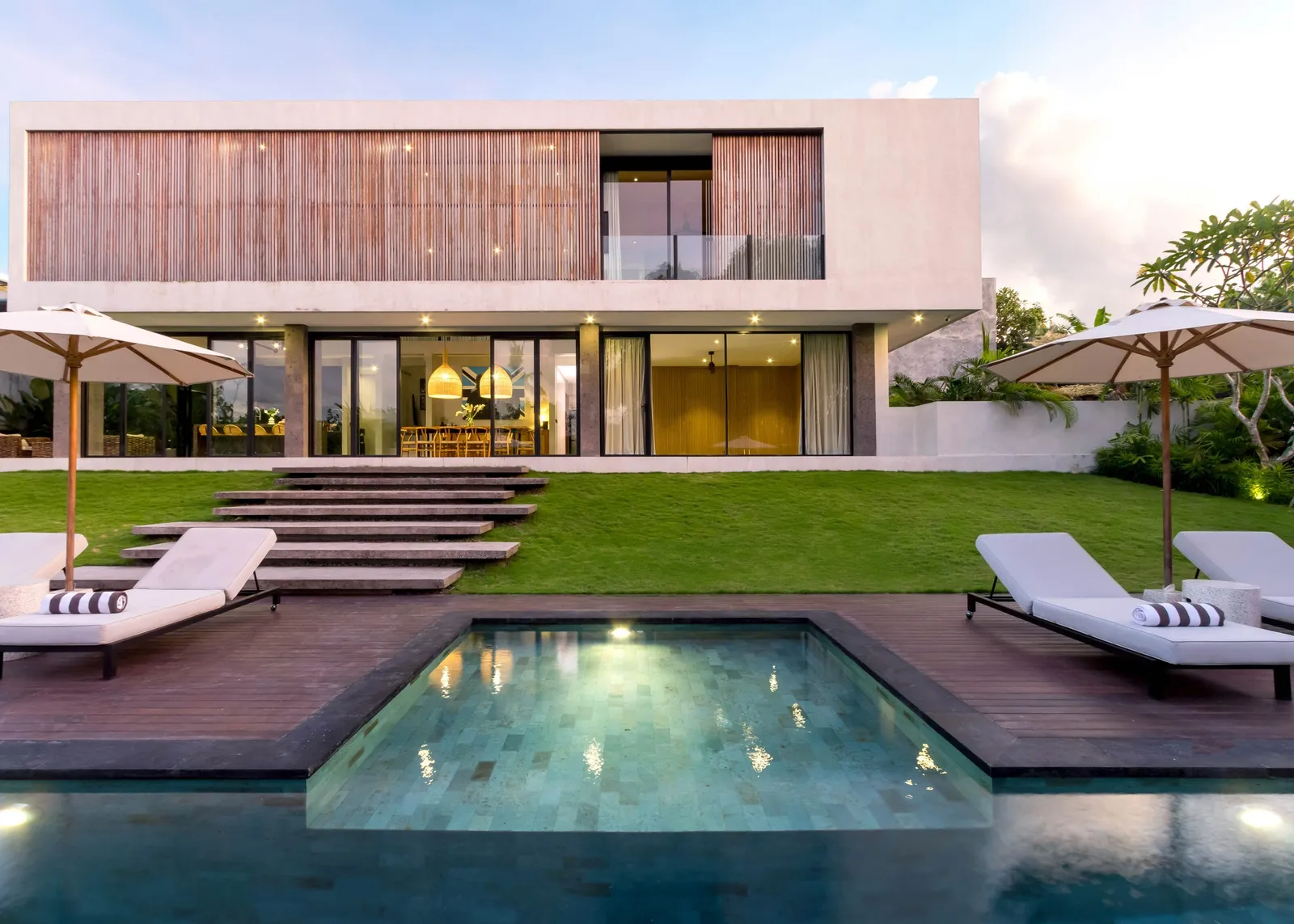
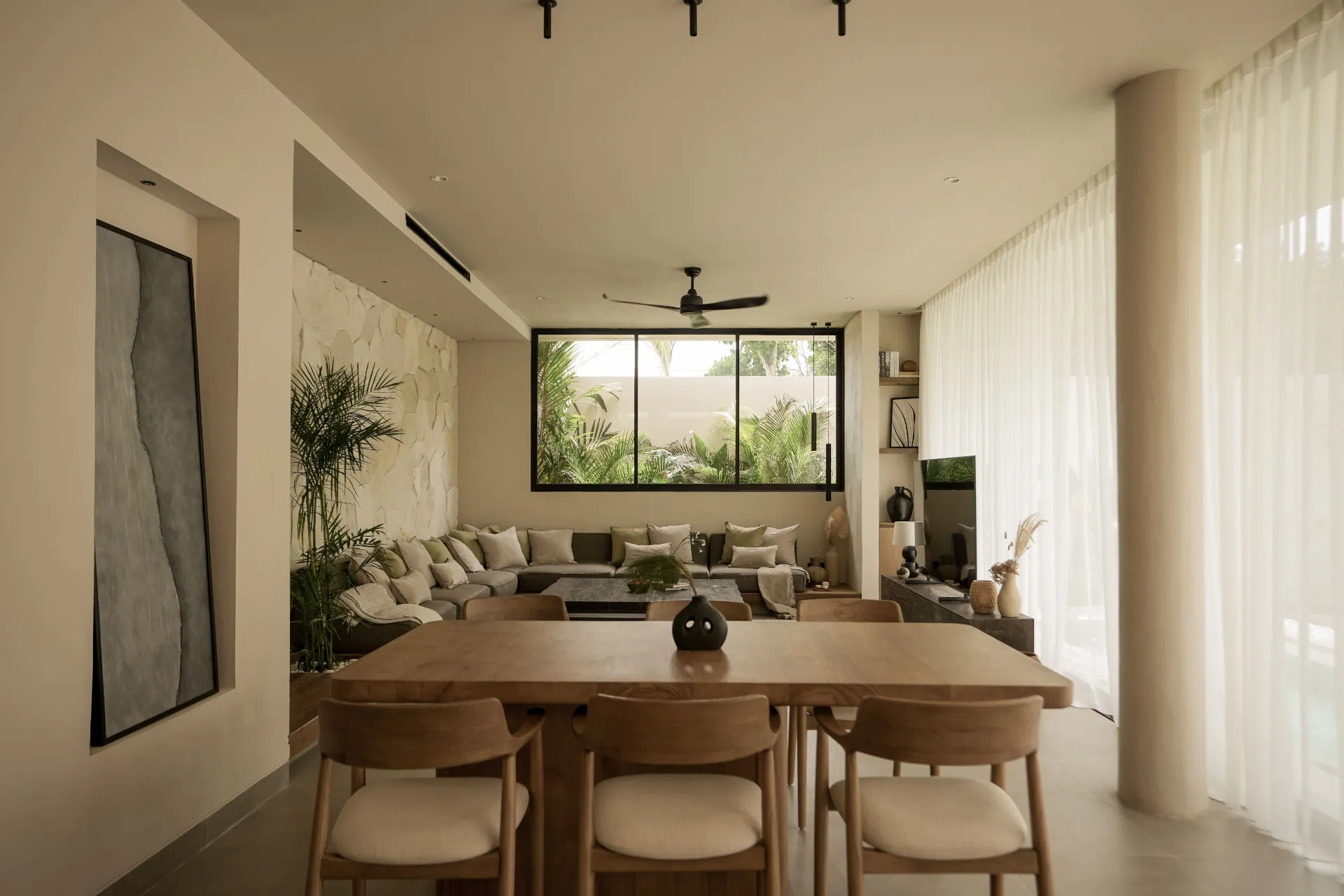
Where you sleep is the decision that sets your entire budget, and it's the one place we'd tell you not to chase the cheapest option. A backpacker can find dorm beds and basic guesthouses from USD 8–20 a night; mid-range private rooms with AC run USD 25–60; and a private pool villa typically costs USD 80–200+ a night depending on area, size and season (kala.surf, bali.com, 2026). Uluwatu, Bingin and Canggu command a premium over Ubud and the quieter east — and they're worth it, because the villa stops being a place you sleep and becomes most of why you came.
Here's the part the per-night number hides: a villa is the one expense that gets cheaper the more of you there are. A USD 180 villa is a splurge for two and a steal for six. If you're travelling as a group, the honest move is to spend up on the house and economise on everything else — the pool, the kitchen, the deck where you actually spend the trip cost less per head than a forgettable hotel room, and you're not nickel-and-dimed by resort add-ons.
The villa number is also where most people overpay without realising it — not on the rate, but on the booking. Reserving the same villa through an OTA (online travel agency) usually adds service fees on top of the nightly rate — money that goes to the platform, not the house. Booking direct with the operator skips that markup entirely. At Cabo Bali, direct bookings carry no OTA service fees, which on a week-long villa stay is often the difference between two tiers of dinner every night.
A real one: a guest found his villa on Airbnb, then did the sensible thing — opened Google Maps to see exactly where it was — and landed on our direct booking link instead. Booking direct saved the group over US$249. They spent it anyway, on a long dinner at Mana — which beats handing it to Airbnb.
How much does food cost in Bali?
Food is where Bali stays gloriously cheap no matter your budget — if you let it. A full meal at a local warung costs USD 1.50–3; a mid-range Western café charges USD 5–12 a meal; and a proper sit-down dinner with drinks runs USD 15–30 per person (kala.surf, 2026). Even luxury travellers rarely spend more than USD 50 a day eating well, because the gap between a USD 3 nasi campur and a USD 25 beachfront dinner is one of taste, not necessity. Some of the best plates on the island are still the ones that cost a couple of dollars.
The line item that quietly blows budgets isn't dinner — it's the beach club. A sunset at Single Fin in Uluwatu or a day bed at one of the big Canggu and Uluwatu clubs like Savaya comes with a minimum spend, and once you're three cocktails in at imported-spirits prices, you've spent more in an afternoon than three days of eating well. We're not telling you to skip them — they're genuinely part of the Bali experience and worth doing once. We're telling you to budget the club as an event, not a habit. One or two big afternoons, planned and paid for on purpose, beats drifting into them every day and wondering where the week's money went.
A practical planning figure: budget USD 10–15/day for food if you eat local, USD 20–35/day for a café-and-restaurant mix, and USD 50+/day if every meal is a destination — then add your beach-club afternoons as separate, deliberate line items. Bottled water, a beer (USD 2–4) and the odd smoothie bowl sit on top.
How much does getting around Bali cost — scooter vs driver?
This is the other place we'd push back on the cheap-by-default instinct. A scooter (IDR 80,000–150,000/day, ~USD 5–10) is unbeatable for buzzing to a warung or the beach, and if you ride confidently, it's the most fun way around. But the maths flips on a day trip. The moment you want to see the east coast, a temple, or somewhere two hours away, a private driver for the day (IDR 600,000–800,000, ~USD 40–55) split between four people is cheaper, cooler and far safer than four scooters in unfamiliar traffic — and you're not white-knuckling a wet road at dusk. Bali's hospitals see a steady stream of tourists who saved five dollars on a scooter and met a gravel corner; that's the one false economy worth taking seriously. The rule we give guests: scooter for your own neighbourhood, driver for the island.
For everything in between, ride-hailing apps (Gojek, Grab) handle short hops — a 10 km car ride is roughly IDR 30,000–50,000 (~USD 2–3) — though note that some areas like Ubud and Uluwatu restrict app pickups due to local taxi arrangements. We break both options down in full in the scooter and private-driver guides linked below. Most mid-range travellers mix a scooter for daily errands with the occasional driver for far-flung day trips.
How much do activities and day trips cost?
The honest truth here is that Bali's best experiences are wildly mismatched on price. The clifftop walks, the surf, the temples at sunset, swimming off a quiet Bingin beach — close to free. The stuff that's marketed hardest — packaged tours, swing photos, manufactured "Insta spots" — is where the markup hides. Budget travellers can fill a rich week on USD 30–60 total by leaning on free beaches and self-guided walks, and honestly not miss much. Activity-heavy itineraries — diving, multiple guided tours, club entries — push USD 200–400+ for the week. If you're going to spend up on one thing, make it a real experience (a dive, a proper surf lesson), not a photo queue.
What is the Bali tourist tax in 2026?
Every foreign visitor pays a one-off tourist levy of IDR 150,000 (~USD 9), charged once per trip regardless of age, with proceeds funding cultural preservation and environmental protection (thebalisun.com, bali.com, 2026). Pay it before you fly via the official Love Bali platform — it's faster than the airport counters and you arrive with the QR code ready. As of 2026 the rate is unchanged, though a future rise to IDR 300,000 has been discussed at government level and not signed off (thebalisun.com, 2026). Indonesian citizens and most long-stay permit holders are exempt; verify the current rate and your status before travelling.
So what will it actually cost you?
Here's the "it depends" everyone hedges on — said plainly. The number is almost entirely about two choices: who you're travelling with, and how hard you chase the cheapest version of everything. Two people determined to do Bali on a shoestring will land near the bottom of every range and have a great time. The same two people who say yes to every beach club and book everything last-minute through an OTA will spend triple and not feel three times the trip. And a group of six in a villa will post the lowest per-head accommodation number of anyone — while looking, on paper, like the "luxury" tier.
So if you want one piece of guidance instead of a range: decide your group, spend up on the house and the island days, and be deliberate about the clubs. Do that and Bali rewards you. Drift, and it quietly empties your account a USD-feels-cheap tap at a time.
The Cabo Bali 7-Day Budget Benchmark (2026): a mid-range couple sharing a private villa, eating a café-and-warung mix, running one scooter and booking two driver days should plan on roughly USD 1,200–1,900 total for the pair on the ground, before international flights and the IDR 150,000 levy. The single fastest way to cut that figure without cutting comfort is booking your villa direct — skipping OTA service fees keeps the saving in your pocket, not the platform's. — Cabo Bali, 2026
Pro tip — Keanu Fischell, Co-Founder, Cabo Bali: Set your daily budget before you arrive and convert it into rupiah, not dollars. People overspend in Bali because everything feels cheap in USD, so each "tiny" splurge slips under the radar until the week's tally surprises them. Decide your tier, pick your accommodation and transport first — they're 70% of the budget — and let food and activities flex around what's left.
FAQ
How much does a week in Bali cost in 2026? Excluding international flights, plan on roughly USD 600–1,000 per person for a budget trip, USD 1,200–2,000 mid-range, and USD 3,000+ for luxury. Accommodation and transport drive almost all of the difference. These are 2026 estimates — verify live prices before booking.
Is Bali expensive in 2026? It can be either. Local food, scooters and many activities remain very cheap (full meals from USD 2, scooters from ~USD 5/day), while private villas, drivers and fine dining can run as high as you let them. Your accommodation choice sets the tier.
How much money should I bring for 7 days in Bali? For day-to-day spending (food, transport, activities, tax), budget travellers need roughly USD 200–385 for the week, mid-range USD 650–1,400, and luxury USD 2,500+, on top of pre-paid accommodation and flights. Bring or withdraw rupiah for warungs and small vendors.
Do I have to pay the Bali tourist tax? Yes — every foreign visitor pays a one-off IDR 150,000 (~USD 9) levy per trip, ideally online via the official Love Bali platform before arrival. Indonesian citizens and most long-stay permit holders are exempt. Confirm the current rate before you travel.
Is it cheaper to rent a scooter or hire a driver in Bali? A scooter is far cheaper (IDR 80,000–150,000/day vs IDR 600,000–800,000 for a driver) and more flexible, but requires a licence and confidence in heavy traffic. Many travellers run a scooter daily and book a driver only for long day trips. See our dedicated guides linked below.
How can I save money on a Bali villa? Book direct with the villa operator rather than through an OTA, which typically adds service fees on top of the nightly rate. Direct bookings at Cabo Bali carry no OTA service fees. Travelling in shoulder season and staying longer also lowers the nightly rate.
Does this budget include international flights? No. Because airfare varies so much by origin (USD 400–700 from Australia, USD 900–1,600 from the US/Europe), every other figure in this guide excludes flights so you can add your own.
Key takeaways
- A 7-day Bali trip in 2026 costs about USD 600–1,000 (budget), USD 1,200–2,000 (mid-range) or USD 3,000+ (luxury) per person, before international flights.
- Accommodation and transport are ~70% of the budget — decide those first; food and activities flex around them.
- Food stays cheap at every tier (full meals from ~USD 2); it rarely drives the total.
- The IDR 150,000 (~USD 9) tourist levy is mandatory for every foreigner — pay it online before you fly.
- Booking your villa direct avoids OTA service fees and is the easiest way to cut cost without cutting comfort.
- All figures are 2026 ranges that move with season and exchange rate — verify live before booking.
Rissa Prima is Digital Marketing Manager at Cabo Bali, which manages boutique villas across Uluwatu, Bingin and Canggu.
Plan your stay — book direct, skip the OTA fees
Cabo Bali manages 20+ boutique villas across Uluwatu, Bingin, Pecatu, Ungasan, Canggu and Pererenan, with 91% portfolio occupancy, a 4.84/5 guest rating from 750+ reviews and a 5.0 on Google. Book direct and you pay no OTA service fees, with a concierge team to handle drivers, surf lessons, chefs and day trips so your budget goes further.
- WhatsApp: +62 812 3968 3171
- Email: hello@cabobali.com
- Browse villas: /all-villas
Related reading